This comparison is based on NVIDIA's official product pages for the RTX PRO 4500 Blackwell Workstation Edition and the GeForce RTX 5080, read on 26 November 2026. We haven't included speed figures because we haven't measured them ourselves.
Both cards use NVIDIA's Blackwell architecture with fifth-generation Tensor Cores, and both support NVIDIA's CUDA platform, which local AI apps such as Ollama, LM Studio and ComfyUI can use. The difference is in what they're built for. The GeForce RTX 5080 is a gaming card. The RTX PRO 4500 is a workstation card with twice the graphics memory, error-correcting memory and a much lower maximum power rating.
Specifications compared
| RTX PRO 4500 Blackwell | GeForce RTX 5080 |
|---|
Graphics memory | 32GB GDDR7 with ECC | 16GB GDDR7 |
Memory bandwidth | 896GB/s | Not listed on NVIDIA's RTX 5080 page |
Memory interface | Not listed on NVIDIA's RTX PRO 4500 page | 256-bit |
Maximum power | 200W | 360W total graphics power |
NVIDIA's required system power | Not listed | 850W |
Architecture | Blackwell, fifth-gen Tensor Cores | Blackwell, fifth-gen Tensor Cores |
Video engines | 2x ninth-gen NVENC, 2x sixth-gen NVDEC | 2x ninth-gen NVENC, 2x sixth-gen NVDEC |
Display outputs | 4x DisplayPort 2.1 | 3x DisplayPort, 1x HDMI |
PCI Express | Gen 5 | Gen 5 |
Size | Dual slot, 4.4in x 10.5in | Founders Edition: 2 slots, 304mm long |
NVIDIA lists 10,752 CUDA cores and 1,801 AI TOPS for the RTX 5080. Its RTX PRO 4500 product page doesn't give a CUDA core count or AI TOPS figure, so we haven't compared raw compute directly.
Memory: the RTX PRO 4500's big advantage
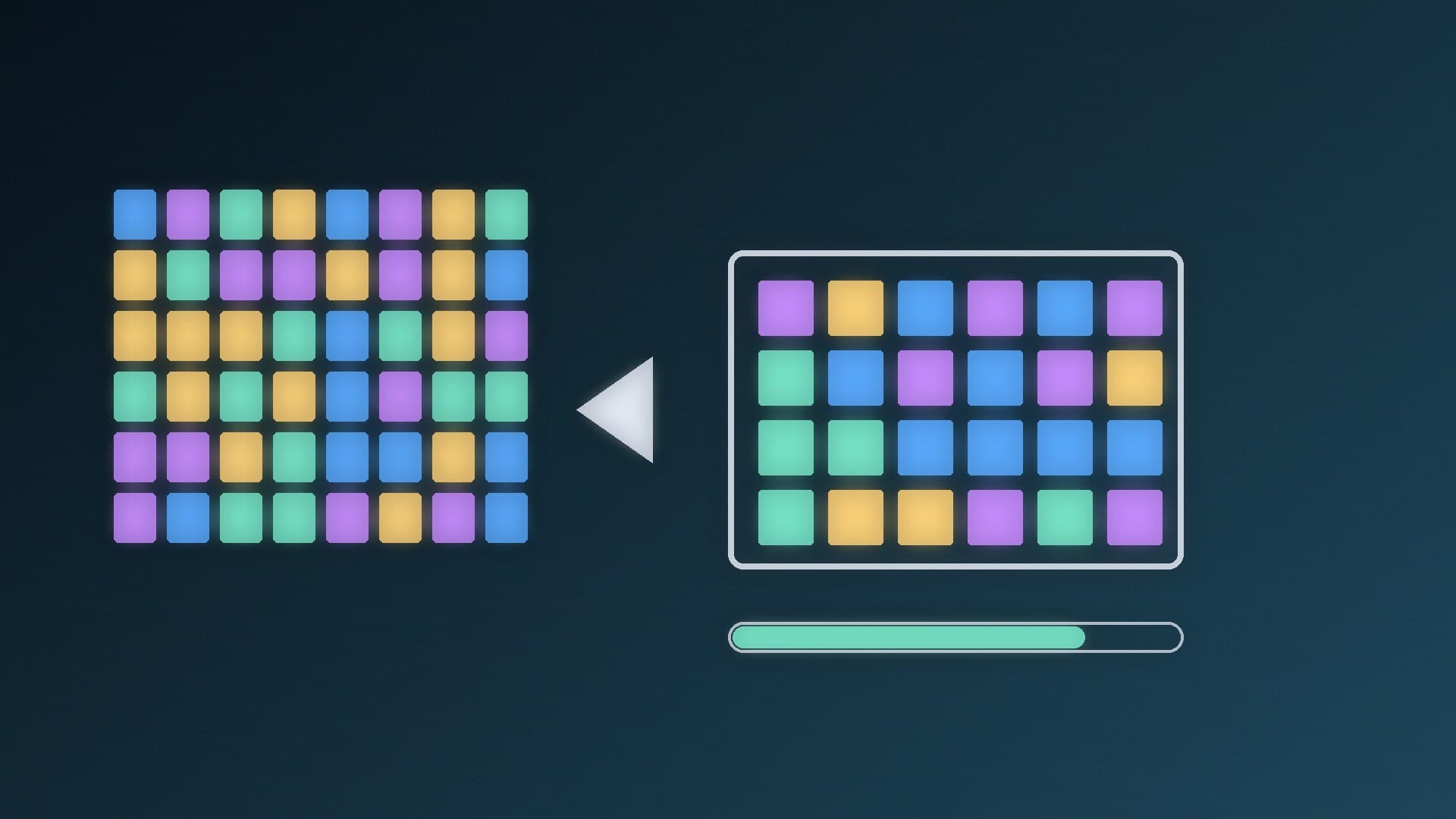
For local language models, the model and its working memory ideally need to fit inside the graphics card's memory. When they don't, apps such as Ollama and LM Studio can split the model between the graphics card and system RAM, and that is much slower. Our VRAM guide explains the sizes in more detail.
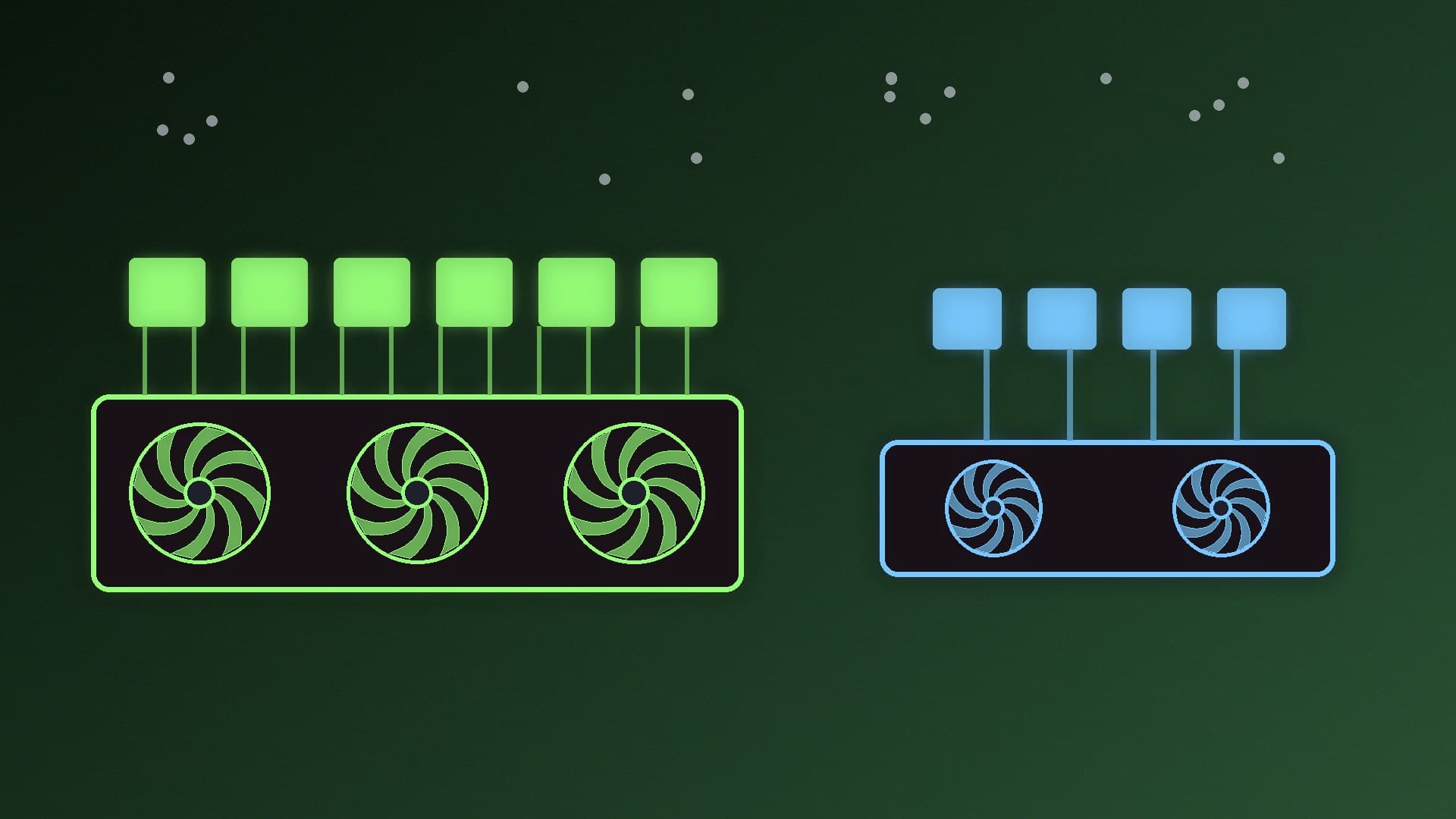
As a rough guide (our calculation), a model stored at 4-bit precision needs about half a byte per parameter for its weights alone. A 30-billion-parameter model therefore needs about 15GB before you add any context, which leaves almost nothing spare on a 16GB card. On a 32GB card, the same model leaves around 17GB for longer conversations, a second model or larger image and video workflows. Our explainers on quantisation and context length and VRAM show how those numbers add up.
ECC (error-correcting code) memory can detect and correct some memory errors. It's most useful for long training or fine-tuning runs and for work where a silent error would be costly. For chatting with a local model or generating images at home, it's a nice extra rather than a requirement.
Compute and speed
NVIDIA lists 10,752 CUDA cores, a 256-bit memory interface and a 360W total graphics power for the RTX 5080. We can't say from NVIDIA's pages which card generates text faster, because NVIDIA doesn't publish a CUDA core count for the RTX PRO 4500 on its product page and doesn't list the RTX 5080's memory bandwidth on its GeForce page. Text generation speed depends heavily on memory bandwidth, as our memory bandwidth explainer covers.
What is clear is the practical limit: a model that fits in 32GB but not 16GB is likely to run much faster on the RTX PRO 4500 than on an RTX 5080 that has to offload part of it to system RAM. If your models fit comfortably in 16GB, memory capacity stops being the deciding factor, and we can't say from NVIDIA's pages which card is faster.
Power, size and building a PC around them
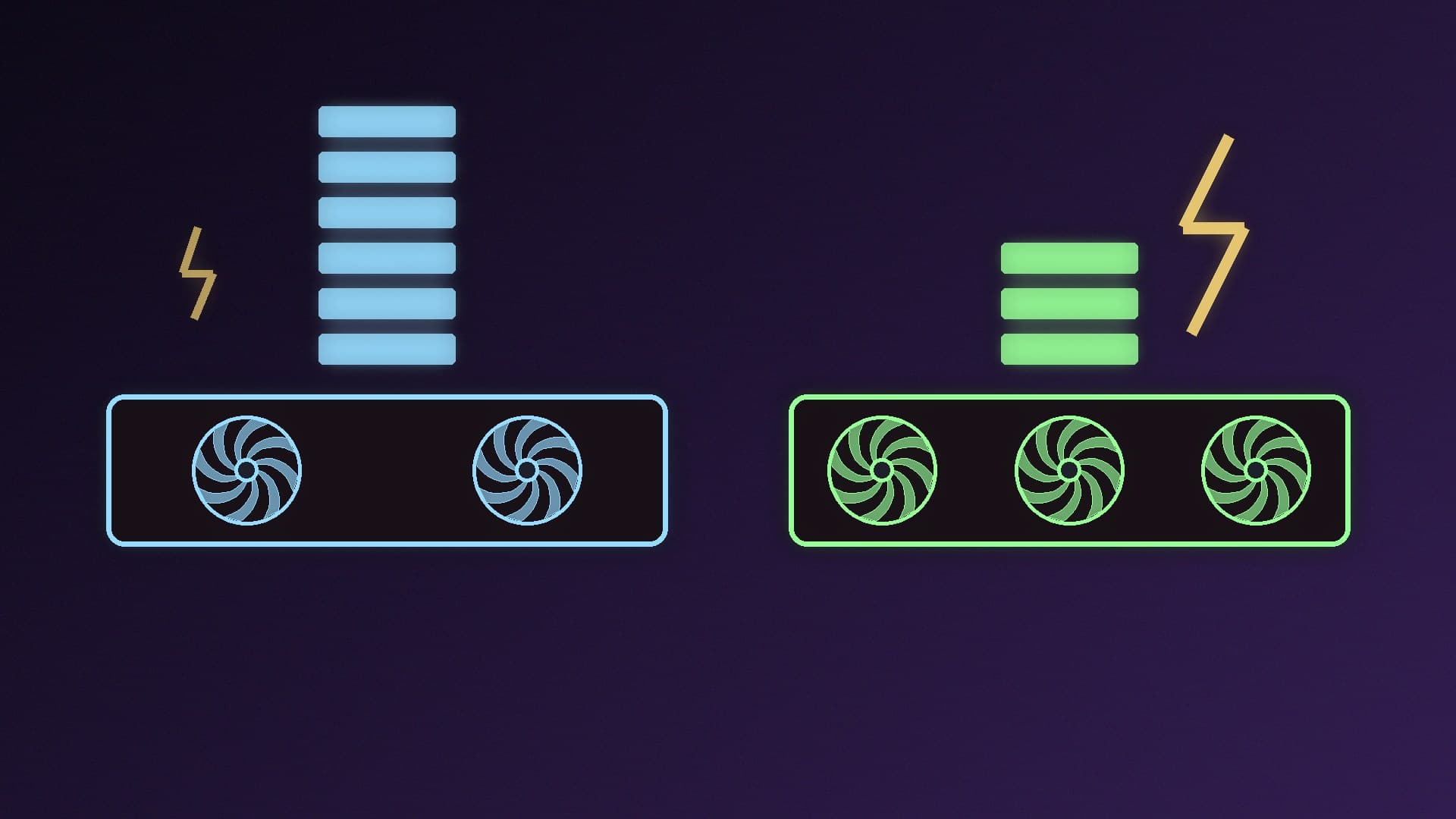
The RTX PRO 4500 has a maximum power consumption of 200W, against a total graphics power of 360W for the RTX 5080. NVIDIA lists a required system power of 850W for a PC with an RTX 5080, based on a PC with a Ryzen 9 9950X processor. A lower power rating generally means less heat to deal with during long AI jobs, and it can make the RTX PRO 4500 an easier fit for two-card builds. Our guides on choosing a PSU for a local AI PC and running a local LLM on two GPUs go into more detail.
NVIDIA lists the RTX PRO 4500 as a dual-slot card, 4.4in high and 10.5in long. The RTX 5080 Founders Edition is a two-slot card, 304mm long, and partner cards vary in size, so check your case clearance against the exact model.
Who should buy which
Choose the RTX PRO 4500 Blackwell if you want to run larger language models, longer contexts or heavier image and video workflows entirely on one card, if you plan to fine-tune models, or if you want lower power draw and ECC memory in a workstation.
Choose the GeForce RTX 5080 if you also play games and your AI models fit within 16GB. NVIDIA makes a Founders Edition and other manufacturers make their own versions. Examples in our database include the NVIDIA GeForce RTX 5080 Founders Edition and the MSI RTX 5080 16GB Ventus 3X OC.
For other options, see our best 32GB graphics cards for local AI and our comparison of the RTX PRO 4000 Blackwell and RTX 5070 Ti.
Our verdict
For local AI, the RTX PRO 4500 Blackwell's 32GB of ECC graphics memory and 200W maximum power make it the better choice for large models, long contexts and fine-tuning. The GeForce RTX 5080 has 16GB and a 360W total graphics power, and suits people who also game and whose models fit within 16GB. NVIDIA sells the RTX PRO 4500 through its partners, so check prices with them on the day.