Skip to content

Author / Senior Hardware Editor / 158 articles

Callum Reid

Callum leads GPU, CPU and platform architecture coverage at Forge PC. Before joining the editorial desk, he spent nine years specifying, assembling and stress-testing custom gaming and workstation systems in the UK, with a focus on PCIe bandwidth, VRM thermal design, DDR5 memory tuning and 1440p/4K frame-time consistency.

  • DDR5-6000 CL30 vs CL36: Do Tighter RAM Timings Matter for Gaming?

    Versus

    DDR5-6000 CL30 vs CL36: Do Tighter RAM Timings Matter for Gaming?

    At DDR5-6000, CL30 memory has a first-word latency of 10ns against 12ns for CL36, but TechSpot's testing found very little gaming difference even between CL30 and CL40 kits. On 16 November 2026 the cheapest 32GB CL30 kit we found was about £31 cheaper than the cheapest CL36 kit, so buy whichever costs less.

    Callum Reid4 min
  • Radeon AI PRO R9700 vs RTX 5090 for Local AI: Same 32GB, Very Different Price

    Versus

    Radeon AI PRO R9700 vs RTX 5090 for Local AI: Same 32GB, Very Different Price

    AMD's 32GB Radeon AI PRO R9700 costs about £1,610 in the UK against about £7,000 for the cheapest RTX 5090 we found on 16 November 2026. The RTX 5090 is much faster in independent llama.cpp results, but the R9700 offers the same 32GB of memory for local AI at under a quarter of the price.

    Callum Reid4 min

  • Ryzen 7 7800X3D vs 9800X3D: Is the Newer X3D Chip Worth £87 More?

    Versus

    Ryzen 7 7800X3D vs 9800X3D: Is the Newer X3D Chip Worth £87 More?

    The Ryzen 7 9800X3D is about 8% faster than the 7800X3D in games on average in TechSpot's testing and better for productivity and overclocking, but at about £350 vs £263 on 16 November 2026 it costs roughly a third more. For most gamers, especially at 1440p and above, the 7800X3D is better value.

    Callum Reid4 min

  • RX 9060 XT 8GB vs 16GB: Is the Cheaper Version Worth Saving £130?

    Versus

    RX 9060 XT 8GB vs 16GB: Is the Cheaper Version Worth Saving £130?

    The RX 9060 XT 8GB and 16GB share the same GPU, but TechSpot's testing shows the 8GB card falling far behind once games exceed its memory, especially on PCIe 3.0 systems. At about £450 vs £580 on 16 November 2026, the 16GB card is worth the extra £130 for most buyers.

    Callum Reid4 min

  • Webcam vs Mirrorless Camera for Streaming: Is the Upgrade Worth It?

    Versus

    Webcam vs Mirrorless Camera for Streaming: Is the Upgrade Worth It?

    A webcam like the Logitech Brio 500 is cheap and plug-and-play, offering 1080p at 30fps with autofocus and HDR. A mirrorless or DSLR camera gives a bigger sensor, natural background blur and better low-light quality via Canon's or Sony's webcam software or an HDMI capture device, but adds cost and hassle. Improve lighting first.

    Callum Reid4 min

  • B860 vs Z890: Which Intel Core Ultra Motherboard Should You Buy?

    Versus

    B860 vs Z890: Which Intel Core Ultra Motherboard Should You Buy?

    B860 and Z890 boards both give Core Ultra 200S processors a PCIe 5.0 graphics slot, a PCIe 5.0 M.2 slot and XMP memory support. Z890 adds CPU and base clock overclocking, 24 rather than 14 chipset PCIe lanes, more USB and SATA ports and more flexible CPU lanes, but costs roughly £90 more on 16 November 2026. Most gamers should buy B860.

    Callum Reid4 min

  • Bluetooth vs 2.4GHz Wireless for Gaming Mice and Headsets: Which Should You Use?

    Versus

    Bluetooth vs 2.4GHz Wireless for Gaming Mice and Headsets: Which Should You Use?

    For gaming, use the 2.4GHz USB receiver: Logitech's G309 runs at 1,000Hz on LIGHTSPEED but 125Hz on Bluetooth, and classic Bluetooth headsets drop to mono audio when the microphone is in use. Bluetooth is better for laptops, phones and battery life, and Bluetooth LE Audio fixes voice chat only on supported Windows 11 24H2 PCs with compatible headphones.

    Callum Reid4 min

  • G-Sync vs FreeSync in 2026: Which Matters When You Buy a Gaming Monitor?

    Versus

    G-Sync vs FreeSync in 2026: Which Matters When You Buy a Gaming Monitor?

    G-Sync Compatible and FreeSync Premium monitors give tear-free gaming with low framerate compensation, and most work with both AMD and NVIDIA cards. G-Sync Ultimate and FreeSync Premium Pro add HDR requirements, while full G-Sync, now also offered through MediaTek scalers, adds NVIDIA-only extras. For most buyers the panel, refresh rate and price matter more than the badge.

    Callum Reid4 min

  • Back-Connect vs Standard Motherboards: Are Hidden-Connector Builds Worth It?

    Versus

    Back-Connect vs Standard Motherboards: Are Hidden-Connector Builds Worth It?

    Back-connect motherboards such as ASUS's BTF range put the power and header connectors on the back of the board, so cables are hidden behind the tray. They need a case with matching tray cutouts, though ASUS says standard coolers, PSUs, SSDs and RAM still work, and NZXT's 2026 H5 and H7 add support. For most builders, a standard board is still the practical choice.

    Callum Reid3 min

  • Linear vs Tactile vs Clicky Keyboard Switches: Which Is Best for Gaming and Typing?

    Versus

    Linear vs Tactile vs Clicky Keyboard Switches: Which Is Best for Gaming and Typing?

    Linear switches such as Cherry's MX2A Red (45cN) are smooth and light, tactile switches such as the Brown (55cN) add a bump you can feel, and clicky switches such as the Blue (60cN) add an audible click. Cherry rates the Red and Brown for over 100 million keystrokes and the Blue for over 50 million. Linear suits gaming, tactile suits mixed use, and clicky is best avoided on voice chat. Forge PC ha

    Callum Reid3 min

  • USB vs XLR Microphone for Streaming and Gaming: Which Should You Buy?

    Versus

    USB vs XLR Microphone for Streaming and Gaming: Which Should You Buy?

    A USB microphone converts audio itself and plugs straight into your PC, while an XLR mic needs an audio interface but lets you upgrade parts separately. For most gamers and solo streamers, a dynamic USB mic is the simplest route; condenser XLR mics also need phantom power. Hybrid mics such as Shure's MV7+ have both outputs, so you can start on USB and move to XLR later.

    Callum Reid3 min

  • CUDIMM vs UDIMM: Do You Need Clocked DDR5 Memory?

    Versus

    CUDIMM vs UDIMM: Do You Need Clocked DDR5 Memory?

    CUDIMMs are DDR5 desktop modules with a clock driver, which JEDEC requires from DDR5-6400. They fit normal DDR5 slots, but only Intel Core Ultra 200S processors on 800-series boards use the clock driver today. On AMD Ryzen 9000 they run in bypass mode, and Kingston says Ryzen 7000 and 8000 on 600-series boards may not boot with them. For most builds, a normal UDIMM kit is the right choice. Forge P

    Callum Reid3 min

  • Fully Modular vs Semi-Modular vs Non-Modular PSU: Which Should You Buy?

    Versus

    Fully Modular vs Semi-Modular vs Non-Modular PSU: Which Should You Buy?

    Fully modular PSUs let you connect only the cables you need, semi-modular units have the main cables fixed, and non-modular PSUs have every cable attached but fewer connection points. On 15 November 2026 the fully modular MSI MAG A750GL cost the same as the fixed-cable Seasonic CORE GC-750 at Scan, about £80, so fully modular is our default. Never reuse modular cables from another PSU. Forge PC ha

    Callum Reid4 min

  • DRAM vs DRAM-less SSD: Does the Cache Still Matter in 2026?

    Versus

    DRAM vs DRAM-less SSD: Does the Cache Still Matter in 2026?

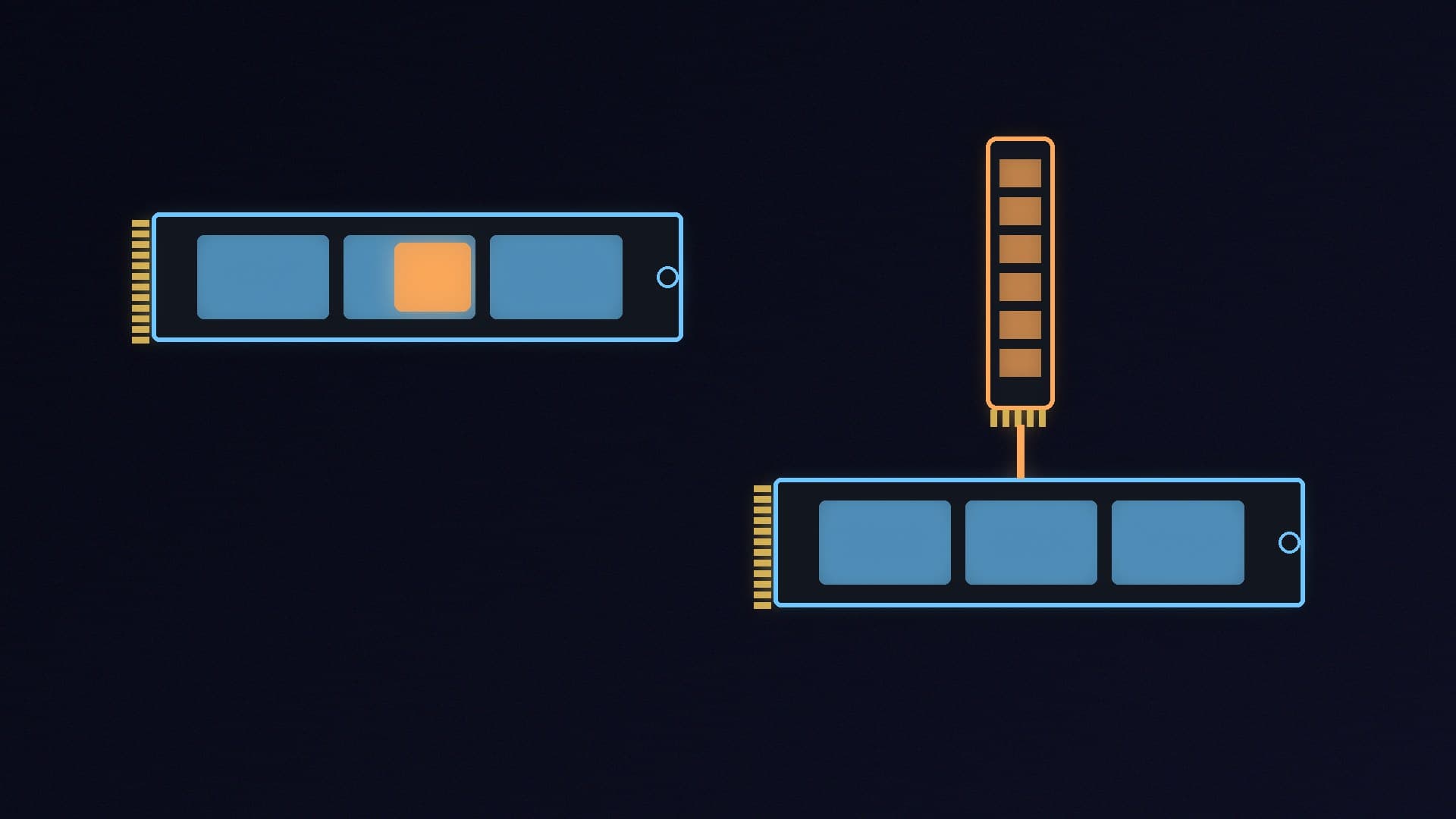
    DRAM on an SSD holds the mapping tables that speed up random reads, but DRAM-less NVMe drives now borrow a little system RAM through the Host Memory Buffer, which Phison says largely closes the gap. For game libraries and most gaming PCs, a DRAM-less drive such as the Kingston NV3 is good value; pay for DRAM when the price gap is small, as with Samsung's 990 PRO and 990 EVO Plus on 15 November 202

    Callum Reid4 min

  • MoE vs Dense AI Models: Which Runs Better on Your PC?

    Versus

    MoE vs Dense AI Models: Which Runs Better on Your PC?

    Mixture-of-experts AI models such as Qwen3-30B-A3B use only a few billion of their parameters for each token, so they generate text far faster than dense models of similar size: Lablup measured 75.9 against 10.2 tokens per second on an AMD Ryzen AI Max+ 395. But every expert must still be loaded, so MoE models need as much memory as their total size.

    Callum Reid4 min

  • 144Hz vs 240Hz Monitor: Is the Upgrade Worth It for Gaming?

    Versus

    144Hz vs 240Hz Monitor: Is the Upgrade Worth It for Gaming?

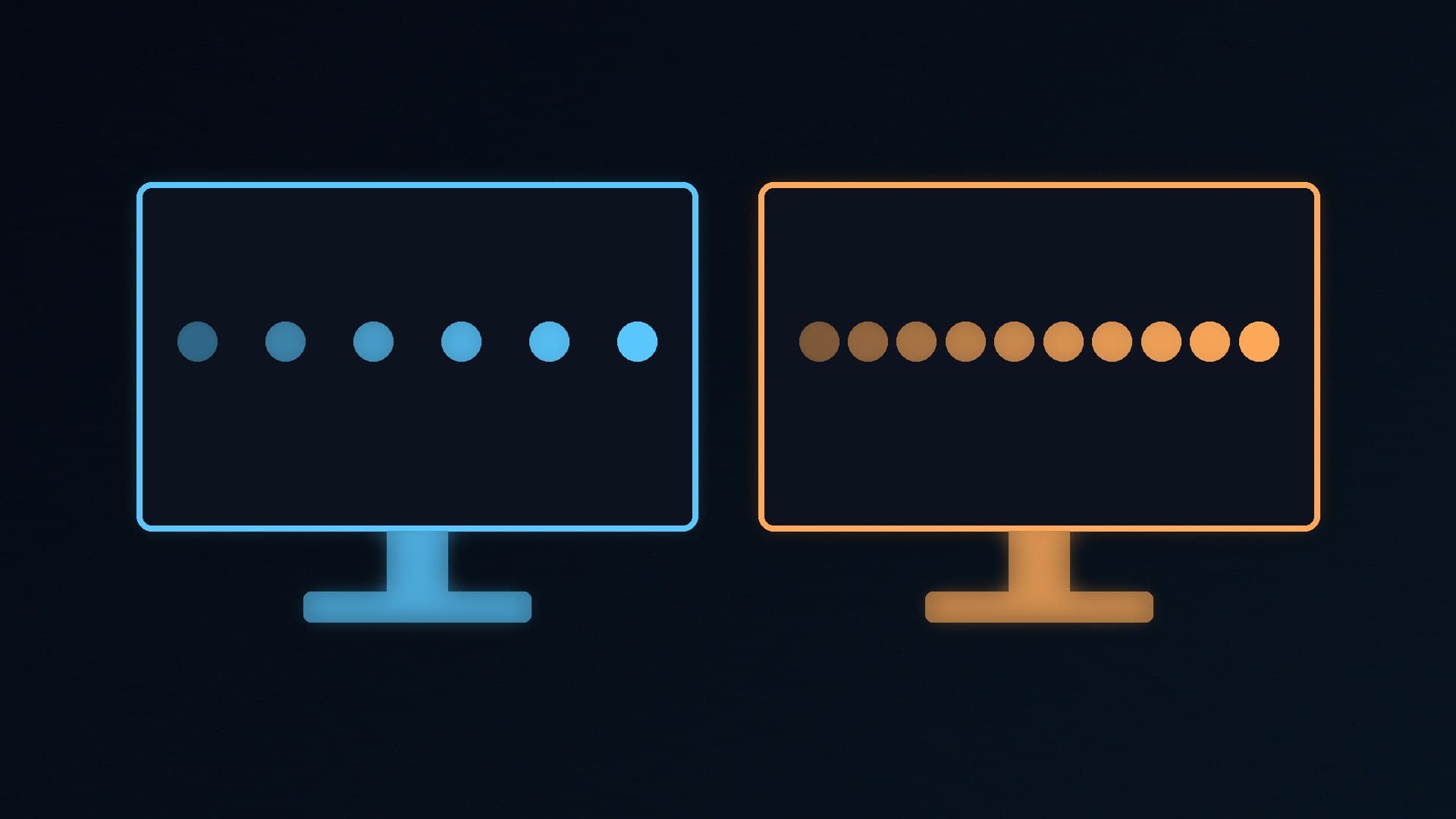
    A 240Hz monitor shows each frame for 4.2ms against 6.9ms at 144Hz, giving smoother motion and less blur, but only if your PC reaches those frame rates. On 15 November 2026 a 27-inch 1440p 240Hz IPS screen cost about £200 at Scan, about £80 to £90 more than 144Hz to 180Hz models. It is worth it for competitive gamers.

    Callum Reid4 min

  • DDR5-6000 vs DDR5-8000: Is Faster RAM Worth It for Gaming in 2026?

    Versus

    DDR5-6000 vs DDR5-8000: Is Faster RAM Worth It for Gaming in 2026?

    DDR5-6000 CL30 is still the best memory for most gaming PCs. TechSpot found DDR5-8000 at most 12% faster on a Ryzen 7 9700X and almost no faster than DDR5-6000 CL26, and only about half the X870E boards it tried ran DDR5-8000. On 15 November 2026 the cheapest DDR5-8000 kit cost about £50 more than DDR5-6000 CL30.

    Callum Reid4 min

  • IPS vs VA vs TN Monitors: Which Panel Type Is Best for You?

    Versus

    IPS vs VA vs TN Monitors: Which Panel Type Is Best for You?

    IPS monitors have the best colour and viewing angles with good speed, making them right for most people, but only around 1000:1 contrast and some IPS glow. VA panels have about three times the contrast for deeper blacks but slower, sometimes smeary motion, according to TechSpot. TN is now a niche choice for the cheapest or fastest screens.

    Callum Reid4 min