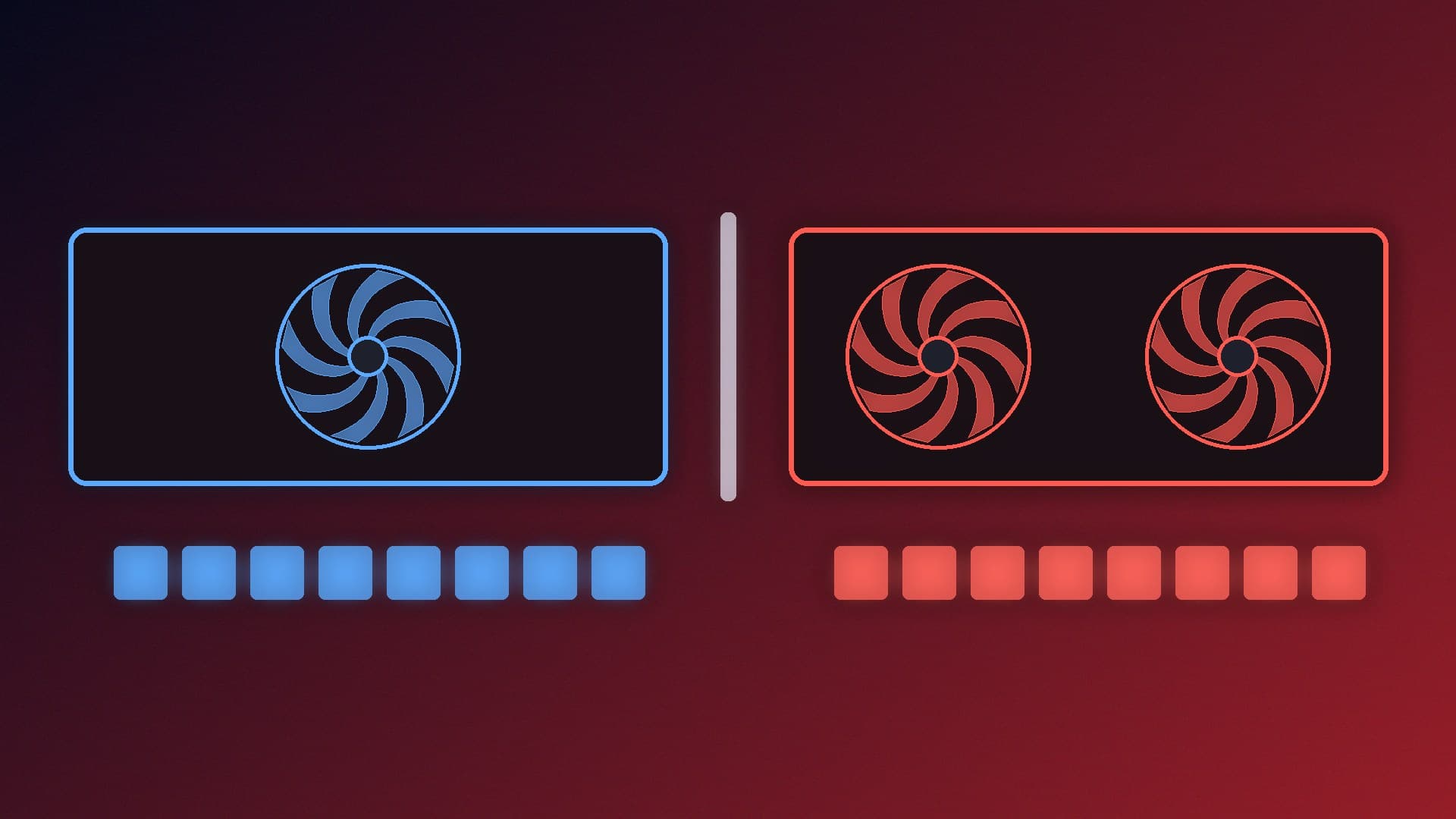
Intel's Arc Pro B65 and AMD's Radeon AI PRO R9700 both put 32GB of video memory on a single workstation card, and with ASRock's Arc Pro B65 Creator 32GB on sale in Japan from 27 November 2026, the B65 is now a real alternative to AMD's card for running language models locally. On memory the two are close; on compute, power and software they're not. This comparison uses Intel's and AMD's official specification pages, Ollama's hardware support documentation and Elmitage Akihabara's report on the ASRock card, all read on 28 November 2026. Where we say how a difference should play out, that's our reading of the specs.
Specs side by side
Spec | Intel Arc Pro B65 | AMD Radeon AI PRO R9700 |
|---|
Architecture | Xe2 (Battlemage), TSMC N5 | RDNA 4 |
Cores | 20 Xe cores, 160 XMX engines | 64 compute units, 4,096 stream processors, 128 AI accelerators |
Clock | 2,400MHz graphics clock | Up to 2,920MHz boost |
Peak INT8 (dense) | 197 TOPS | 383 TOPS |
Peak FP32 | 12.28 TFLOPS | 47.8 TFLOPS (vector) |
Memory | 32GB GDDR6 | 32GB GDDR6, plus 64MB Infinity Cache |
Memory bus / bandwidth | 256-bit / 608GB/s | 256-bit / 640GB/s |
ECC memory | Not listed on Intel's spec page | Yes (Linux only) |
Interface | PCIe 5.0 x16 | PCIe 5.0 x16 |
Total board power | 200W | 300W (750W minimum PSU recommended) |
Power connector | Varies by card (ASRock B65 Creator: 12V-2x6) | 12V-2x6 |
The B65 figures are from Intel's specification page and the R9700 figures from AMD's. AMD also lists FP16, FP8 and INT4 matrix figures, and higher numbers with structured sparsity; we've used the dense INT8 figure because both companies publish it. Vendors don't always calculate peak figures in the same way, so treat the compute rows as a rough guide rather than an exact ratio.
Memory: what you can load is the same
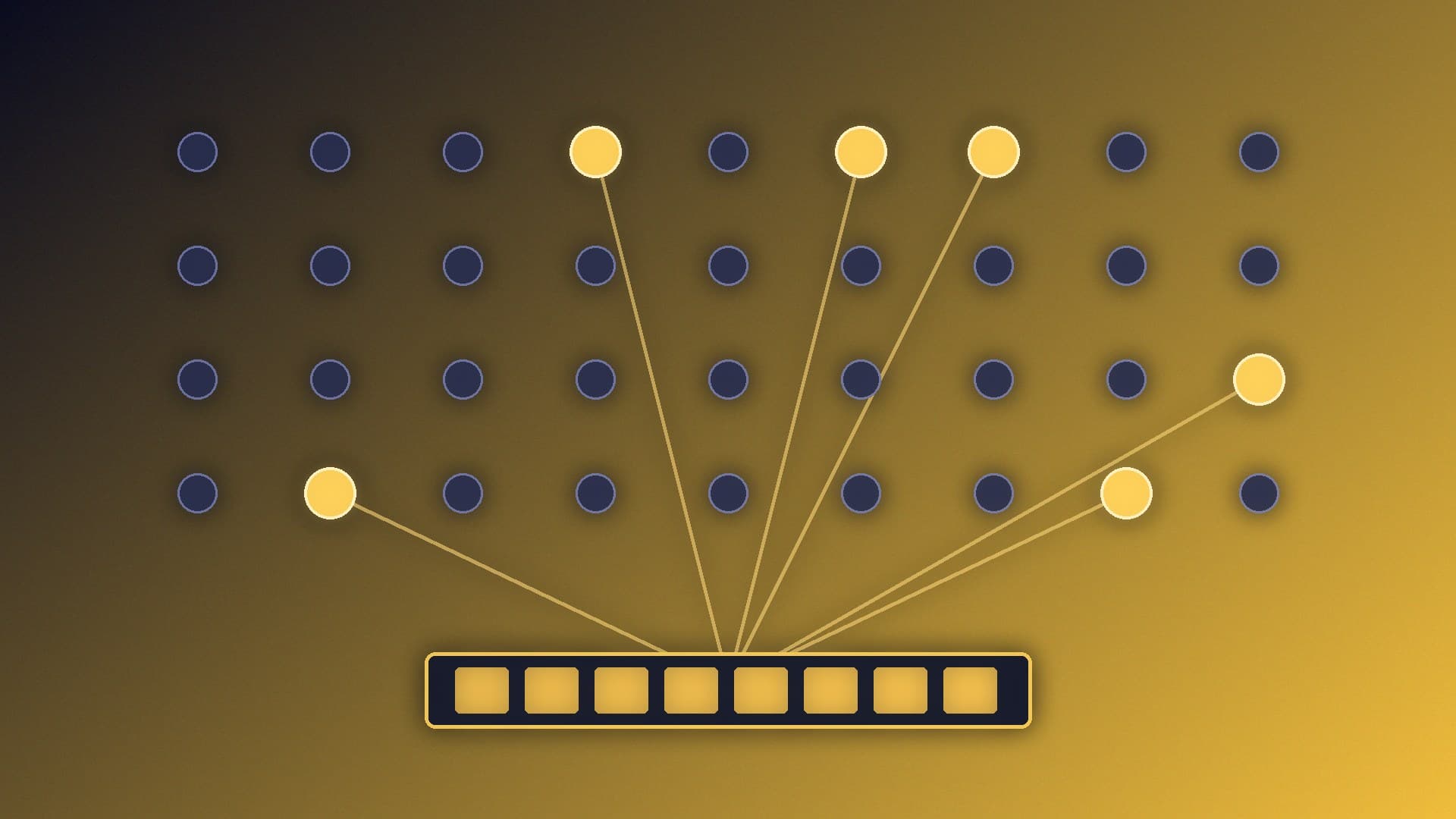
Both cards have 32GB of GDDR6 on a 256-bit bus, so a model file that fits on one will fit on the other. The R9700 has slightly more bandwidth, 640GB/s against 608GB/s, which works out at about 5% more. Since text generation is usually limited by how fast the card can read the model's weights, we'd expect that gap to make only a small difference to chat speed on its own; our guide to memory bandwidth and local LLM speed explains why. For working out what fits in 32GB once the context window is included, see our context length and VRAM explainer.
The R9700 supports ECC on its video memory, but only on Linux, according to AMD. Intel's B65 page doesn't list ECC. If error-corrected memory matters for long or unattended jobs, that tips things towards AMD; our ECC vs non-ECC comparison explains what it protects against.
Compute: the R9700 is in a different class
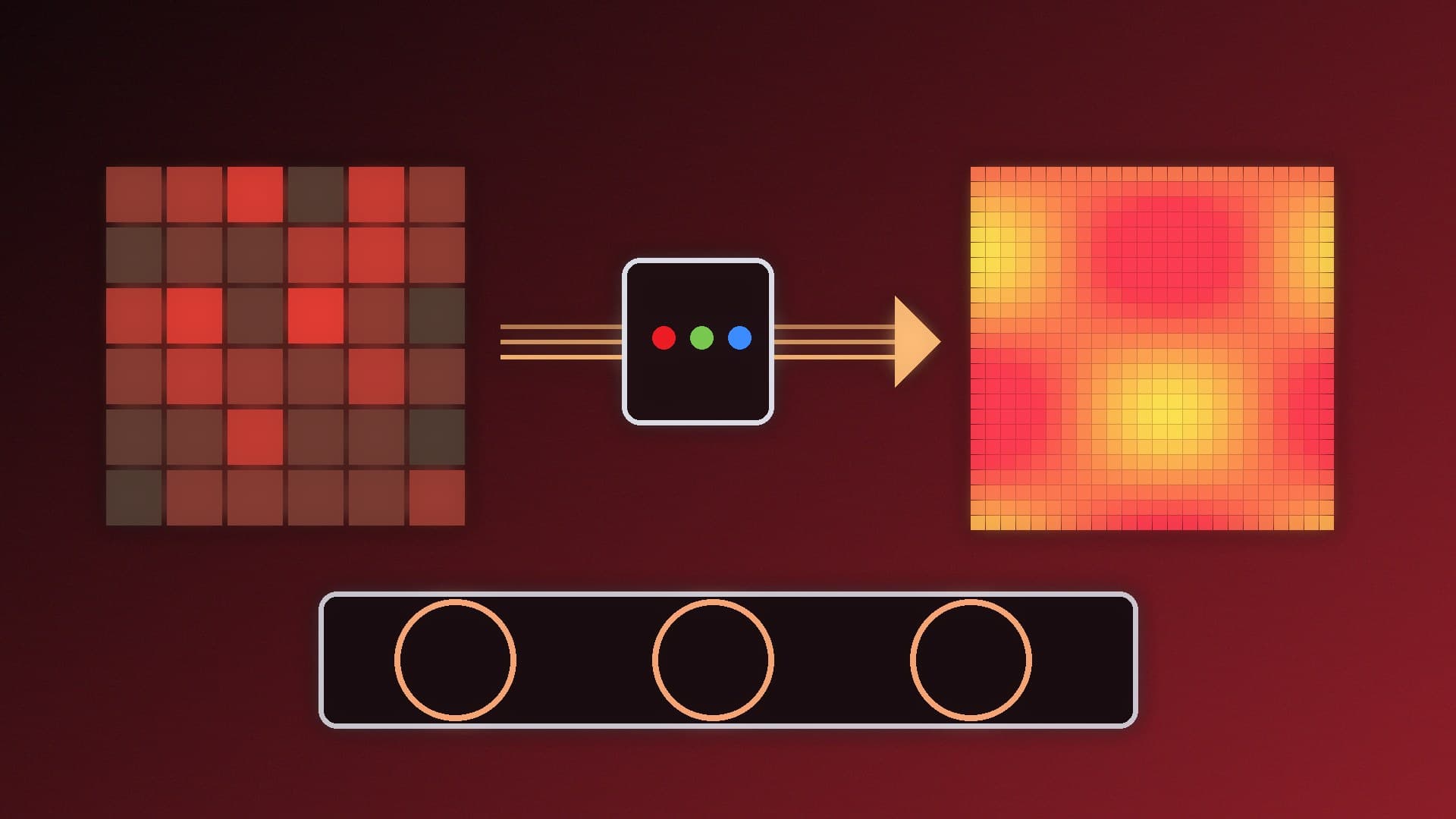
The biggest gap is raw compute. AMD rates the R9700 at 383 TOPS of dense INT8 matrix performance, about 1.9 times the B65's 197 TOPS, and its 47.8 TFLOPS of FP32 is far above the B65's 12.28 TFLOPS on paper. That matters most for compute-heavy jobs:
Processing long prompts, such as large documents or codebases, before the first word appears.
Image and video generation in tools such as ComfyUI.
Serving several users or agents at once, where batching puts more load on compute.
For one person chatting with a model that fits comfortably in memory, the gap should be much smaller than those figures suggest, because memory bandwidth is so similar. Intel's Arc Pro B70 is the bigger card in the same family, with the same memory setup; if you like the Intel route but want more compute, our Arc Pro B65 vs Arc Pro B70 comparison covers that step up, and our Arc Pro B70 vs Radeon AI PRO R9700 comparison pits the bigger Intel card against AMD's.
Power, cooling and multi-card builds
The B65's 200W rating is a third lower than the R9700's 300W, and AMD recommends at least a 750W power supply for its card. On paper, that should make the B65 easier to cool and keep quiet in a small workstation, and it means less heat to deal with during long jobs. If you're sizing a power supply, our PSU guide for local AI PCs walks through it.
Both use a full PCIe 5.0 x16 interface. AMD lists the R9700 as a double-slot card, and ASRock's B65 Creator is also two slots thick, so either can be doubled up for 64GB across two cards. According to Elmitage Akihabara, ASRock's Arc Pro B65 Creator 32GB uses a blower fan with a vapour chamber and a phase-change thermal pad, measures 271 x 112 x 39mm, weighs 1,057g and has a single 12V-2x6 connector with an adaptor to two 8-pin PCIe plugs in the box. Our blower vs open-air comparison and guide to running a local LLM on two GPUs explain why a blower cooler suits multi-card builds. R9700 cooler designs vary by maker, so check the specific card.
Software support
This is where many buyers will decide.
Radeon AI PRO R9700. AMD lists support for 64-bit Windows 10 and 11 and Linux. Ollama's documentation includes the R9700 in its list of AMD cards supported through ROCm on Linux, which needs the ROCm v7 driver. The R9700 isn't in Ollama's Windows ROCm list, where Ollama's broader GPU support comes through its Vulkan backend instead. A Linux machine is the most straightforward way to use this card for AI; our guide to running local AI on an AMD Radeon GPU covers the setup.
Arc Pro B65. Intel's spec page lists support for oneAPI, OpenVINO, Intel Extension for PyTorch and Vulkan 1.3. Ollama's documentation covers Intel GPUs under its Vulkan backend, which it says is enabled by default on Windows and Linux. Some AI tools need specific backends or builds to run on Intel GPUs, so check the apps you use first. Our guide to running local AI on an Intel Arc GPU covers the options, and our CUDA vs ROCm vs Vulkan explainer puts both vendors' software in context.
Which should you choose?
Choose the Radeon AI PRO R9700 if you'll run image or video generation, long documents or several users at once, want ECC on Linux, or are building a Linux AI server where ROCm support is listed.
Choose the Arc Pro B65 if your main use is chatting with or querying models that fit in 32GB, and you value a 200W power rating for a quieter, cooler or multi-card workstation, as long as your software works on Intel's stack.
If you'd rather stay with NVIDIA's CUDA, our best 32GB graphics cards for local AI guide lists the alternatives. The R9700 is in the Forge PC database as the PowerColor AI PRO R9700 32GB; there's no Arc Pro B65 listing yet. For more on the ASRock B65 card, see our Arc Pro B65 Creator report.