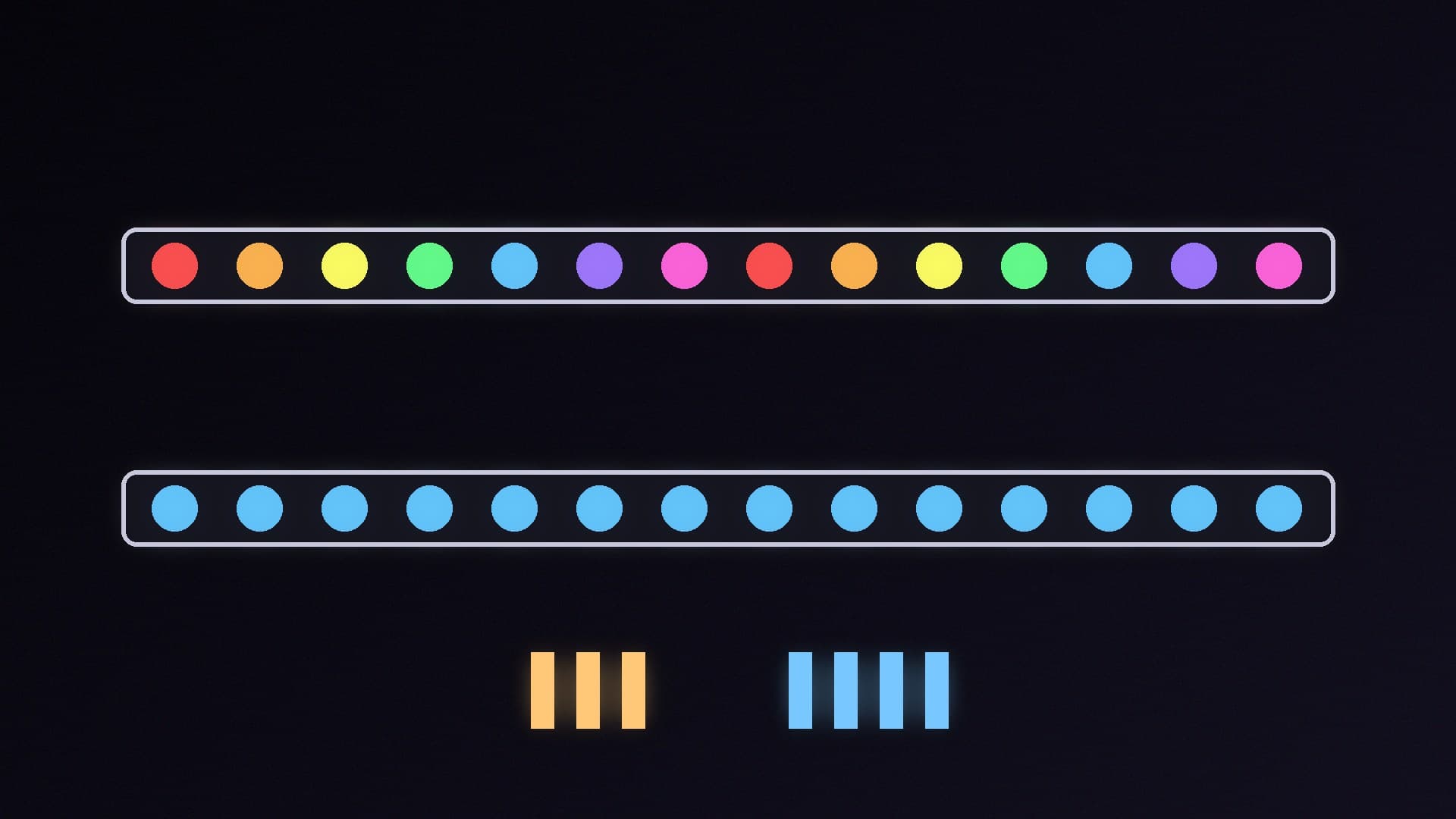
USB4 and Thunderbolt 5 ports look identical. Both use USB-C, both can carry data, video and power over one cable, and Thunderbolt 5 is built on the latest version of USB4. The difference is in what each one guarantees. A Thunderbolt 5 port has to meet a high minimum standard, while a USB4 port can be anything from 20Gbps to 80Gbps depending on what the maker chose to support.
This guide compares the two using the USB Implementers Forum (USB-IF) and Intel specifications. Forge PC hasn't tested Thunderbolt 5 or USB4 hardware for this article.
The short answer
| USB4 | Thunderbolt 5 |
|---|
Connector | USB-C | USB-C |
Minimum PC speed (Intel's comparison) | 20Gbps | 80Gbps, plus 120Gbps Bandwidth Boost |
Fastest mode | 80Gbps (USB4 Version 2.0), or 120Gbps one way | 80Gbps both ways, or 120Gbps one way |
Minimum PCIe data for storage and eGPUs | Not specified in Intel's table | 64Gbps |
Minimum port power for accessories | 7.5W | 15W |
PC charging | No requirement listed | Required up to 140W on at least one port, up to 240W available |
Certification | USB-IF compliance | Mandatory Intel certification for PCs, accessories and cables |
Who controls it | USB-IF | Intel |
If you just want the fastest, most predictable port, look for the Thunderbolt 5 logo. If you see "USB4", check the exact speed on the spec sheet.
USB4 started life as Thunderbolt. The USB-IF says the USB4 specification is "based on the Thunderbolt protocol specification contributed by the Intel Corporation", and that it lets a single high-speed link be shared dynamically between data and display traffic. That's why USB4 and Thunderbolt devices usually work with each other.
In October 2022, the USB-IF published USB4 Version 2.0, which raised the top speed to 80Gbps. According to the announcement, it uses a new PAM3 signal encoding, works over existing 40Gbps passive USB-C cables as well as new 80Gbps active cables, and can be configured asymmetrically to send up to 120Gbps in one direction while keeping 40Gbps in the other. It also aligns with DisplayPort 2.1 and PCI Express 4.0, and stays backward compatible with all previous versions of USB.
Thunderbolt 5 is Intel's certified version of that technology. Intel says it supports USB4 Version 2.0, DisplayPort 2.1 and PCIe Gen 4.
Speed: guaranteed vs optional
The biggest difference is what each standard requires as a minimum.
Thunderbolt 5 must deliver 80Gbps in both directions. Its Bandwidth Boost feature detects heavy video traffic, such as high-refresh-rate monitors, and raises the bandwidth to 120Gbps in one direction while keeping 40Gbps in the other. Intel says it supports two 8K monitors (using Display Stream Compression).
USB4 has a minimum PC speed of 20Gbps in Intel's comparison table. A USB4 port can support 40Gbps or 80Gbps, but it doesn't have to.
So a port labelled "USB4" on a laptop or motherboard may be a quarter of the speed of a Thunderbolt 5 port. The USB-IF says specification names aren't meant to describe products to consumers, and its announcement refers to speeds as USB 20Gbps, USB 40Gbps and USB 80Gbps, so look for the speed rather than the version number.
Storage and external graphics
For external SSDs and graphics enclosures, the PCIe data figure matters more than the headline speed, because those devices talk to the PC over tunnelled PCIe. Intel lists a minimum of 64Gbps of PCIe data for Thunderbolt 5 and 32Gbps for Thunderbolt 4, and claims up to twice the storage and eGFX throughput of Thunderbolt 4. Its table doesn't list a PCIe minimum for USB4, so support varies by device.
So for an external SSD or a graphics dock such as ASUS's USB4-based XG Core, check which interface and speed it supports and whether your PC's port matches. If you're shopping for a drive, our best external SSD guide explains which interface each pick needs.
Power, charging and docks
Intel's requirements for Thunderbolt 5 PCs include:
charging of up to 140W on at least one port, with up to 240W available on some devices;
at least 15W of power for accessories on each port, against 7.5W for USB4;
waking the PC from sleep when it's connected to a Thunderbolt dock;
daisy-chaining, which Intel says can pass data and video down a chain of up to five Thunderbolt accessories.
A Thunderbolt 5 dock such as the Dell Thunderbolt 5 Smart Dock relies on that bandwidth to run several monitors and USB devices over one cable.
Certification and security
Thunderbolt requires mandatory certification for every shipping computer, accessory and cable, plus cable testing and quality audits for cable makers. Intel also requires DMA protection based on Intel VT-d, which guards against devices reading memory directly without permission. USB4 devices must comply with the USB4 specification, but Intel's table doesn't list certification or DMA protection as USB4 requirements.
In practice, that means a Thunderbolt 5 laptop, dock and cable are designed to work together at full speed, whereas USB4 products need a closer look at the spec sheet.
What about desktop PCs?
On desktops, USB4 and Thunderbolt depend on the motherboard.
AMD: TechPowerUp's summary of AMD's 800-series chipsets says X870E and X870 boards mandate USB4, while B850 "doesn't mandate USB4 connectivity" and leaves it up to board makers. We compare the two in B850 vs X870.
Intel: Thunderbolt support on desktop boards varies by model, as we explain in B860 vs Z890. Check the board's spec page for a Thunderbolt port or header.
Add-in cards: ASUS's ThunderboltEX 5 card adds two USB-C ports using Intel's JHL9580 Thunderbolt 5 controller, with up to 120Gbps for Thunderbolt and USB4 devices, a combined 130W of charging, three mini DisplayPort inputs and a PCIe 4.0 x4 interface. It needs a motherboard with a Thunderbolt header, so check ASUS's support list before buying.
Intel says Thunderbolt 5 is supported on PCs running Windows 11 version 23H2 or later and Linux kernel 6.7 or later.
If a USB-C device isn't working on your PC, our guide to fixing a USB device not recognised in Windows 11 covers the basics.
Which should you buy?
Choose Thunderbolt 5 if you want guaranteed 80Gbps, use a dock with several high-resolution monitors, connect an external GPU, or charge a power-hungry laptop over USB-C.
USB4 is fine for most external SSDs and simple docks, as long as you confirm the speed (40Gbps or 80Gbps) on the spec sheet.
Use the right cable. Speed also depends on the cable. Thunderbolt 5 cables are certified for up to 120Gbps at up to 2 metres, according to Intel.
Our verdict
USB4 and Thunderbolt 5 share the same connector and core technology, and Thunderbolt 5 is built on USB4 Version 2.0. The difference is the guarantee: Thunderbolt 5 requires 80Gbps with a 120Gbps boost, 64Gbps of PCIe data, 15W for accessories, 140W charging on at least one port and certified cables, while USB4 can be as slow as 20Gbps. Pick Thunderbolt 5 for docks, eGPUs and multi-monitor setups; USB4 is fine for many external drives if you check the advertised speed. Forge PC hasn't tested Thunderbolt 5 or USB4 hardware for this guide.