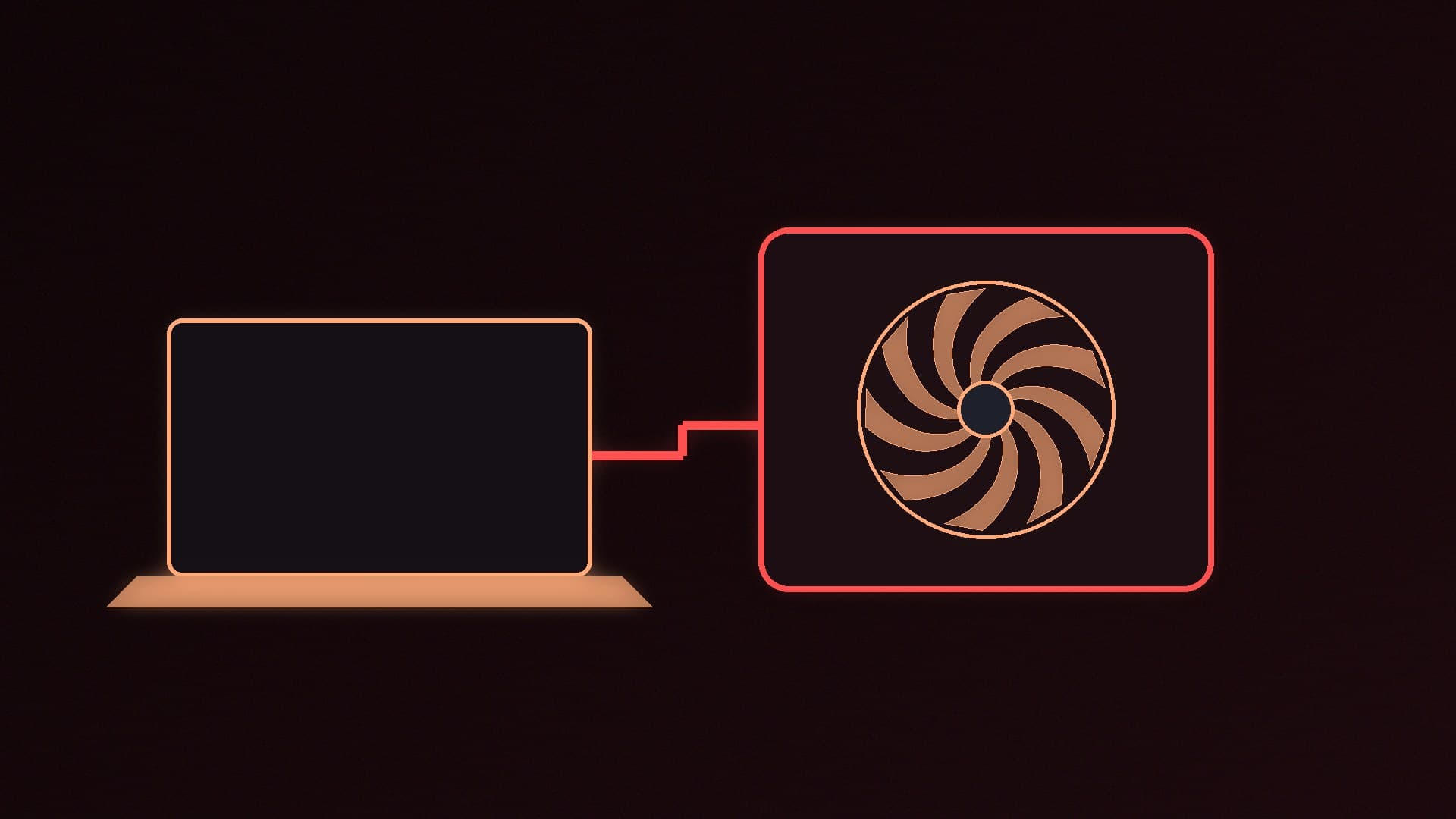
ASUS has announced the XG Core Radeon RX 9060 XT LP 16GB GDDR6, a small external graphics enclosure that connects to laptops, mini PCs and gaming handhelds over USB4. The idea is simple: plug in one cable and get a discrete RDNA 4 graphics card with 16GB of video memory, without opening up your device. The catch, spotted by Notebookcheck, is that the GPU inside runs at a 75W power limit and at much lower clock speeds than a normal desktop RX 9060 XT.
Forge PC has not tested the XG Core. This report is based on ASUS's press release, plus specifications reported by Notebookcheck and TweakTown. UK context prices come from SpecPrice and were checked on 15 November 2026.
What ASUS has announced
According to ASUS, the XG Core:
uses a Radeon RX 9060 XT LP GPU based on AMD's RDNA 4 architecture, with 16GB of GDDR6
connects to a host over USB4 with up to 40Gbps of bandwidth, and also supports compatible Thunderbolt 3 systems
measures 144 x 117 x 39mm, small enough for a gear bag
has HDMI and DisplayPort outputs, so you can plug a monitor straight into it
works with ASUS GPU Tweak III for clock, memory, voltage and fan control, plus on-screen monitoring
supports compatible laptops, mini PCs and handhelds, naming the ROG Ally X and ROG Xbox Ally X
ASUS also pitches it for local AI. It says the XG Core supports AI image generation and large language model inference in compatible software, naming ComfyUI, LM Studio and Ollama, and adds that performance and compatibility depend on the workload, model and system. It also says host connectivity and external GPU support should be checked before use.
The 75W limit
Notebookcheck reports that the XG Core runs at a default game clock of 1,010MHz and a boost clock of 1,600MHz. OC mode in GPU Tweak III raises those only slightly, to 1,030MHz and 1,620MHz. AMD's reference specification for the RX 9060 XT is a 2,530MHz game clock and a boost clock of up to 3,130MHz, so the XG Core's clocks are roughly half.
The reason is power. Notebookcheck and TweakTown both report a 75W limit for the GPU, compared with 160W for full desktop RX 9060 XT models, according to TweakTown.
The rest of the GPU is unchanged. Notebookcheck says the XG Core keeps the same 2,048 stream processors, 16GB of GDDR6, 20Gbps memory speed and 128-bit memory bus as the desktop RX 9060 XT. It also lists HDMI 2.1b and DisplayPort 2.1a outputs, support for up to two external monitors, and a separate USB-C power input.
Lower clocks alone can't tell you exactly how much slower the XG Core will be in games, and there are no independent benchmarks yet. Notebookcheck notes that ASUS previously claimed more than 60fps in selected AAA games at 1440p, but without detailed test conditions or comparisons. Treat that as a manufacturer claim until reviews arrive.
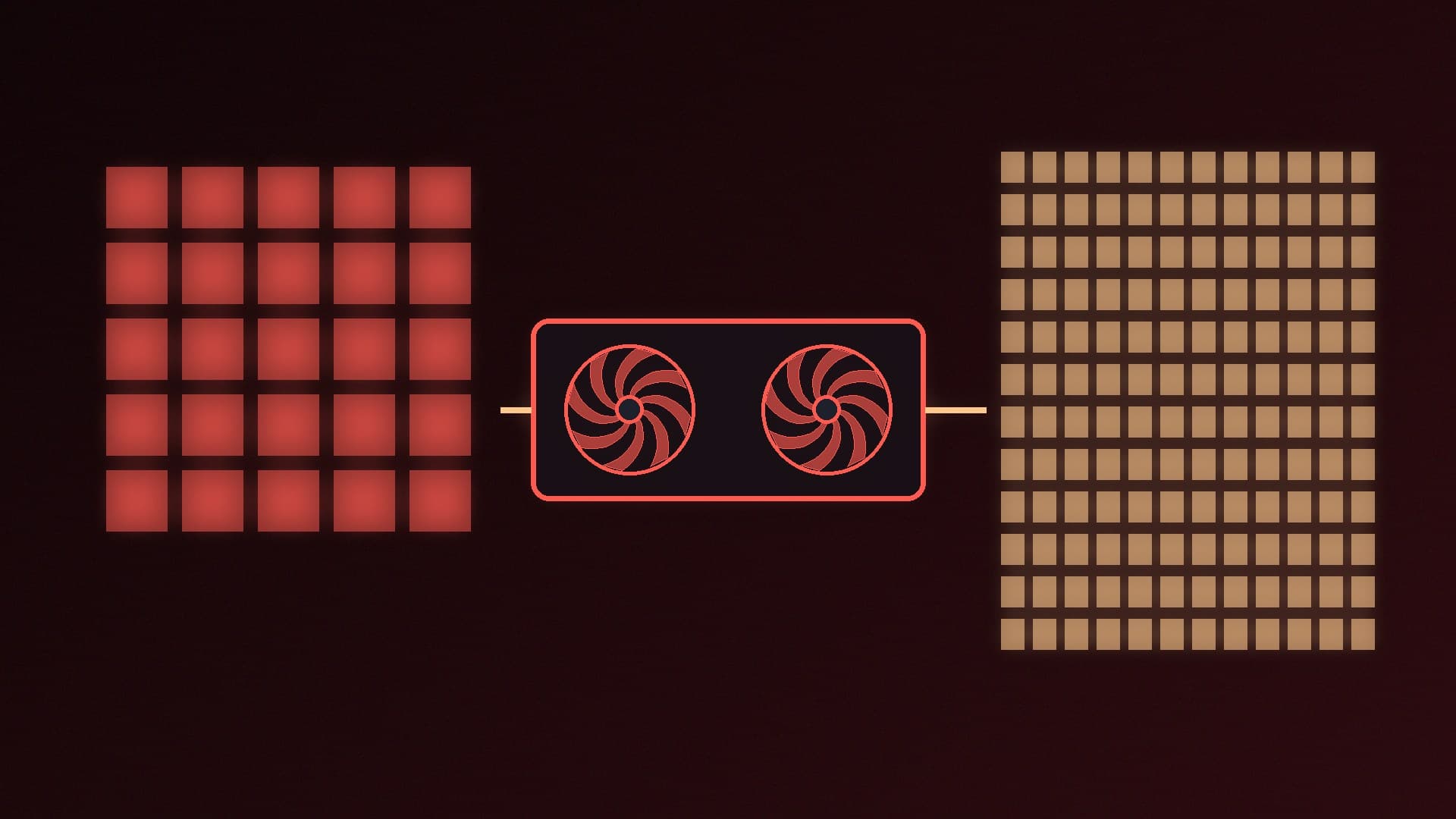
The connection is the other limit. A desktop RX 9060 XT sits in a PCIe slot; the XG Core talks to its host through a 40Gbps USB-C link. Notebookcheck describes this as another potential bottleneck.
For local AI, the 16GB of memory is the more interesting part. VRAM decides which models fit on the GPU at all, so a 16GB external card could let a thin laptop or handheld run models it would otherwise struggle with. Our VRAM guide and our laptop vs desktop for local AI comparison explain why memory capacity matters so much. Just remember that the reduced clocks will also affect how fast those models run.
Price and UK availability
ASUS has not announced a price or release date. For context, a desktop Radeon RX 9060 XT 16GB was listed at £579.98 at Scan on 15 November 2026, according to SpecPrice (approximate, and prices change often). The XG Core adds an enclosure, power input and display outputs, so don't expect it to undercut a desktop card.
If you have a desktop PC with a PCIe x16 slot, a normal graphics card makes far more sense. Our RX 9060 XT vs RTX 5060 Ti 16GB comparison and best budget graphics card guide cover those options.
Our verdict
The XG Core is a neat idea: a pocket-sized box that gives USB4 laptops, mini PCs and handhelds a 16GB RDNA 4 GPU with its own display outputs. But the 75W limit roughly halves the clock speeds compared with AMD's reference RX 9060 XT, and a 40Gbps link is no substitute for a PCIe slot. Without a price or independent reviews, the safest advice is to wait. Desktop owners should simply buy a normal graphics card. Forge PC has not tested the XG Core; specifications are from ASUS, Notebookcheck and TweakTown, and the UK desktop price was checked on 15 November 2026.