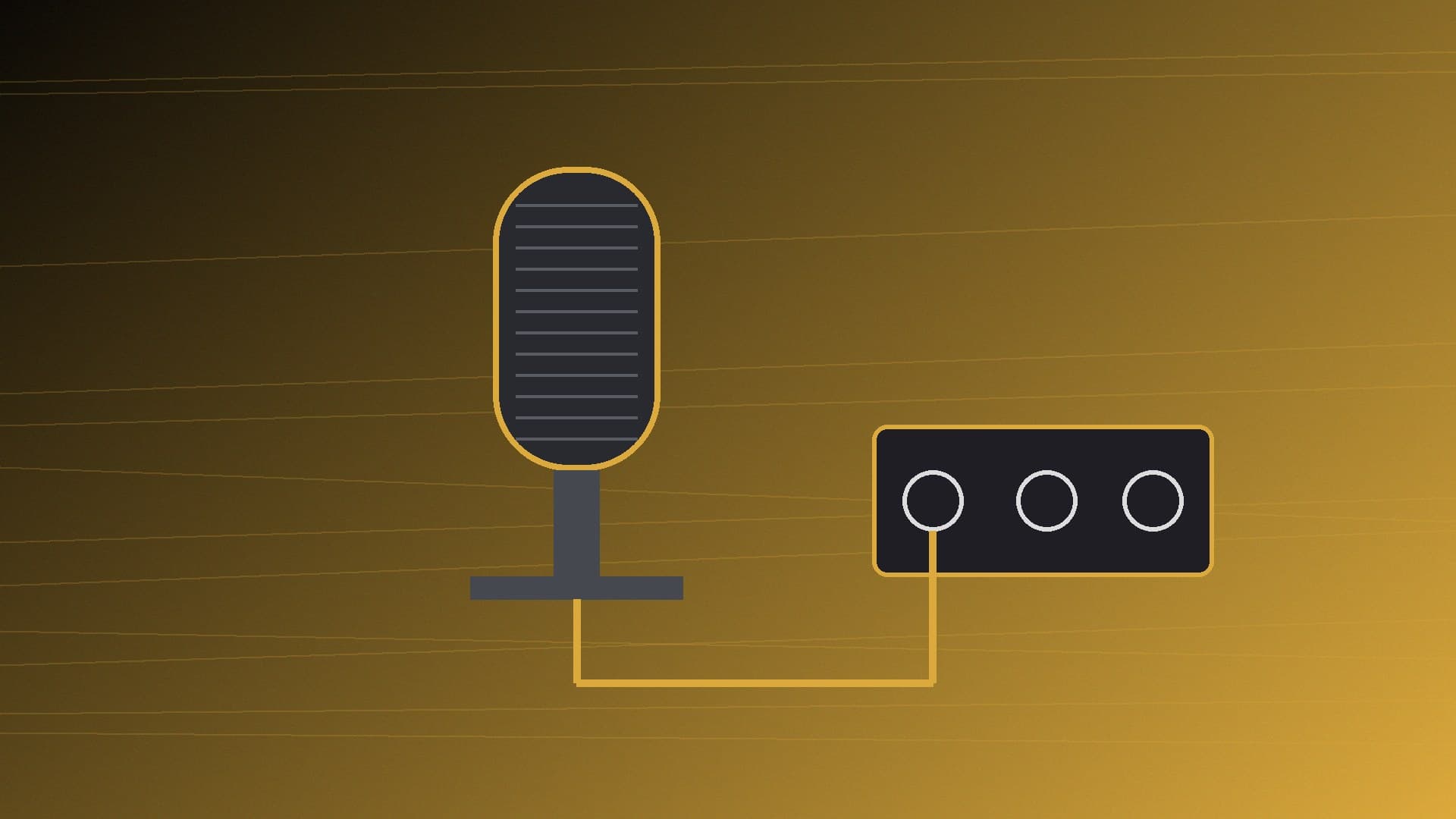
An XLR microphone plugs into an audio interface or mixer rather than straight into a USB port. That costs a little more and takes a little more setting up, but it lets you upgrade the interface later, run more than one mic and choose from the microphones broadcasters actually use. These picks are based on Shure, RØDE and Audio-Technica's official product pages. Prices are Shure UK's recommended retail prices, checked on 28 November 2026, and are approximate; street prices vary.
If you're still deciding between connection types, read USB vs XLR microphones first, and our guide to connecting an XLR microphone to a PC covers interfaces, phantom power and gain.
Quick picks
Pick | Microphone | Type | Why |
|---|
Best overall | Shure SM7dB | Dynamic, built-in preamp | SM7B sound with up to +28dB of extra gain |
Classic choice | Shure SM7B | Dynamic | The broadcast standard, needs a high-gain interface |
Best value dynamic | RØDE PodMic | Dynamic | Built-in pop filter, shock mount and swing mount |
Best for noisy rooms | RØDE Procaster | Dynamic | Tight pickup pattern, 10-year warranty |
Best USB and XLR hybrid | Shure MV7+ | USB-C and XLR | Start on USB, move to an interface later |
Best studio condenser | RØDE NT1 5th Generation | Condenser, XLR and USB | 4dBA self-noise, 32-bit float USB output |
Best budget condenser | Audio-Technica AT2020 | Condenser | Simple cardioid condenser, XLR only |
Best overall: Shure SM7dB
The SM7dB is Shure's SM7B with a built-in preamp. Shure says the preamp adds a selectable +18dB or +28dB of low-noise gain, which addresses the main complaint about the original: many affordable interfaces struggle to drive it. The preamp runs from +48V phantom power, and a bypass switch turns it off to give original SM7B behaviour. Shure lists a 50 to 20,000Hz frequency range, the familiar bass roll-off and presence boost switches, and a cardioid pattern. Shure UK's RRP is £549 (approximate, 28 November 2026). If your interface can supply phantom power, this is the easiest way to get the SM7 sound.
Classic choice: Shure SM7B
The SM7B is the dynamic microphone you see on countless podcasts and streams. Shure highlights its flat, wide-range response, bass roll-off and presence boost controls, air-suspension shock isolation, shielding against hum from monitors and other electronics, and a cardioid pattern. It now ships with the A7WS close-talk windscreen. It has no preamp, so pair it with an interface that has plenty of clean gain, or an in-line booster. Shure UK's RRP is £409 (approximate, 28 November 2026), which makes it the cheaper SM7 if your interface already has the gain.
Best value dynamic: RØDE PodMic
RØDE describes the PodMic as a broadcast-quality dynamic microphone for podcasting, livestreaming and speech, with an internal pop filter, an internal shock mount and an integrated swing mount, in an all-metal body. RØDE lists a tight cardioid pickup pattern to reduce room noise. Like most dynamic mics it needs a decent amount of gain from your interface, but it's a sensible way into XLR without spending SM7 money.
Best for noisy rooms: RØDE Procaster
The Procaster is RØDE's broadcast dynamic microphone for podcasting, streaming, voice-over and radio. RØDE says its tight polar pattern helps reject ambient noise, and it has an internal pop filter, capsule shock mounting and a robust all-metal build. It also carries a 10-year warranty. It suits a desk in a room you can't treat acoustically; pair it with a microphone arm to keep it close to your mouth.
Best USB and XLR hybrid: Shure MV7+
The MV7+ has both USB-C and XLR outputs, so you can plug it straight into a PC today and move to an interface later. Shure adds an LED touch panel for muting, onboard processing features and a headphone jack for latency-free monitoring. Shure UK's RRP is £295 (approximate, 28 November 2026). If you only ever plan to use USB, our best USB microphone guide has cheaper options.
Best studio condenser: RØDE NT1 5th Generation
The NT1 5th Generation is a large-diaphragm cardioid condenser with RØDE's Dual Connect output, offering XLR and USB. RØDE quotes 4dBA self-noise, which it calls the world's quietest studio condenser, and a 32-bit float digital output over USB that it says can't clip. A condenser picks up more of the room than a dynamic mic, so it's best in a quiet, treated space or for singing and instruments. Read dynamic vs condenser microphones if you're unsure which suits your room.
Best budget condenser: Audio-Technica AT2020
The AT2020 is a simple cardioid condenser microphone with an XLR connector and no USB. Audio-Technica lists a 20 to 20,000Hz frequency response and a phantom power requirement of 48V DC, 2mA typical, and it weighs 345g. It's an easy first condenser for a quiet room, paired with any interface that supplies phantom power.
What else you need
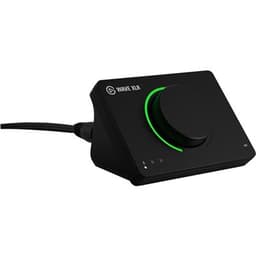
An audio interface or mixer with enough clean gain for dynamic mics and +48V phantom power for condensers and the SM7dB. Our best audio interface for streaming guide covers the options, and the Elgato Wave XLR MK.2 is in our specs database.
An XLR cable: check each microphone's box contents, as not every XLR microphone includes one.
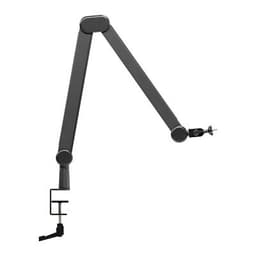
A boom arm such as the Elgato Wave Mic Arm MK.2 to keep a dynamic mic close to your mouth, which is how these broadcast microphones are designed to be used.
How to choose
Untreated room or noisy PC fans? Choose a dynamic mic (SM7dB, SM7B, PodMic, Procaster) and keep it close.
Interface with limited gain? The SM7dB's built-in preamp, or a hybrid like the MV7+, avoids buying an in-line booster.
Quiet room, singing or instruments? A condenser such as the NT1 5th Generation or AT2020.
Not sure you'll stick with XLR? The MV7+ and NT1 5th Generation also work over USB.