This comparison is based on AMD's and NVIDIA's official specification pages and Ollama's hardware support documentation, all read on 24 November 2026. We've left out prices because they move around a lot, especially in the run-up to Black Friday, so check current UK listings before you buy.
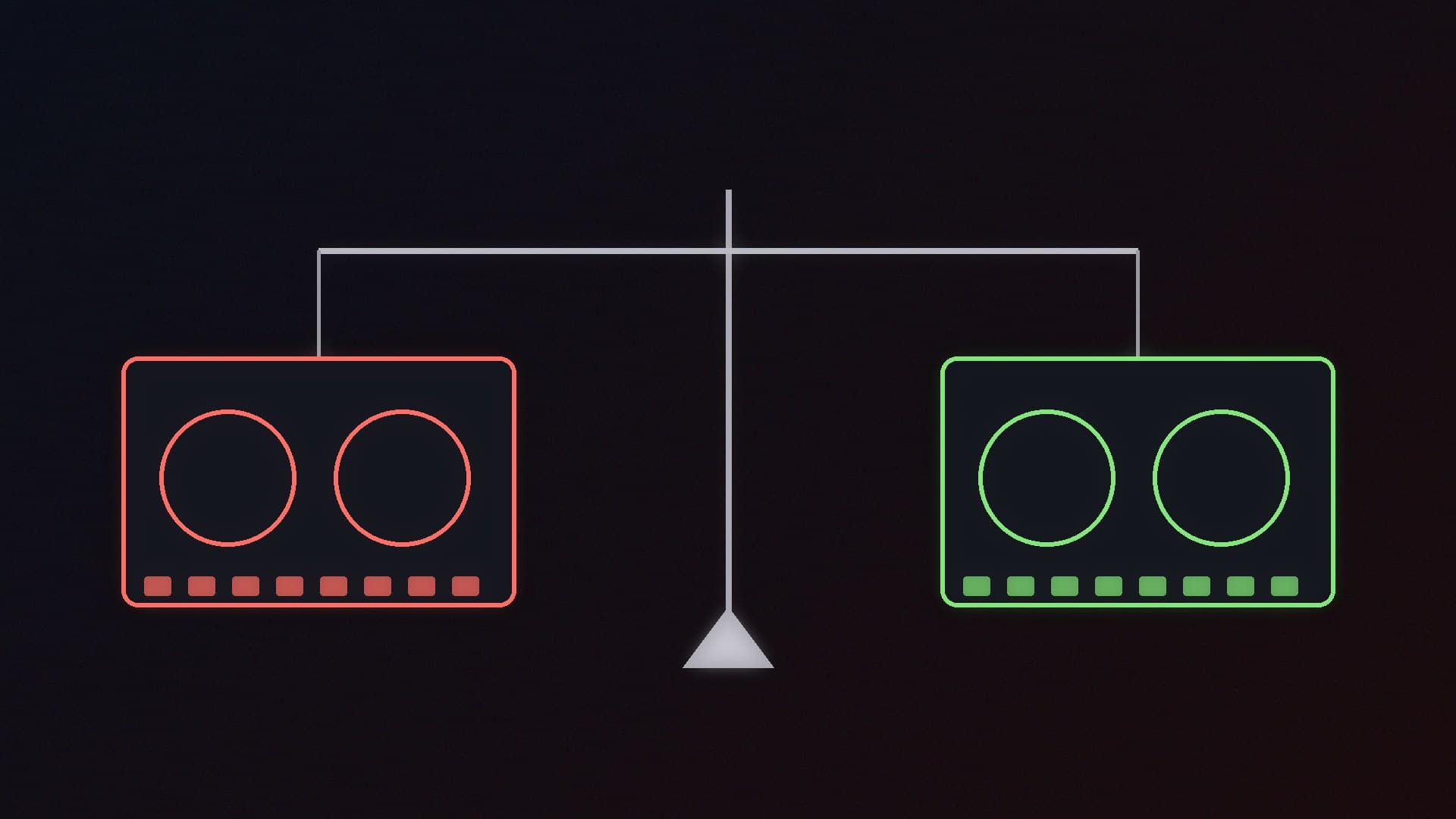
The RX 9070 XT and RTX 5080 are both popular high-end gaming cards, and plenty of people buying one also want to run AI models locally, whether that's a chatbot in Ollama or LM Studio, a coding assistant or an image generator such as ComfyUI. Both cards have exactly 16GB of VRAM, which shapes the decision more than you might expect.
At a glance
| AMD Radeon RX 9070 XT | NVIDIA GeForce RTX 5080 |
|---|
VRAM | 16GB GDDR6 | 16GB GDDR7 |
Memory interface | 256-bit | 256-bit |
Memory speed / bandwidth | Up to 20Gbps, up to 640GB/s | GDDR7 (bandwidth not listed on NVIDIA's UK spec page) |
AI hardware | 128 AI accelerators | 5th-generation Tensor Cores |
AI throughput (maker's figure) | 389 TOPS INT8, 779 TOPS INT4 (dense) | 1,801 AI TOPS |
Board power | 304W typical board power | 360W total graphics power |
Recommended PSU | 750W minimum | 850W required system power |
Power connectors (reference spec) | 2x 8-pin | 3x 8-pin via adapter, or one 450W+ PCIe Gen 5 cable |
Ollama GPU support | ROCm on Linux; Vulkan on Windows | CUDA on Windows and Linux |
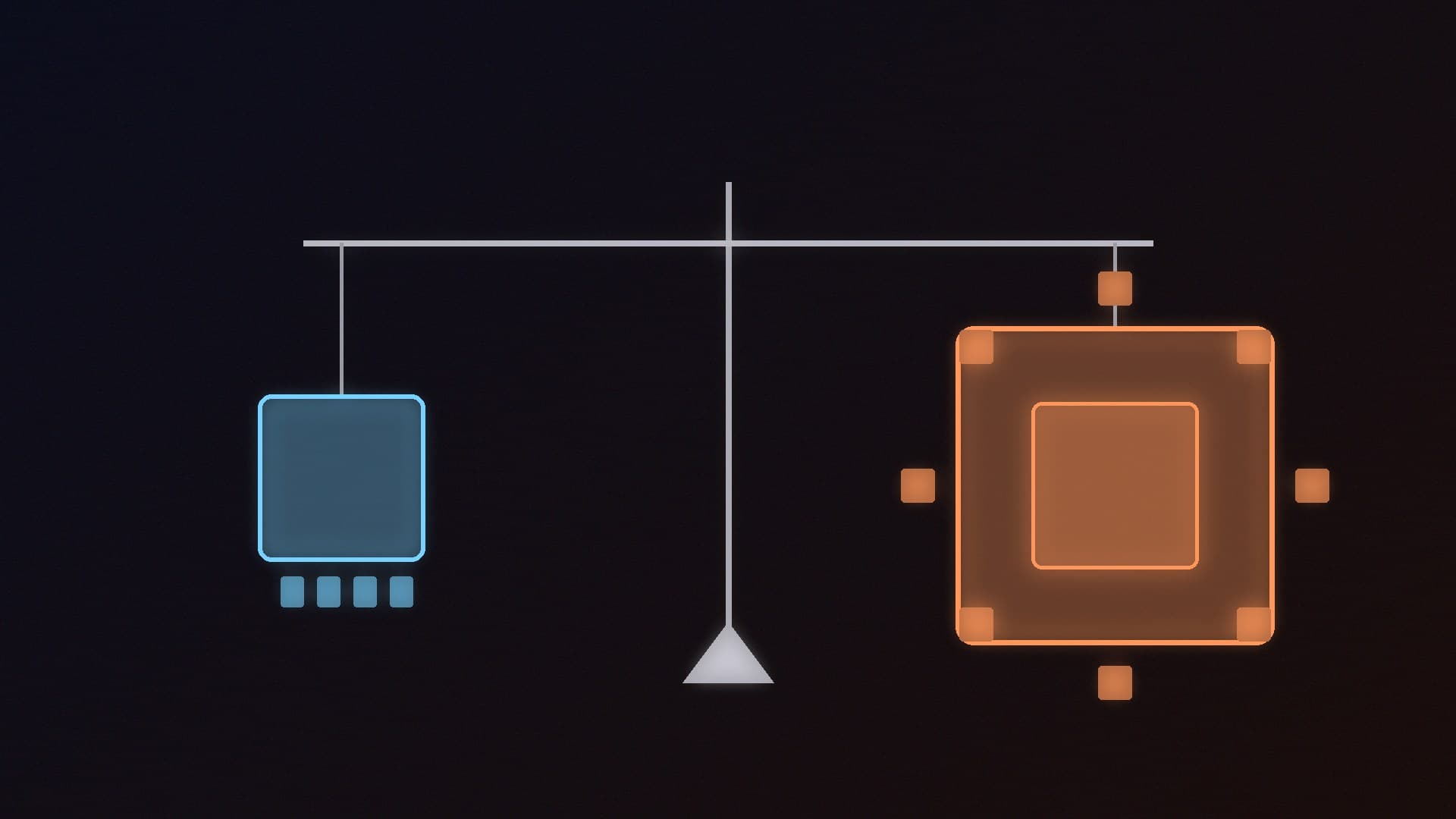
A word of warning about the AI throughput row: AMD and NVIDIA quote these figures in different ways. AMD lists separate numbers for each precision, with and without structured sparsity (its INT4 figure doubles to 1,557 TOPS with sparsity, for example), while NVIDIA gives a single AI TOPS figure. They aren't directly comparable, and neither tells you how fast a real model will run.
Same VRAM, same model limits
Because both cards have 16GB, they can load the same models. In practice that means 4-bit quantised models up to roughly the 14B class with room left for a reasonable context, or slightly larger models with a short context. Neither card can hold a 27B or 32B model entirely in VRAM at typical 4-bit quality, so if your main goal is running bigger models, you'd be better off looking at a 24GB or 32GB card. Our best GPU for local LLMs guide covers the options, and our how much VRAM do you need guide explains the limits in more detail.
When a model does fit, text generation speed is largely governed by memory bandwidth. Both cards use a 256-bit bus, but the RTX 5080 uses newer GDDR7 memory where the RX 9070 XT uses GDDR6 at up to 20Gbps. That gives the NVIDIA card a bandwidth advantage, although NVIDIA doesn't list a bandwidth figure on its UK spec page, so we can't put an official number on the gap. Our explainer on memory bandwidth and local LLM speed explains why it matters.
Software support: the biggest difference
This is where the two cards really diverge, and it matters more than any spec-sheet figure.
RTX 5080: Ollama's documentation lists the RTX 5080 among its supported compute capability 12.0 cards. CUDA is the first-class target for almost every local AI tool, so you can expect Ollama, LM Studio, llama.cpp, ComfyUI and most Python-based projects to use the card without extra steps on Windows or Linux.
RX 9070 XT: Ollama's documentation lists the RX 9070 XT (LLVM target gfx1201) as supported through AMD's ROCm v7 on Linux. Its Windows ROCm list, however, currently only includes Radeon RX 7000-series and Radeon PRO W7000-series cards. On Windows, Ollama's additional GPU support comes from its Vulkan backend, which it says is enabled by default and works with the Vulkan support bundled with most GPU drivers. In other words, the RX 9070 XT can still be used for local LLMs on Windows, but through a different route than on Linux, and other AI apps vary in how well they support it. Our guide to running local AI on an AMD Radeon GPU covers the options, and CUDA vs ROCm vs Vulkan explains the trade-offs between the three.
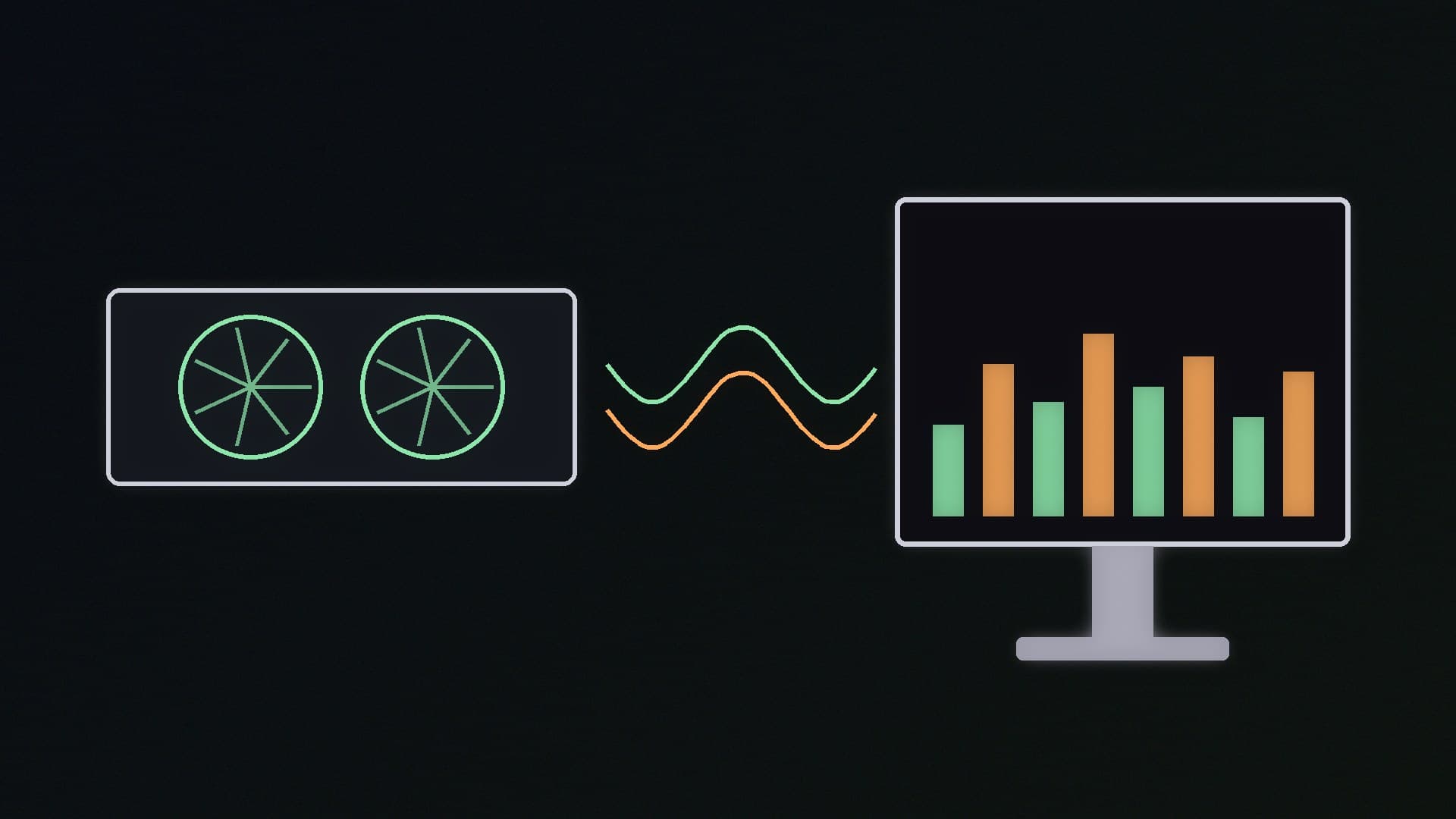
For image and video generation, check support for your exact tools before choosing AMD. CUDA is the default target for most of them, while AMD users may need specific builds or backends, or AMD-focused apps such as Amuse. If image generation is your main interest, the RTX 5080 is the less complicated choice.
Power, size and running costs
The RX 9070 XT is the more frugal card on paper: AMD lists a 304W typical board power and recommends at least a 750W power supply. NVIDIA lists 360W total graphics power for the RTX 5080 and an 850W required system power. That's not a huge difference for occasional use, but if you plan to leave a model loaded or run long batch jobs, the AMD card should draw a little less. Partner cards vary, so check the specific model's power connectors and length before buying. Our guide to choosing a PSU for a local AI PC is worth a read either way.
Which should you choose?
Choose the RTX 5080 if you use Windows, want image or video generation as well as chatbots, or simply want the widest software support with the fewest workarounds.
Choose the RX 9070 XT if it's noticeably cheaper when you buy, you mostly run LLMs in Ollama or LM Studio, or you plan to use Linux, where Ollama supports it through ROCm.
Consider neither if you need to run models above about 14B parameters at good quality; more VRAM will matter more than which of these two you pick.
If you're also weighing up NVIDIA's cheaper 16GB option, see our RX 9070 XT vs RTX 5070 Ti and RTX 5070 Ti vs RTX 5080 comparisons.
Product pages: PowerColor RX 9070 XT 16GB Reaper and NVIDIA GeForce RTX 5080 Founders Edition.
Our verdict
For local AI, the RTX 5080 is the easier recommendation: it has the same 16GB of VRAM as the RX 9070 XT but faster GDDR7 memory and CUDA support that almost every AI app uses by default on both Windows and Linux. The RX 9070 XT is a sensible alternative if it costs clearly less, especially on a Linux machine where Ollama supports it through ROCm, and it draws a little less power. Just remember that both cards share the same 16GB ceiling, so neither is the right buy if your real goal is running much bigger models.