All the specifications below come from AMD's official product pages for the Radeon AI PRO R9700 and the Radeon RX 9070 XT, read on 23 November 2026. We haven't quoted prices, because the R9700 is a workstation card sold through different channels and prices move a lot.
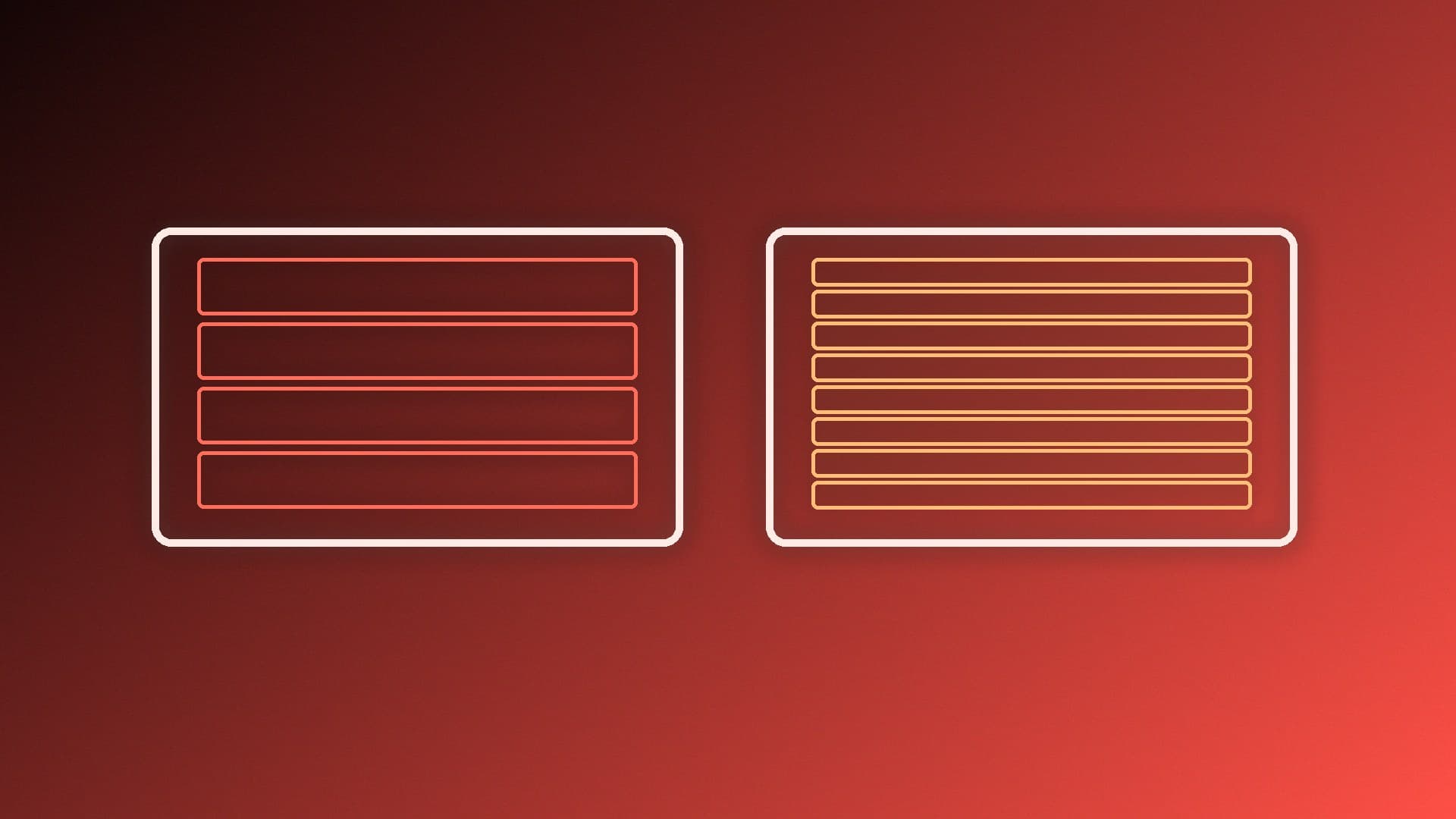
On paper, these two AMD cards look almost identical. Both have 64 compute units, 4,096 stream processors and 128 AI accelerators, and both use a 256-bit GDDR6 memory interface with up to 640GB/s of bandwidth. The headline difference is memory capacity: the Radeon AI PRO R9700 has 32GB, while the Radeon RX 9070 XT has 16GB. For gaming, that extra memory rarely matters. For local AI, it can decide which models you can run at all.
If you're weighing up the R9700 against NVIDIA's flagship, read our Radeon AI PRO R9700 vs RTX 5090 for local AI comparison. If you're looking at the RX 9070 XT against its usual NVIDIA rival, see RX 9070 XT vs RTX 5070 Ti for local AI.
Specs at a glance
| Radeon AI PRO R9700 | Radeon RX 9070 XT |
|---|
Compute units | 64 | 64 |
Stream processors | 4,096 | 4,096 |
AI accelerators | 128 | 128 |
Boost frequency | Up to 2,920MHz | Up to 2,970MHz |
Game frequency | 2,350MHz | 2,400MHz |
Peak FP16 matrix | 191 TFLOPS | 195 TFLOPS |
Peak INT8 matrix | 383 TOPS | 389 TOPS |
Peak INT4 matrix | 766 TOPS | 779 TOPS |
Memory | 32GB GDDR6 | 16GB GDDR6 |
Memory interface | 256-bit | 256-bit |
Memory bandwidth | 640GB/s | Up to 640GB/s |
Infinity Cache | 64MB | 64MB |
Board power | 300W (total board power) | 304W (typical board power) |
Minimum PSU recommendation | 750W | 750W |
Memory ECC | Yes (Linux only) | Not listed |
Cooling (AMD reference spec) | Active, dual-slot | Varies by partner card |
Interface | PCIe 5.0 x16 | PCIe 5.0 x16 |
Source: AMD's product pages. Partner versions of the RX 9070 XT from ASUS, Gigabyte, PowerColor, Sapphire and others can have different clocks, power limits and sizes, so check the exact model you're buying.
Compute: effectively a tie
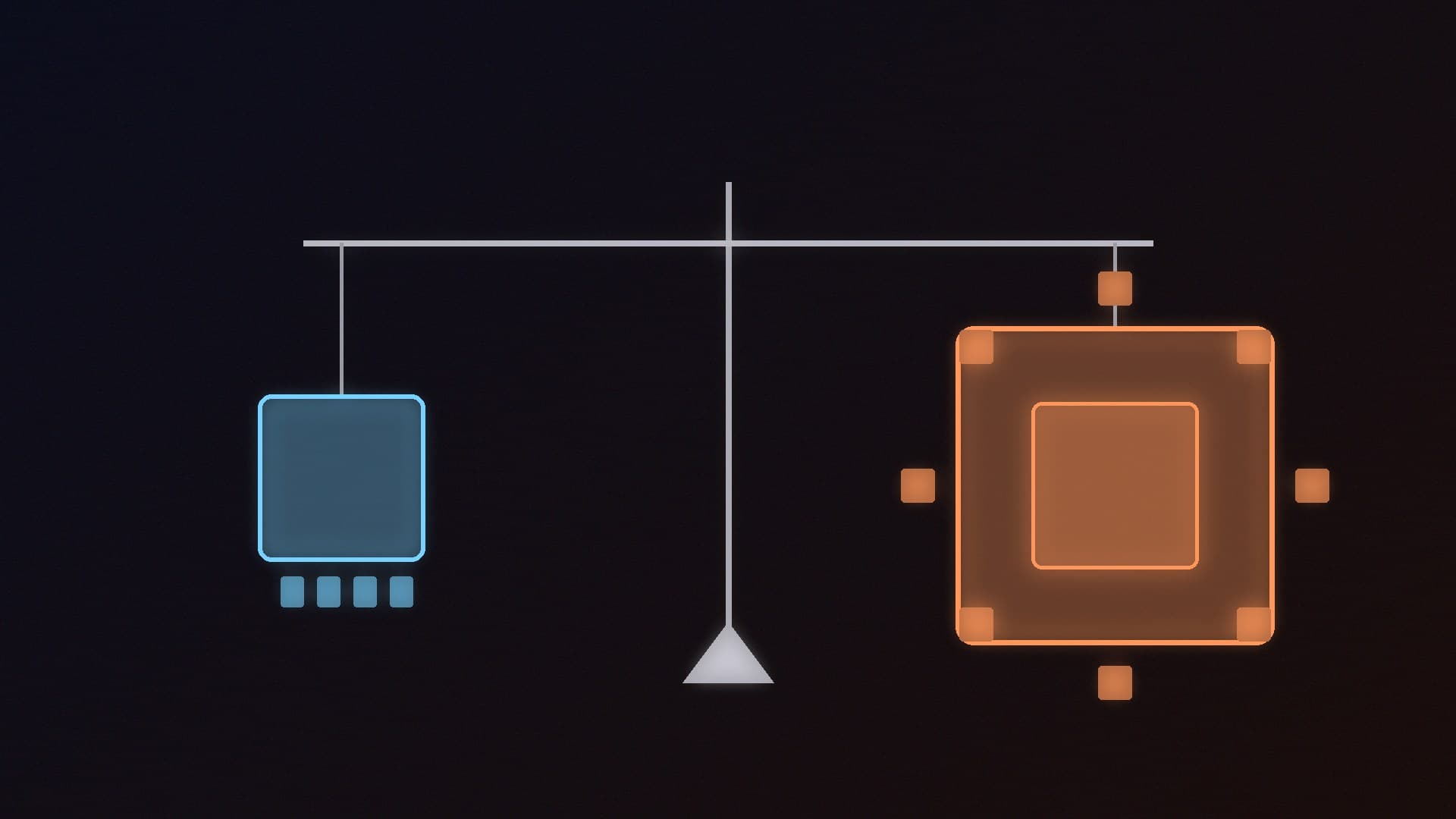
The R9700's figures are fractionally lower than the RX 9070 XT's. Its boost clock is up to 2,920MHz against 2,970MHz, and AMD quotes 191 TFLOPS of peak FP16 matrix performance against 195 TFLOPS. That's a gap of around 2%, which you're unlikely to notice in practice. Peak figures are theoretical maximums, not measured results, and real workloads rarely get close to them.
The practical takeaway is that if a model fits comfortably in 16GB, the R9700 shouldn't be meaningfully faster than the RX 9070 XT. They share the same GPU configuration and the same memory bandwidth, and bandwidth is the main limit on how quickly a large language model (LLM) generates text. Our explainer on memory bandwidth and local LLM speed explains why. That's an inference from AMD's specs, not a benchmark result.
VRAM: the whole reason the R9700 exists
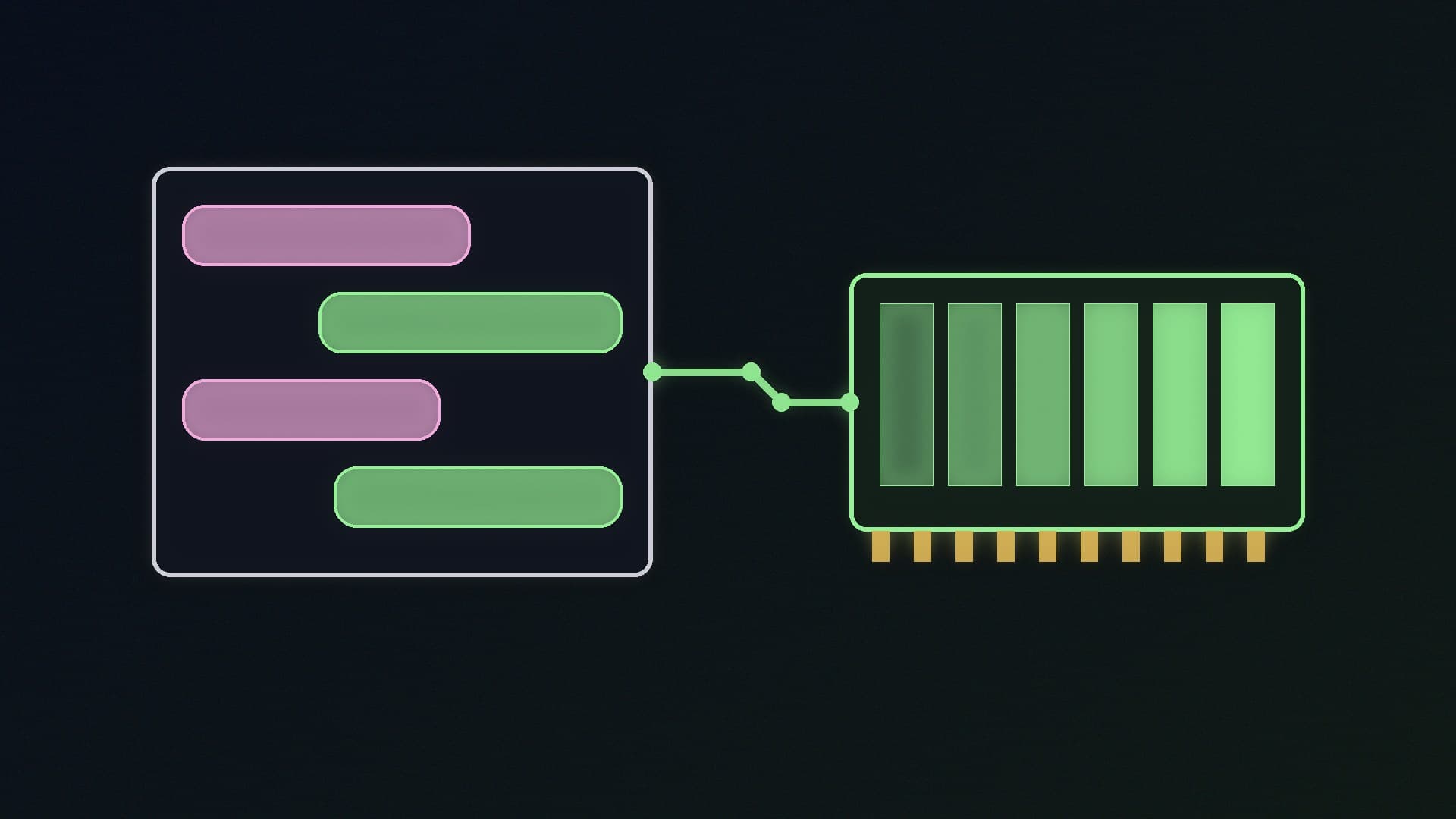
The R9700's 32GB is where it pulls ahead. When you run an LLM locally with tools such as Ollama, LM Studio or llama.cpp, the model's weights and its context (the KV cache) need to fit in video memory to run at full speed. If they don't fit, the software offloads part of the model to system RAM and the CPU, and text generation usually slows down a lot.
With 16GB, the RX 9070 XT is a good fit for smaller and mid-sized quantised models, with some room left for context. With 32GB, the R9700 can hold larger quantised models, run longer context windows, or keep more than one model loaded at the same time. Exactly which models fit depends on the model size, the quantisation level and the context length you choose, so check the file sizes before you buy. Our guides to how much VRAM you need and LLM context length and VRAM go through the maths.
It also matters for image and video generation. Bigger diffusion models and higher resolutions use more memory, and on a 16GB card you'll sometimes need low-VRAM modes or smaller model versions. Our guide to running ComfyUI with low VRAM covers those options, but the R9700 will need them less often.
Two cards or one?
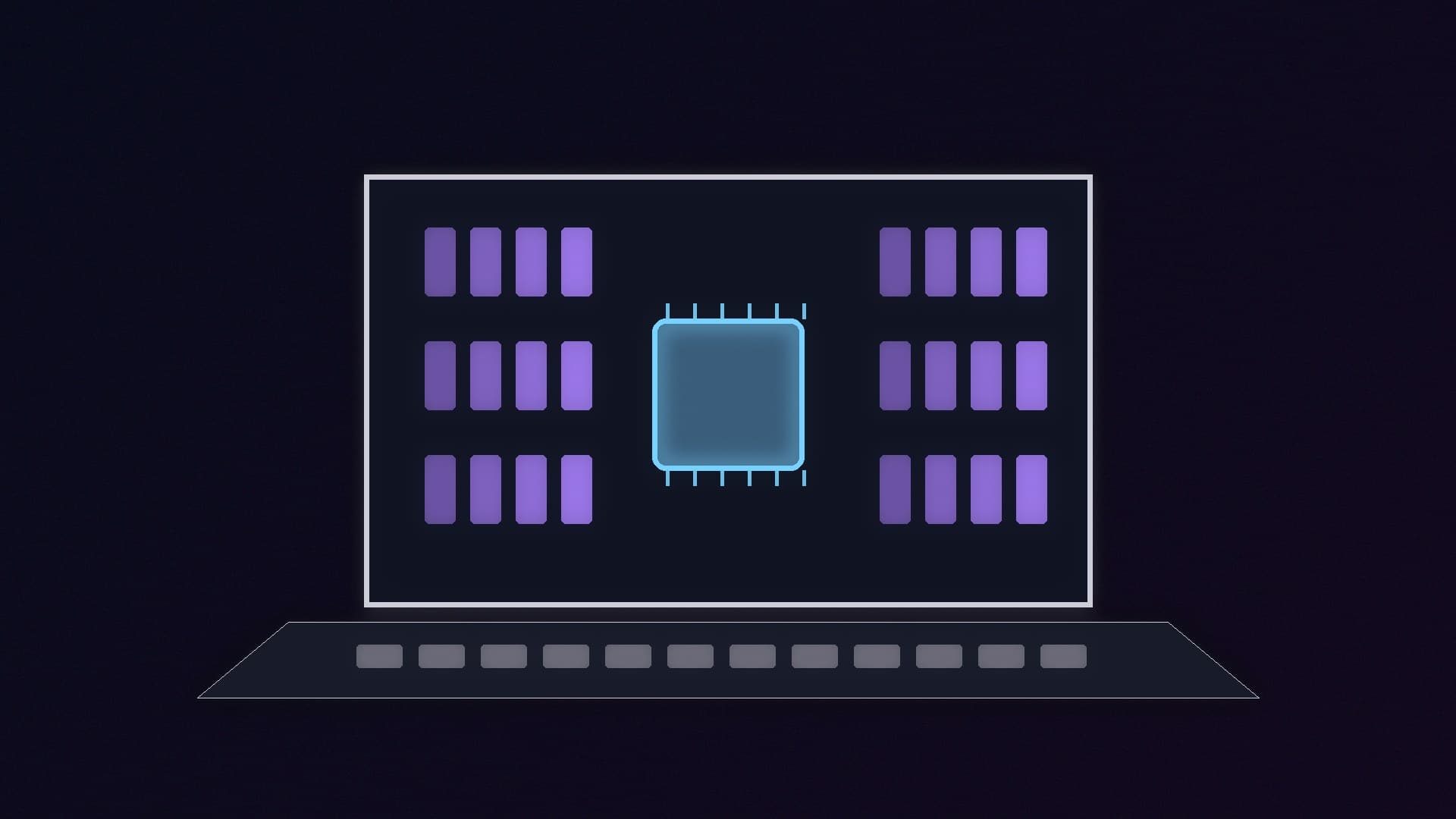
Because the RX 9070 XT costs less, it's tempting to think two of them would equal one R9700. In terms of total memory, two 16GB cards do add up to 32GB, and tools like llama.cpp can split a model across GPUs. But splitting adds complexity: you need a motherboard with enough suitable PCIe slots, a case with room for two cards, and a power supply that can handle two cards that AMD rates at 304W each. Our guide to running a local LLM on two GPUs explains the trade-offs. A single 32GB card keeps the whole model on one GPU, which is simpler.
Power, cooling and fit
The power figures are close. AMD lists 300W total board power for the R9700 and 304W typical board power for the RX 9070 XT, with a 750W minimum PSU recommendation for both. If you're building around either card, our guide to choosing a PSU for a local AI PC explains how to size your power supply with some headroom.
AMD's R9700 page lists active cooling in a dual-slot design. That matters if you're planning to fit more than one card, because many gaming RX 9070 XT models are thicker than two slots. Check the exact dimensions of any partner card before you buy.
The R9700 also supports ECC memory, but AMD says this is on Linux only. ECC can detect and correct some memory errors, which is useful for long training runs or work where reliability matters more than cost. For most home users running chatbots and image generators, it's a nice extra rather than a must-have.
Software support
Both cards are listed in AMD's ROCm 7.2.1 support matrix for Linux, which we checked on 23 November 2026, so you can use either for PyTorch and other ROCm-based AI tools on supported Linux distributions. On Windows, many popular apps also support Radeon GPUs, but the details vary by app and backend. Our CUDA vs ROCm vs Vulkan for local AI explainer and our guide to running local AI on an AMD Radeon GPU are good places to start.
The RX 9070 XT is a gaming card first. If you also want your PC to play games, it is the more natural choice. The R9700 is aimed at workstations and AI, so check that it suits any non-AI work you plan to do with it.
Who should buy which?
Choose the Radeon RX 9070 XT if:
You mainly run smaller or mid-sized quantised models that fit in 16GB.
You also want a strong gaming card.
You'd rather spend less now and accept that some larger models won't fit entirely on the GPU.
Choose the Radeon AI PRO R9700 if:
You want to run larger models, longer contexts or several models at once without offloading to system RAM.
You do heavier image or video generation work that pushes past 16GB.
You want ECC memory support on Linux, or a dual-slot card for a multi-GPU workstation.
Our verdict
The Radeon AI PRO R9700 and RX 9070 XT have virtually the same compute, bandwidth and power figures on AMD's spec sheets, so the choice comes down to memory. If your models fit in 16GB, the RX 9070 XT gives you nearly identical speed for less money and is the better all-rounder for gaming too. If you keep running out of VRAM, the R9700's 32GB is the upgrade that actually matters, and it avoids the hassle of a two-GPU setup. Check current prices before you buy, because the gap between the two decides whether that extra 16GB is worth it.