The specifications come from Intel's Arc Pro B60 data sheet and AMD's official Radeon AI PRO R9700 product page, plus AMD's ROCm support matrix, all read on 24 November 2026. We haven't included prices, because they change often. Intel says the B60 is available in partner board designs, so check the exact card you're buying.
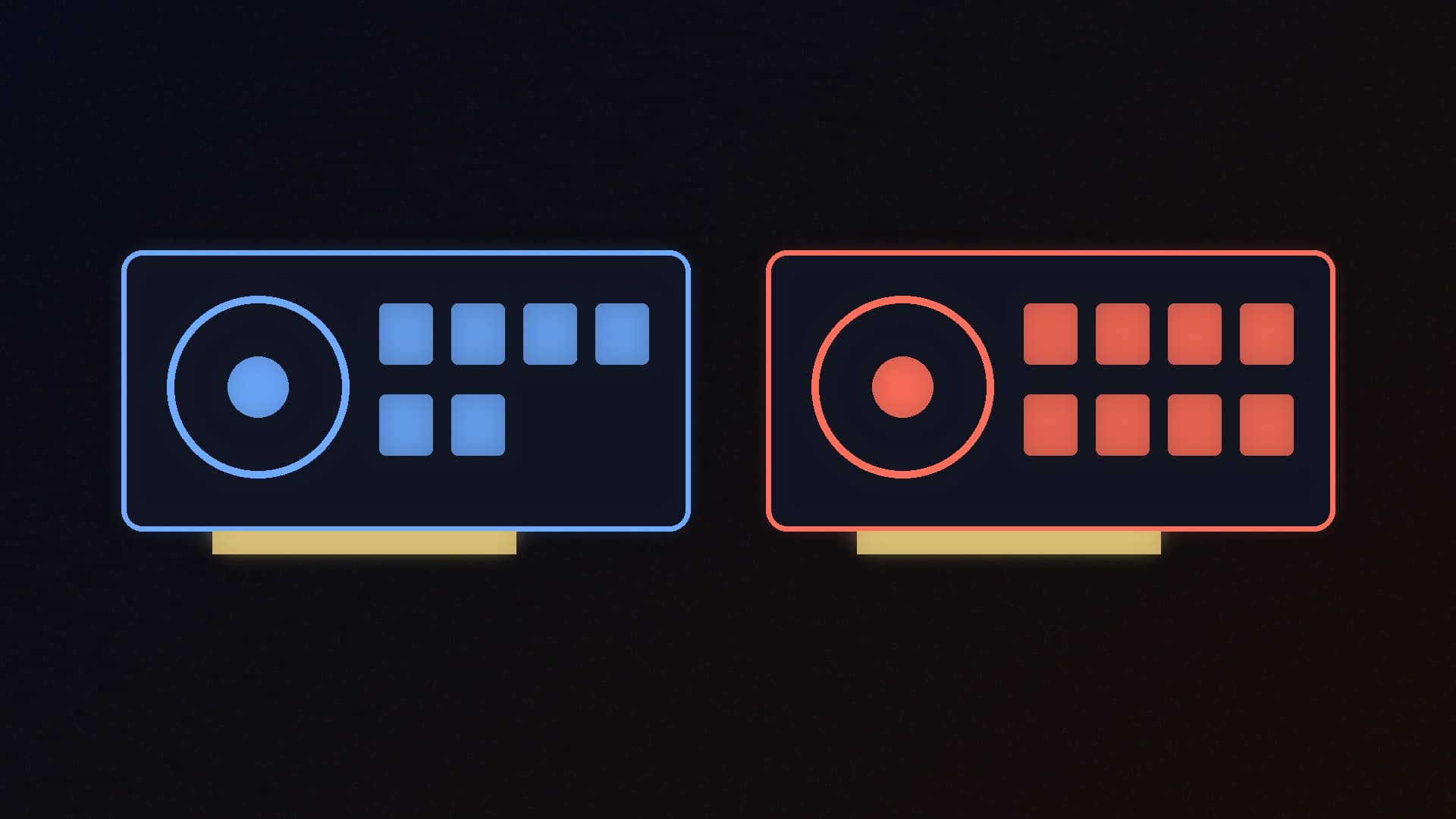
If you want more video memory for local AI than a mainstream gaming card offers, workstation cards are the next step. Intel's Arc Pro B60 and AMD's Radeon AI PRO R9700 are two workstation cards with plenty of VRAM for home and small-office AI builds. Both are pitched squarely at running AI models locally, but they take quite different approaches.
We've compared each card against NVIDIA before, in Arc Pro B60 vs RTX 5060 Ti 16GB and Radeon AI PRO R9700 vs RTX 5090. This time they go head to head.
Specs at a glance
| Intel Arc Pro B60 | AMD Radeon AI PRO R9700 |
|---|
Architecture | Xe2-HPG (20 Xe-cores) | RDNA 4 (64 compute units) |
AI engines | 160 XMX engines | 128 AI accelerators |
Memory | 24GB GDDR6 | 32GB GDDR6 |
Memory interface | 192-bit | 256-bit |
Memory bandwidth | 456GB/s | 640GB/s |
Peak INT8 (dense) | 197 TOPS | 383 TOPS |
Peak FP32 | Up to 12.28 TFLOPS | 47.8 TFLOPS |
Board power | 120-200W (varies by partner) | 300W total board power |
Minimum PSU | Not specified by Intel | 750W |
PCIe | Gen 5.0 x16 slot, x8 electrical | PCIe 5.0 x16 |
Power connector | Varies by partner | 12V-2x6 |
OS support | Windows 11 and 10, Ubuntu Linux | Windows 10 and 11, Linux x86 64-bit |
ECC memory | Not listed | Yes (Linux only) |
Sources: Intel's Arc Pro B60 data sheet and AMD's Radeon AI PRO R9700 product page. Intel's figures are for its reference specification, and partner designs may vary. Peak TOPS and TFLOPS figures are theoretical maximums from each maker, so they're a rough guide rather than a prediction of real-world speed.
VRAM: the R9700 has 8GB more
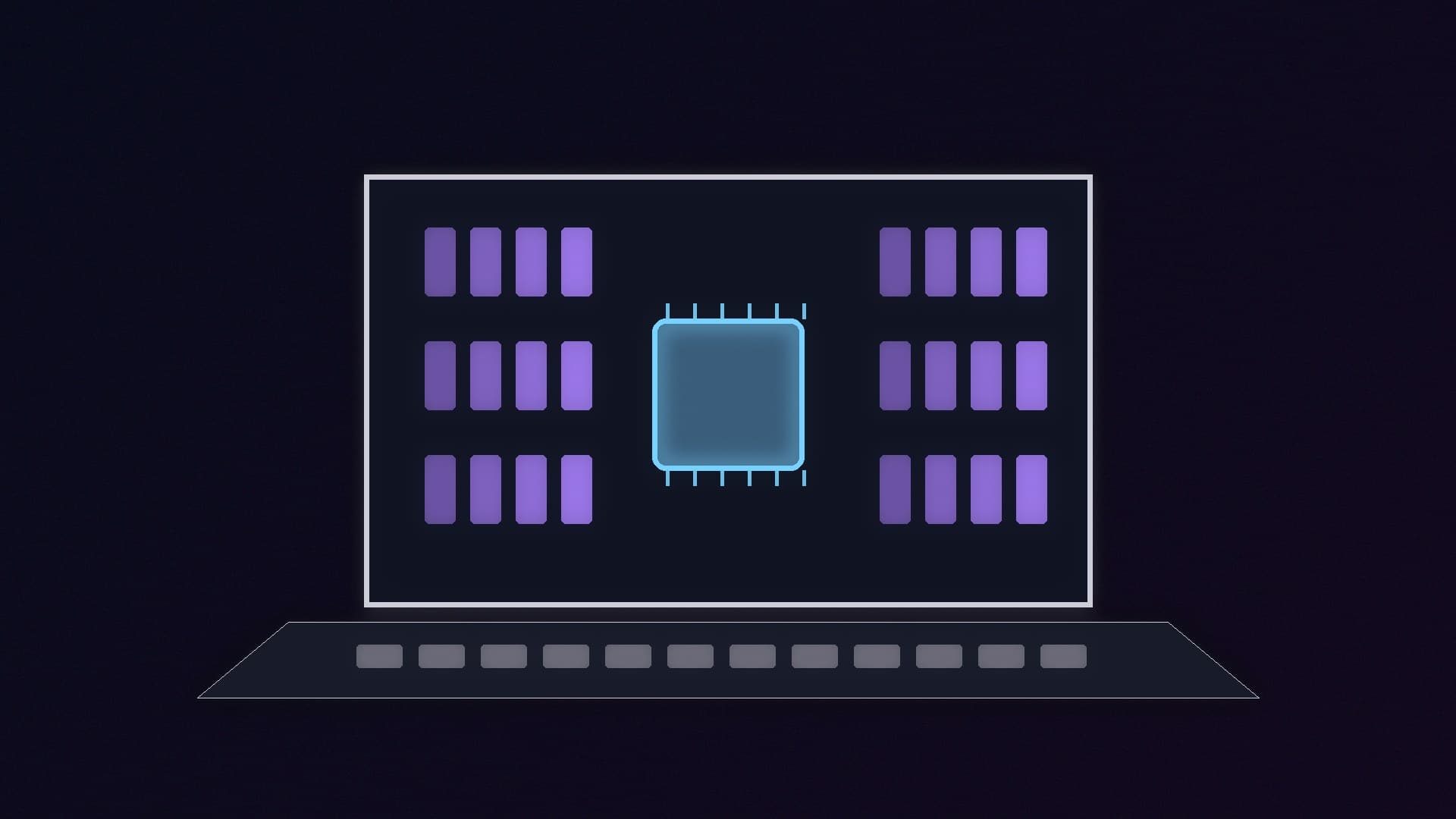
For local large language models (LLMs), video memory decides how big a model you can run entirely on the GPU, and how much room is left for context. The R9700's 32GB gives it a clear advantage over the B60's 24GB. That extra 8GB can be the difference between fitting a larger quantised model, or a longer context window, on the card or having to spill part of it into much slower system RAM.
Our guides to how much VRAM you need and LLM context length and VRAM explain how to estimate what will fit.
If 24GB isn't enough but you'd prefer Intel, it's worth knowing that Intel also has 32GB Arc Pro cards. We covered one in our report on the ASRock Arc Pro B65 Creator 32GB.
Memory bandwidth: a big win for AMD
When an LLM generates text, it has to read through its weights for every token, so memory bandwidth is often the main limit on speed. AMD lists 640GB/s for the R9700, thanks to its 256-bit memory interface. Intel lists 456GB/s for the B60, on a 192-bit interface. That's about 40% more bandwidth for the R9700 on paper.
Based on those specs, you'd generally expect the R9700 to generate text faster with the same model, but that's an inference rather than a measured result, and real speeds depend heavily on the software and backend. Our explainer on memory bandwidth and local LLM speed covers why this matters.
AI compute: roughly double on paper
Intel quotes 197 TOPS of peak dense INT8 throughput for the B60. AMD quotes 383 TOPS of peak INT8 matrix throughput for the R9700 (without sparsity). AMD also lists FP16 matrix performance of 191 TFLOPS and FP8 matrix performance of 383 TFLOPS. Compute matters most for image generation, prompt processing and fine-tuning, rather than plain text generation.
Power, size and PCIe lanes
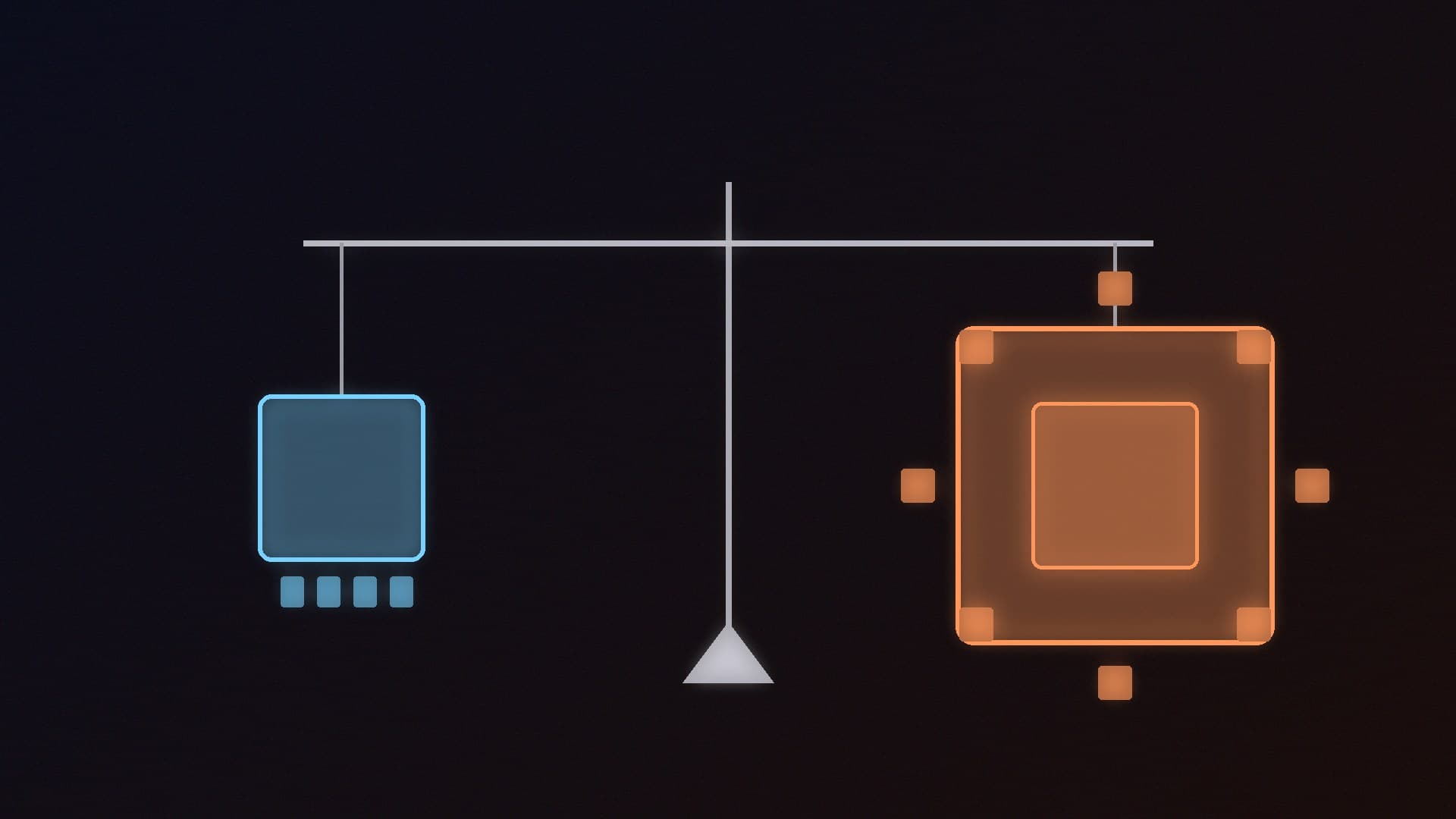
This is where the B60 has the upper hand. Intel lists 120-200W total board power, depending on the partner card. AMD lists 300W for the R9700 and recommends at least a 750W power supply. The R9700 is a double-slot card that uses a 12V-2x6 power connector. Our guide to choosing a PSU for a local AI PC covers sizing if you're planning one or more of these cards.
The B60 uses a PCIe 5.0 x16 slot but only eight lanes electrically, according to Intel's data sheet. The R9700 is a full PCIe 5.0 x16 card. Our PCIe x16 vs x8 guide explains when the number of lanes matters. It's worth checking your motherboard's lane layout if you're planning a multi-GPU build.
Multi-GPU and software
Intel makes a point of multi-GPU use. Its data sheet highlights "Linux multi-GPU LLM support" and lists Linux multi-GPU deployments among the B60's target uses, along with support for oneAPI, OpenVINO, Vulkan 1.3 and OpenCL 3.0. The lower power draw makes it easier to fit two or more cards in one system. Our guide to running a local LLM on two GPUs explains the basics.
The R9700 is listed in AMD's ROCm 7.2.1 support matrix for Linux, which means ROCm-based tools such as PyTorch are officially supported on the listed Linux distributions. AMD also lists ECC memory support on Linux. On Windows, support for both cards depends on the app you use. Our guides to running local AI on an Intel Arc GPU and on an AMD Radeon GPU cover the main options.
Who should buy which?
Choose the Intel Arc Pro B60 if:
24GB is enough for the models you want to run.
You want lower power draw, or you're planning a multi-GPU Linux build.
You're comfortable with Intel's software stack, such as OpenVINO.
Choose the AMD Radeon AI PRO R9700 if:
You want 32GB of VRAM for larger models or longer context.
Faster text generation matters to you, based on its higher memory bandwidth.
You want ROCm support on Linux and ECC memory, and your PC can supply 300W to the card.
The R9700 is listed in our database as the PowerColor AI PRO R9700 32GB.
Our verdict
On paper, the Radeon AI PRO R9700 is the stronger local AI card. It has 32GB of VRAM rather than 24GB, about 40% more memory bandwidth and roughly double the peak INT8 throughput. The Arc Pro B60's strengths are lower power, at 120-200W against 300W, and Intel's focus on multi-GPU Linux setups. If you want the most capable single card, pick the R9700. If you're planning to run several cards, or you're limited by your power supply, the B60 deserves a look. Compare current prices before you decide.