If you're buying a high-end NVIDIA card mainly to run AI models at home, the RTX 5080 and RTX 4090 are an awkward pair. The 5080 is the newer Blackwell card with GDDR7 memory and fifth-generation Tensor Cores. The 4090 is a previous-generation Ada Lovelace card, but it has 24GB of memory to the 5080's 16GB and slightly more memory bandwidth. This comparison uses NVIDIA's official specifications plus bandwidth figures from TechRadar and TechSpot. Forge PC hasn't tested either card, so there are no speed results here, only what the specs tell you.
The specs side by side
| RTX 5080 | RTX 4090 |
|---|
Architecture | Blackwell | Ada Lovelace |
CUDA cores | 10,752 | 16,384 |
Tensor Cores | 5th generation | 4th generation |
NVIDIA AI TOPS | 1,801 | 1,321 |
Memory | 16GB GDDR7 | 24GB GDDR6X |
Memory bus | 256-bit | 384-bit |
Memory bandwidth | 960GB/s (TechRadar) | 1,008GB/s (TechSpot) |
Total graphics power | 360W | 450W |
NVIDIA required system power | 850W | 850W |
PCI Express | Gen 5 | Gen 4 |
CUDA compute capability | 12.0 | 8.9 |
Figures are for NVIDIA's Founders Edition/reference designs; partner cards can differ.
Memory capacity: the 4090's big advantage
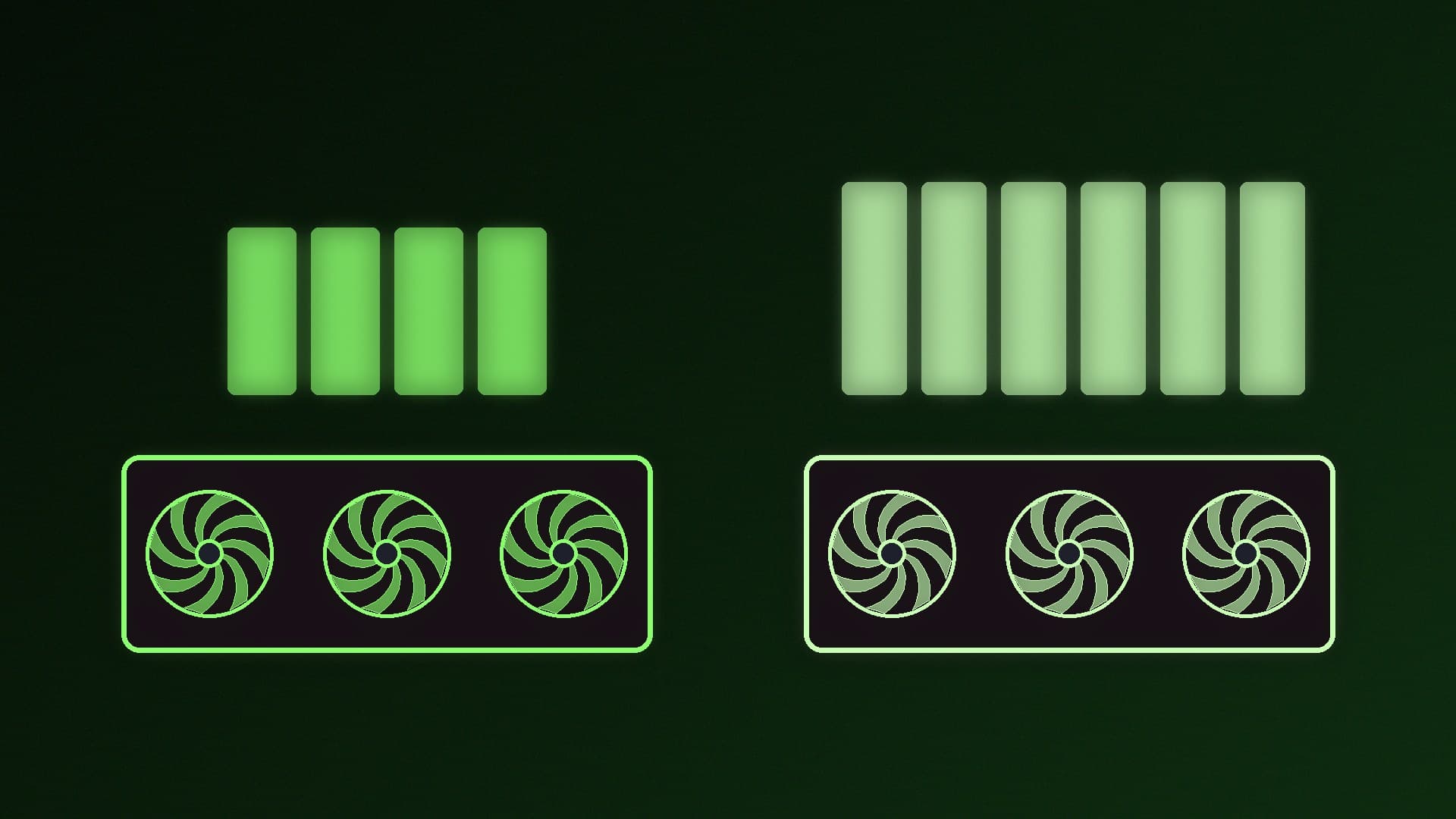
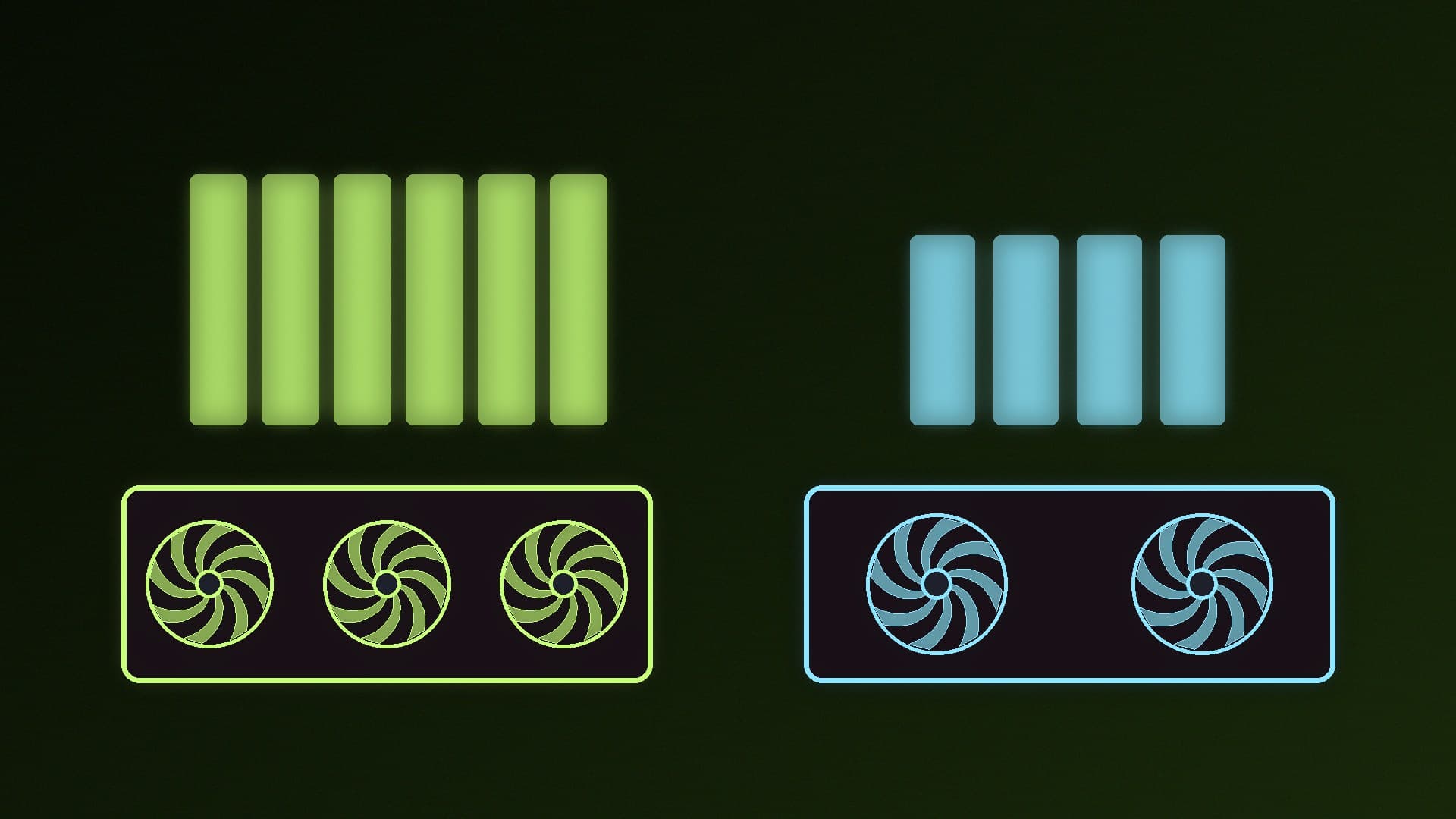
For local AI, the first question is whether the model fits in graphics memory. If it doesn't, part of it has to run from slower system memory instead. The 4090's 24GB gives you 50% more room than the 5080's 16GB, which means larger models, higher-quality quantisations or longer context windows can stay entirely on the card. Our guides to how much VRAM you need, GGUF quantisation and context length explain how those trade-offs work.
Bandwidth: close to a draw
NVIDIA's inference guide explains that generating text is memory-bound: the speed at which the model's weights are read from memory dominates, rather than raw compute. On that measure the two cards are close, with 1,008GB/s for the 4090 against 960GB/s for the 5080, about 5% apart. The 5080 gets there with faster GDDR7 on a narrower 256-bit bus; the 4090 uses slower GDDR6X on a wider 384-bit bus. Our GDDR7 vs GDDR6 explainer covers the memory types.
NVIDIA lists 1,801 AI TOPS for the 5080 against 1,321 for the 4090, but treat that comparison with care: NVIDIA's 5080 page credits its maximum AI performance to FP4, a lower-precision format supported by its fifth-generation Tensor Cores, so the figures aren't a like-for-like measure. Our FP4 vs FP8 vs FP16 explainer covers what those formats mean. The 4090 has more CUDA cores (16,384 against 10,752).
Software support matters too. The 5080's Blackwell chip reports CUDA compute capability 12.0, and PyTorch only added Blackwell support in version 2.7 with CUDA 12.8 builds, so older AI tools and pre-built packages may need updating to use it. The 4090's Ada architecture (8.9) has been supported for longer.
Power and fitting it in
The 5080's 360W total graphics power is 90W lower than the 4090's 450W, though NVIDIA recommends an 850W power supply for both. NVIDIA's Founders Edition 4090 is a three-slot card, while the 5080 Founders Edition is two slots; partner cards vary, so check your case. Both use the 16-pin connector, so read our 12V-2x6 cable safety guide before installing either.
New or used?
The RTX 4090 is a previous-generation card, so many buyers will be looking at second-hand examples. Our used GPU for local AI guide covers what to check. If you're also considering the cheaper 16GB option, see our RTX 5070 Ti vs RTX 5080 for local AI comparison, and our best GPU for local LLMs guide for the wider picture.
Our verdict
If the models you want to run need more than 16GB, the RTX 4090's 24GB makes it the better local AI card, and its bandwidth is slightly higher too. The RTX 5080 makes more sense if your models fit in 16GB and you want lower power, a newer architecture with FP4 support and PCIe 5.0, as long as your software supports Blackwell. Forge PC hasn't tested either card; this comparison is based on NVIDIA's specifications and independently reported bandwidth figures.