For years, the 80 PLUS badge was the only efficiency label most PC builders looked at on a power supply. Now many PSU boxes and spec sheets also show a Cybenetics rating, with names like ETA Platinum and LAMBDA A-. The two schemes use similar medal names, but they test in different ways and don't mean exactly the same thing.
This guide explains both, with the actual thresholds, and how to use them when you're choosing a PSU in the UK. Forge PC hasn't tested power supplies itself; the figures come from CLEAResult, which runs 80 PLUS, and from Cybenetics Labs.
The short answer
| 80 PLUS | Cybenetics ETA | Cybenetics LAMBDA |
|---|
What it rates | Efficiency | Efficiency (plus power factor, standby efficiency and vampire power) | Noise |
How many load points | A few fixed loads (10% or 20%, 50%, 100%, plus 5% for Ruby) | More than 1,450 load combinations | Noise averaged across the load range |
Levels | Standard, Bronze, Silver, Gold, Platinum, Titanium, Ruby | Bronze, Silver, Gold, Platinum, Titanium, Diamond | Standard, Standard+, Standard++, A-, A, A+, A++ |
UK-relevant tables | 230V EU internal | 230V input | Same for 115V and 230V |
80 PLUS is the long-established minimum standard. Cybenetics measures far more operating points and adds a noise rating, which makes it more useful for comparing quiet, efficient units. Ideally, look at both.
How 80 PLUS works
CLEAResult describes 80 PLUS as a performance specification and certification programme for internal PSUs, with seven levels from Standard to Ruby. Each level sets a minimum efficiency at fixed percentages of the PSU's rated load, along with a minimum power factor.
For the 230V EU internal category, which is the one that matches UK mains, CLEAResult's minimums are:
80 PLUS level (230V EU internal) | 10% load | 20% load | 50% load | 100% load |
|---|
Standard | - | 82% | 85% | 82% |
Bronze | - | 85% | 88% | 85% |
Silver | - | 87% | 90% | 87% |
Gold | - | 90% | 92% | 89% |
Platinum | - | 92% | 94% | 90% |
Titanium | 90% | 93% | 95% | 91% |
Ruby | 91% | 94% | 96% | 92% |
Ruby also requires 85% at 5% load. The 115V internal table, used for US-market testing, has lower thresholds; for example, Gold there is 87%, 90% and 87% at 20%, 50% and 100% load.
The weakness is that only a handful of points are tested. Cybenetics argues that this lets manufacturers tune a design to meet specific load levels.
How Cybenetics ETA works
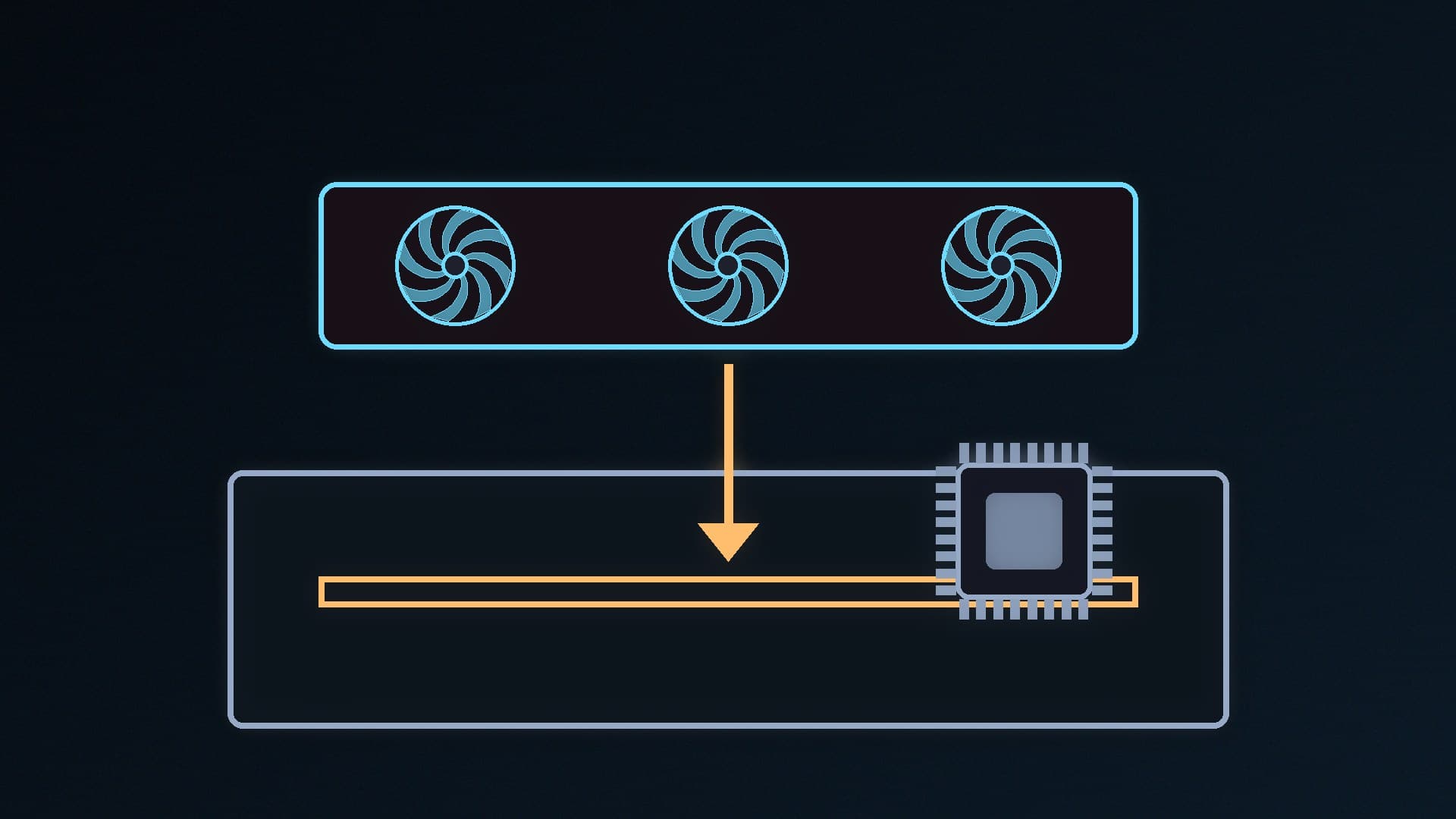
Cybenetics says its ETA programme applies "more than 1450 different load combinations", which with interpolation can provide up to 25,000 measurement points, compared with three or four for traditional methods. The overall efficiency is the average across the PSU's whole operating range. Testing starts at close to 30°C with the PSU inside a "hot-box" to simulate the inside of a case, reaching 32 to 34°C by the end.
ETA also sets minimums for power factor, the efficiency of the 5VSB standby rail, and "vampire power", the power a PSU wastes with no load on the standby rail. Cybenetics says a unit that misses its vampire power standard is automatically downgraded to the next lower level.
Cybenetics' 230V table, the relevant one for the UK, is:
ETA level (230V) | Overall efficiency | Power factor | 5VSB efficiency | Vampire power |
|---|
Diamond | 95% or more | 0.950+ | Over 78% | Under 0.12W |
Titanium | 93% to under 95% | 0.940+ | Over 76% | Under 0.15W |
Platinum | 91% to under 93% | 0.935+ | Over 75% | Under 0.18W |
Gold | 89% to under 91% | 0.930+ | Over 74% | Under 0.20W |
Silver | 87% to under 89% | 0.920+ | Over 72% | Under 0.23W |
Bronze | 84% to under 87% | 0.910+ | Over 70% | Under 0.25W |
At 115V the thresholds are lower; Gold, for example, is 87% to under 89% overall efficiency.
Cybenetics LAMBDA: a noise rating
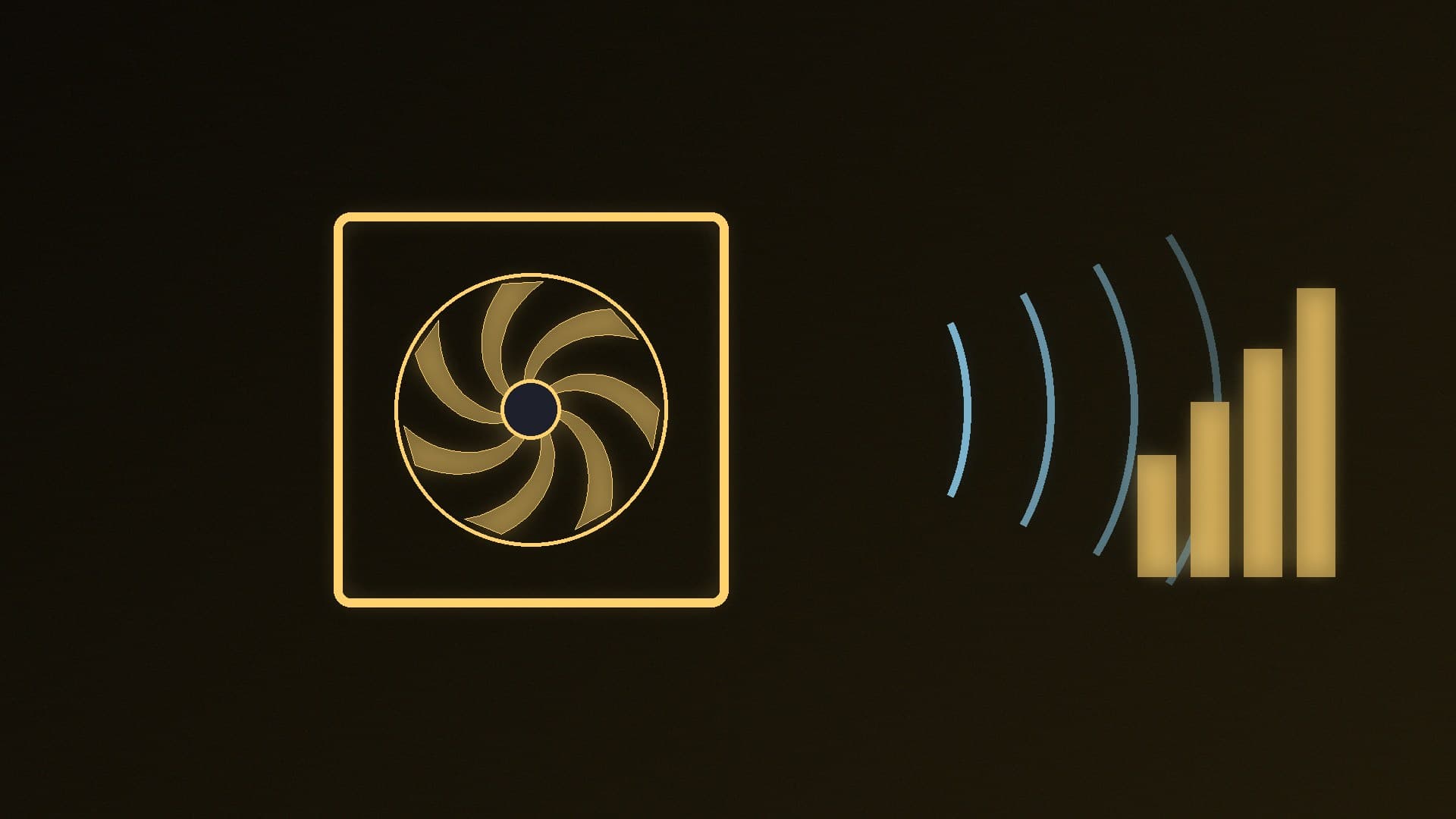
80 PLUS says nothing about noise. Cybenetics' LAMBDA scheme rates the average noise of a PSU across the loads it measures:
LAMBDA level | Average noise |
|---|
A++ | Under 15 dB(A) |
A+ | 15 to under 20 dB(A) |
A | 20 to under 25 dB(A) |
A- | 25 to under 30 dB(A) |
Standard++ | 30 to under 35 dB(A) |
Standard+ | 35 to under 40 dB(A) |
Standard | 40 to under 45 dB(A) |
If you want a quiet PC, a LAMBDA A or A- rating is a far more useful guide than any efficiency badge.
Why "Gold" doesn't mean the same thing
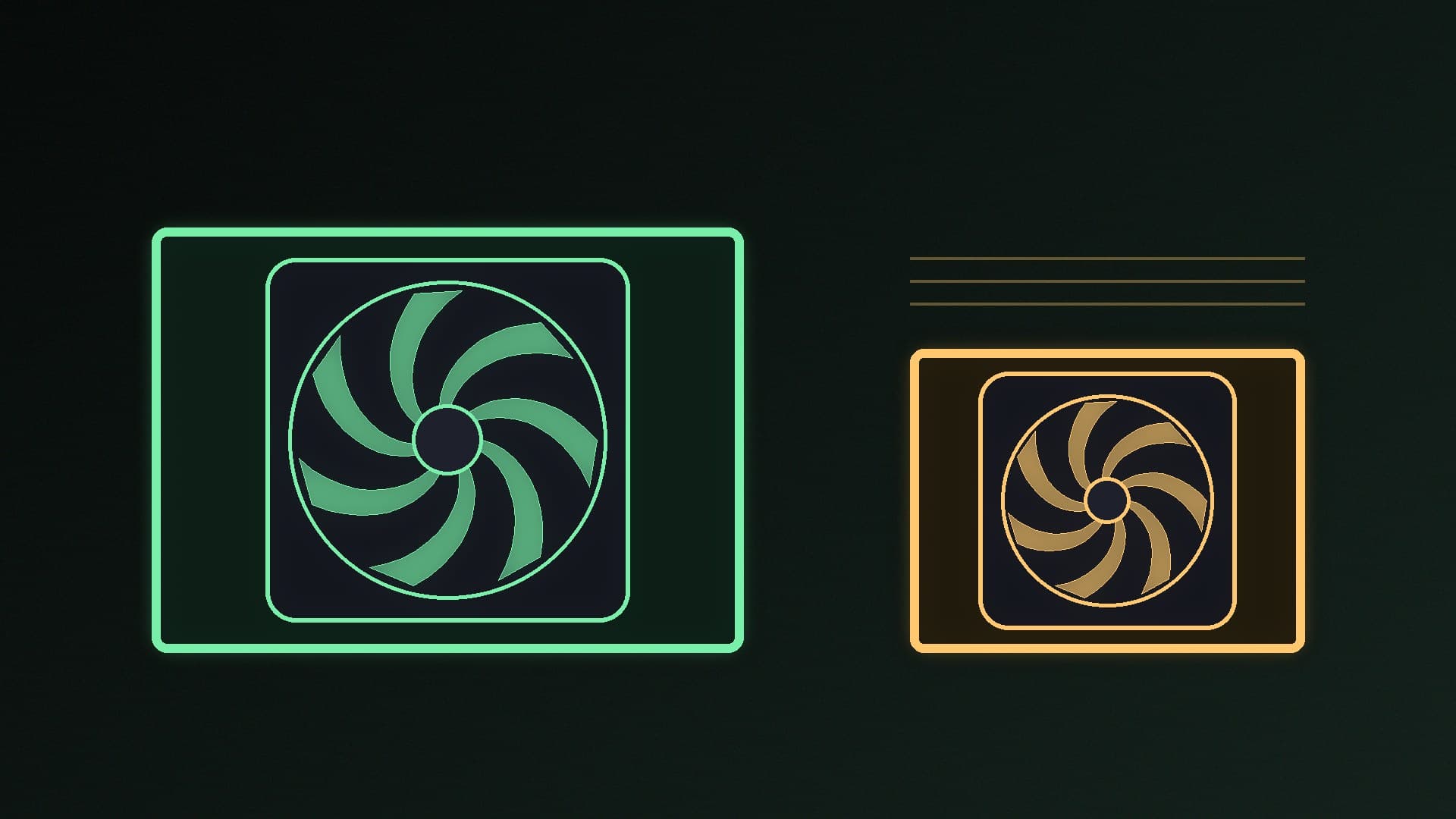
The two schemes share medal names, but a Cybenetics ETA Gold is an average across the full load range, while an 80 PLUS Gold means the unit met minimums at three specific loads. A PSU can carry different levels from each scheme, so compare like with like. Our 80 PLUS Gold vs Platinum guide explains how much those efficiency differences are worth on a UK electricity bill.
How to use both when buying a PSU
Use 80 PLUS as a baseline. It tells you the unit met CLEAResult's minimum efficiency at its fixed test loads.
Check Cybenetics for detail. Look for both an ETA and a LAMBDA rating, and use the 230V results where they're listed.
Don't buy on efficiency alone. Wattage, connectors such as 12V-2x6, ATX 3.1 compliance and warranty matter more for most builds. See how to choose a PSU and ATX 3.1 vs ATX 3.0.
Read independent reviews for ripple, protections and build quality, which neither badge covers.
For specific recommendations, see our best power supply and best 850W PSU guides.
Our verdict
80 PLUS sets minimum efficiency at a few fixed loads; for UK 230V units, Gold means at least 90% at 20% load, 92% at 50% and 89% at 100%. Cybenetics ETA averages efficiency across more than 1,450 load combinations, adds power factor, standby and vampire power limits, and its LAMBDA scheme rates noise, from Standard (40 to 45 dB(A)) to A++ (under 15 dB(A)). Use 80 PLUS as a baseline and Cybenetics for a fuller picture, especially if you want a quiet PC. Forge PC hasn't tested PSUs itself.