This comparison is based on AMD's official specification pages, read on 26 November 2026. We haven't included speed figures because we haven't measured them ourselves.
AMD's Ryzen AI Max chips interest people running AI at home because they combine a 256-bit memory interface with up to 128GB of memory and large integrated graphics. The Ryzen AI Max+ 395 is the flagship; the Ryzen AI Max 385 is a cut-down version. Here's what you give up.
Specifications compared
| Ryzen AI Max 385 | Ryzen AI Max+ 395 |
|---|
CPU cores / threads | 8 / 16 | 16 / 32 |
Max boost | Up to 5GHz | Up to 5.1GHz |
L3 cache | 32MB | 64MB |
Graphics | Radeon 8050S, 32 graphics cores | Radeon 8060S, 40 graphics cores |
Graphics frequency | 2800MHz | 2900MHz |
Memory | 256-bit LPDDR5X-8000, up to 128GB | 256-bit LPDDR5X-8000, up to 128GB |
NPU (AMD) | Up to 50 TOPS | Up to 50 TOPS |
Overall AI (AMD) | Up to 106 TOPS | Up to 126 TOPS |
Default TDP (configurable) | 55W (45-120W) | 55W (45-120W) |
AMD also lists up to 60 TFLOPS of FP16 AI compute for the Max+ 395; it doesn't list that figure on the Max 385 page.
Memory: the same on both
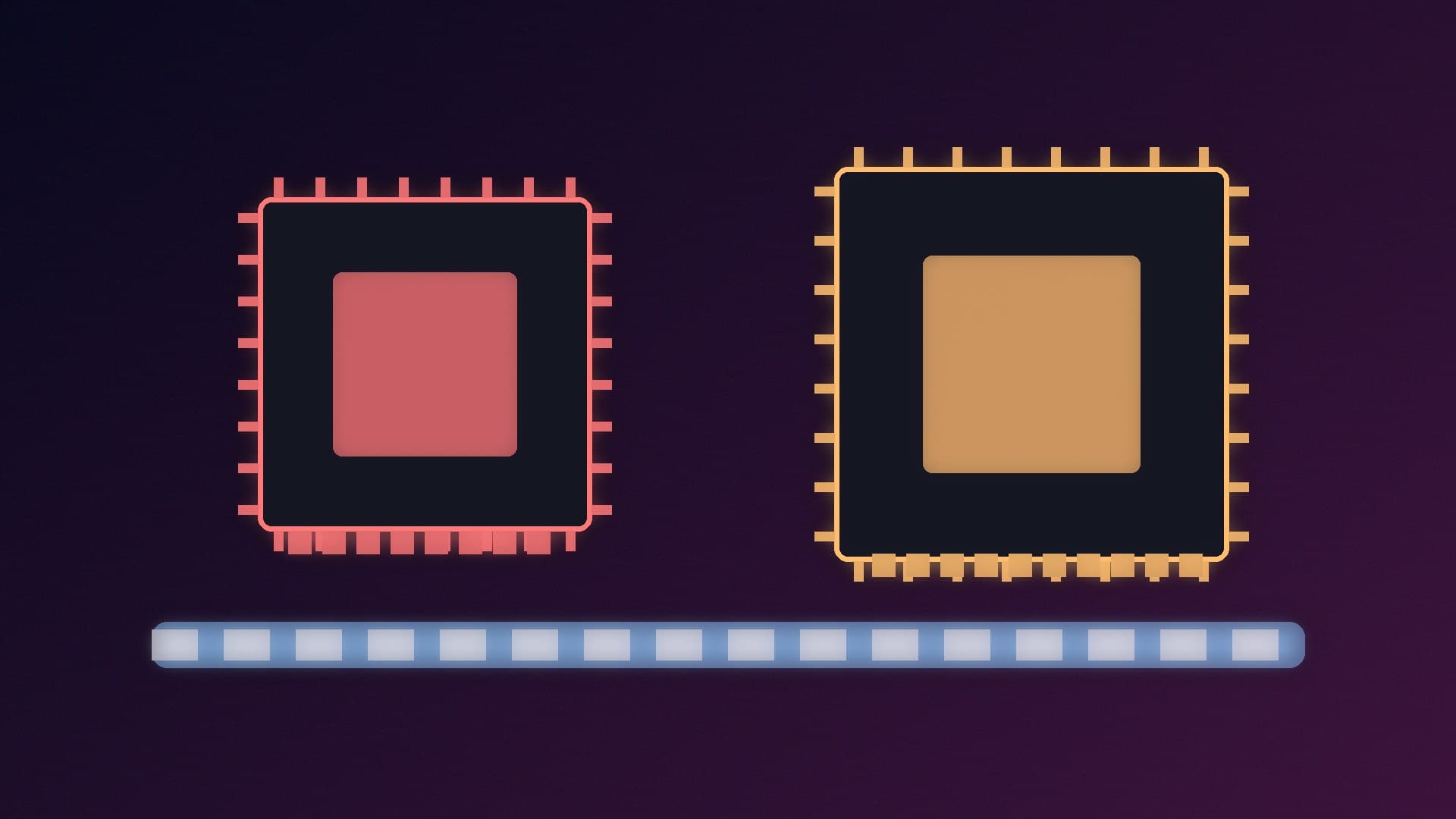
For running language models, the most important figures are identical. Both chips use a 256-bit LPDDR5X-8000 memory interface and support up to 128GB. By our calculation from AMD's figures, that works out at 256GB/s of peak memory bandwidth for both. Memory bandwidth largely sets how quickly a model generates text, as our explainer on memory bandwidth and local LLM speed covers, so generation speed with the same model and memory may be closer than the core counts suggest. We haven't measured that.
What you can load depends on how much memory the system maker fitted, not the chip. A 128GB Max 385 system can hold larger models than a 64GB Max+ 395 system. Our guide to unified memory vs VRAM explains how shared memory works for AI.
Graphics and CPU: where the 395 pulls ahead
The Max+ 395's Radeon 8060S has 40 graphics cores against 32 on the 385's Radeon 8050S, so it has 25% more graphics cores. That is likely to matter most for compute-heavy work such as image generation and processing long prompts, though we haven't measured the difference. The 395 also has twice the CPU cores and twice the L3 cache, which helps if you compile code, edit video or run several models and apps at once.
NPU: no difference for most uses
Both NPUs are rated at up to 50 TOPS. The difference in AMD's overall AI figure comes from the graphics and CPU, not the NPU. If you plan to run models on the NPU, for example with FastFlowLM, the two chips are rated the same.
Which should you buy?
Choose the Ryzen AI Max+ 395 if you want the most graphics compute for image generation, or you need 16 CPU cores. Choose the Ryzen AI Max 385 if you mainly run language models and it lets you afford more memory, since both chips share the same memory interface. In either case, check how much memory the system has, because LPDDR5X is usually soldered and can't be upgraded later. See our best mini PCs for local AI for complete systems, and Ryzen AI 9 HX 370 vs Ryzen AI Max+ 395 for a step down.
Our verdict
The Ryzen AI Max 385 and Max+ 395 share the same 256-bit LPDDR5X-8000 memory interface and up to 128GB of memory, so they can load the same size of models. The Max+ 395 has 25% more graphics cores and twice the CPU cores, which helps with image generation and heavy multitasking. If you mostly run language models, a Max 385 system with more memory can be the better buy than a Max+ 395 with less.