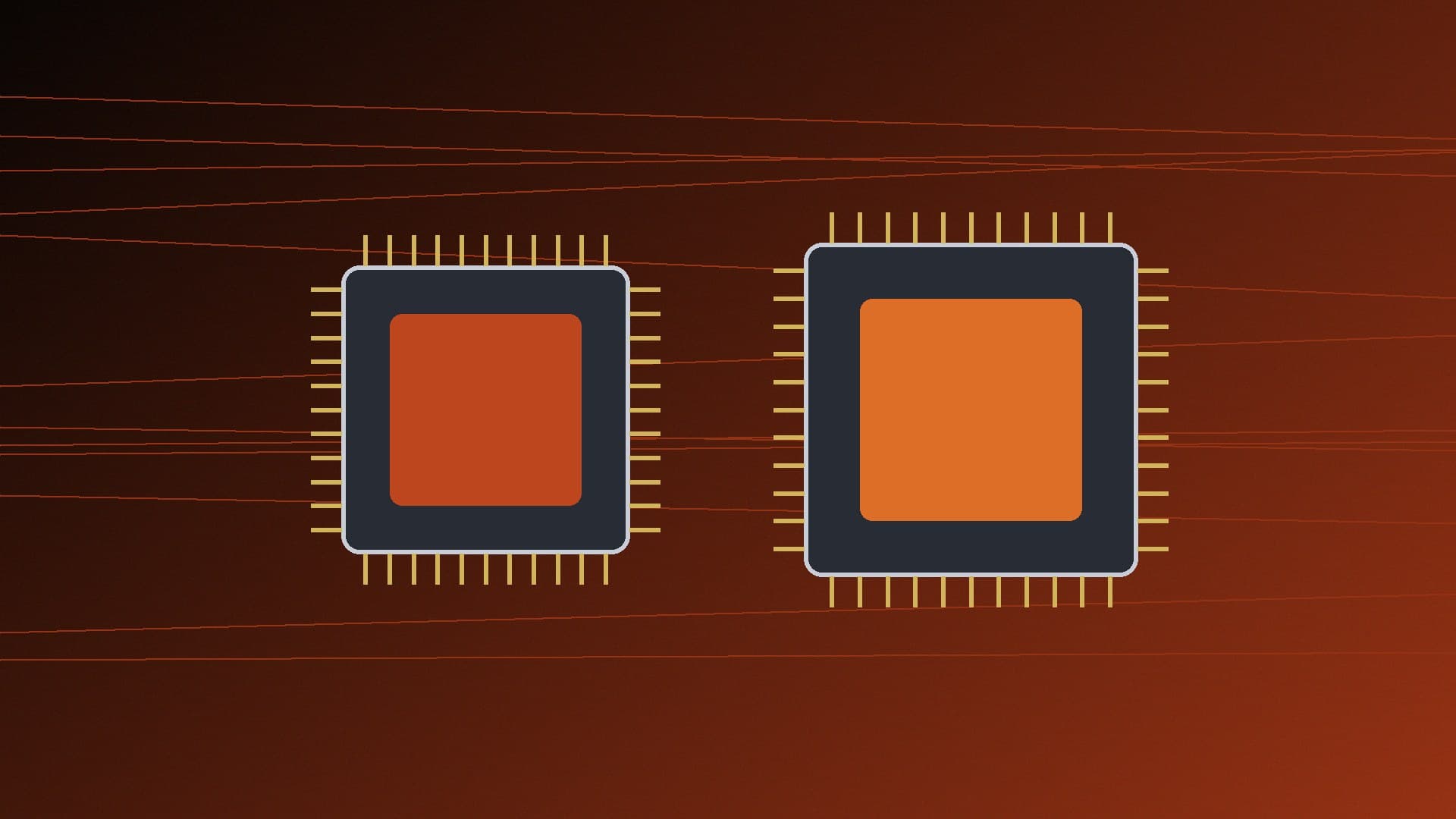
AMD's Ryzen 5 9600X and Ryzen 7 9700X are AMD's six-core and eight-core Zen 5 desktop chips for the AM5 platform. They share the same socket, the same 65 W default TDP and the same 32 MB of L3 cache, so the real question is whether two extra cores are worth paying for.
Key specs compared
| Ryzen 5 9600X | Ryzen 7 9700X |
|---|
Cores / threads | 6 / 12 | 8 / 16 |
Max boost clock | Up to 5.4 GHz | Up to 5.5 GHz |
Base clock | 3.9 GHz | 3.8 GHz |
L2 cache | 6 MB | 8 MB |
L3 cache | 32 MB | 32 MB |
Default TDP | 65 W | 65 W |
Socket | AM5 | AM5 |
Memory | DDR5, 2 channels, up to DDR5-5600 (2x1R or 2x2R) | DDR5, 2 channels, up to DDR5-5600 (2x1R or 2x2R) |
Integrated graphics | AMD Radeon Graphics, 2 cores | AMD Radeon Graphics, 2 cores |
Cooler in box | Not included | Not included |
Launch date | 8 August 2024 | 8 August 2024 |
What's the same
Both chips are Zen 5 "Granite Ridge" processors built with TSMC 4nm FinFET core dies and a 6nm I/O die. They're unlocked for overclocking, support AMD EXPO memory profiles, Precision Boost Overdrive and Curve Optimizer, and work with Ryzen Master. AMD lists the same chipsets for both: A620, B650, B650E, X670, X670E, B840, B850, X870 and X870E. Each offers PCIe 5.0 with 28 native lanes (24 usable) and four native USB 3.2 Gen 2 ports.
Neither comes with a cooler, and AMD recommends a premium air cooler for optimal performance on both, so budget for one either way. Both have a small integrated Radeon GPU, which is handy for troubleshooting or a basic office PC but isn't meant for gaming.
If you want faster memory, our guide to enabling XMP and EXPO explains how to turn on your kit's rated profile.
The difference: two more cores
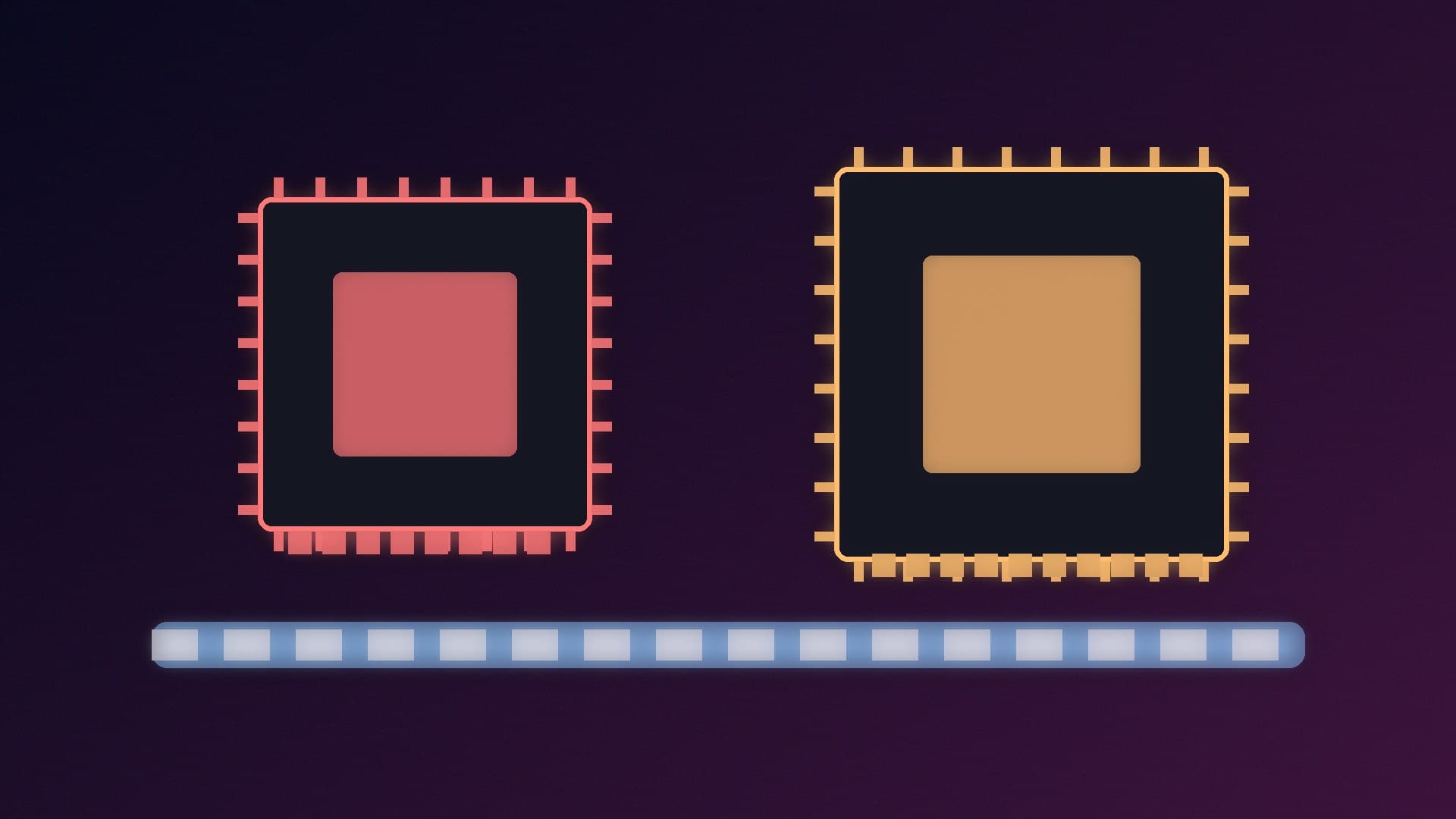
The Ryzen 7 9700X has eight cores and 16 threads, against six cores and 12 threads on the Ryzen 5 9600X. That's a third more cores, plus 8 MB of L2 cache against 6 MB. AMD lists a slightly higher maximum boost clock for the 9700X (5.5 GHz against 5.4 GHz), while the 9600X has a marginally higher base clock.
Because both have the same 32 MB of L3 cache and close boost clocks, the gap in lightly threaded work is likely to be small on paper. The extra cores matter most in heavily threaded jobs such as video encoding, code compiling, 3D rendering, and gaming while streaming or running lots of background apps. Check independent reviews for measured results in the games and apps you use, as we haven't benchmarked these chips ourselves.
Power and cooling
Both chips have a 65 W default TDP and a 95°C maximum operating temperature. That keeps cooling demands modest for desktop CPUs of this class, but AMD still recommends a premium air cooler. Check your cooler's specifications against your case and budget before you buy.
Upgrade path
Both use AM5, which means you can start with a 9600X now and move to a higher-core-count AM5 chip later without changing motherboard, as long as your board's BIOS supports the newer processor. See our best AM5 CPU upgrade guide for options.
Our verdict
Pick the AMD Ryzen 5 9600X if you mainly game and want the cheaper way into Zen 5 on AM5, with the option to upgrade later. Pick the AMD Ryzen 7 9700X if you also stream, edit video, compile code or keep lots of apps open, as its two extra cores and larger L2 cache give it more headroom in multi-threaded work. For more comparisons, see Ryzen 5 9600X vs Ryzen 5 7600X and Ryzen 7 9700X vs Ryzen 9 9900X.