Skip to content

VersusGPU

RTX 5080 vs RTX 5090 for Local AI: Is Double the VRAM Worth It?

NVIDIA's GeForce RTX 5080 and RTX 5090 compared for running AI models locally, using NVIDIA's official specs: the RTX 5090 doubles VRAM to 32GB GDDR7 on a 512-bit bus with roughly double the CUDA cores and AI TOPS, but needs 575W and a 1,000W system PSU.

By , Senior Hardware Editor

3 min read

RTX 5080 vs RTX 5090 for Local AI: Is Double the VRAM Worth It?
ASUS Prime RTX 5080 16GB compared with MSI RTX 5080 16GB Ventus 3X OC
ASUS Prime RTX 5080 16GBMSI RTX 5080 16GB Ventus 3X OC
1080p average225fps225fps
1440p average182fps182fps
4K average109fps109fps
GPU Chip ManufacturerNVIDIANVIDIA
GPU SeriesRTX 5000RTX 5000
VRAM Capacity (GB)1616
VRAM TypeGDDR6XGDDR6X
Base ClockN/A—
Boost ClockN/A—
CUDA / Stream Processor Count0—
Ray Tracing SupportYesYes
AI / Tensor SupportYesYes
PCIe Interface VersionPCIe 4.0 x16—
Typical Board Power (W)0300
Recommended PSU Wattage (W)0750
Minimum PSU Wattage (W)0650
Required PCIe Power ConnectorsN/A—

Estimated average frame rate across 10 games, paired with a top-tier processor. These are estimates from our benchmark dataset, not measurements of these exact units. Try other pairings

The GeForce RTX 5080 and RTX 5090 are two high-end GeForce RTX 50 Series desktop graphics cards, and both can run large language models and image generators on your own PC. For local AI the gap between them is bigger than for gaming, because video memory decides which models you can run comfortably. This comparison uses NVIDIA's official UK specification pages.

Spec comparison

Spec (NVIDIA official)

RTX 5080

RTX 5090

Architecture

Blackwell

Blackwell

CUDA cores

10,752

21,760

Tensor cores

5th generation

5th generation

AI TOPS

1,801

3,352

Memory

16GB GDDR7

32GB GDDR7

Memory interface

256-bit

512-bit

Boost clock

2.62GHz

2.41GHz

Total graphics power

360W

575W

Required system power

850W

1,000W

Power connectors

3x PCIe 8-pin (adapter) or 1x 450W or greater PCIe Gen 5 cable

4x PCIe 8-pin (adapter) or 1x 600W PCIe Gen 5 cable

Founders Edition size

304mm long, 137mm wide, 2-slot

304mm long, 137mm wide, 2-slot

VRAM: the deciding factor

The RTX 5090's 32GB of GDDR7 is exactly double the RTX 5080's 16GB. For local AI this matters more than any other line in the table. A model runs fastest when its weights and its context (the KV cache) fit entirely in video memory; anything that doesn't fit has to be offloaded to system RAM or split with the CPU, which usually slows things down considerably. Doubling VRAM lets you run larger models, or the same model at a higher-quality quantisation or with a longer context, without offloading. Our guide to LLM context length and VRAM explains how context adds to memory use, and how to check VRAM usage in Windows shows how to see what you're actually using.

The RTX 5090 also has a 512-bit memory interface against the RTX 5080's 256-bit. With the same GDDR7 memory type, a wider bus gives more memory bandwidth, which matters for text generation speed in LLMs because each generated token has to read the model's weights from memory.

Compute: roughly double

NVIDIA rates the RTX 5090 at 3,352 AI TOPS against 1,801 for the RTX 5080, and it has 21,760 CUDA cores against 10,752. The RTX 5080 has a higher boost clock (2.62GHz against 2.41GHz), but on NVIDIA's figures the RTX 5090 is the far more powerful card. These are NVIDIA's rated figures, not measured results in any particular AI app, so look for independent tests in the tools you plan to use.
Power, PSU and case fit

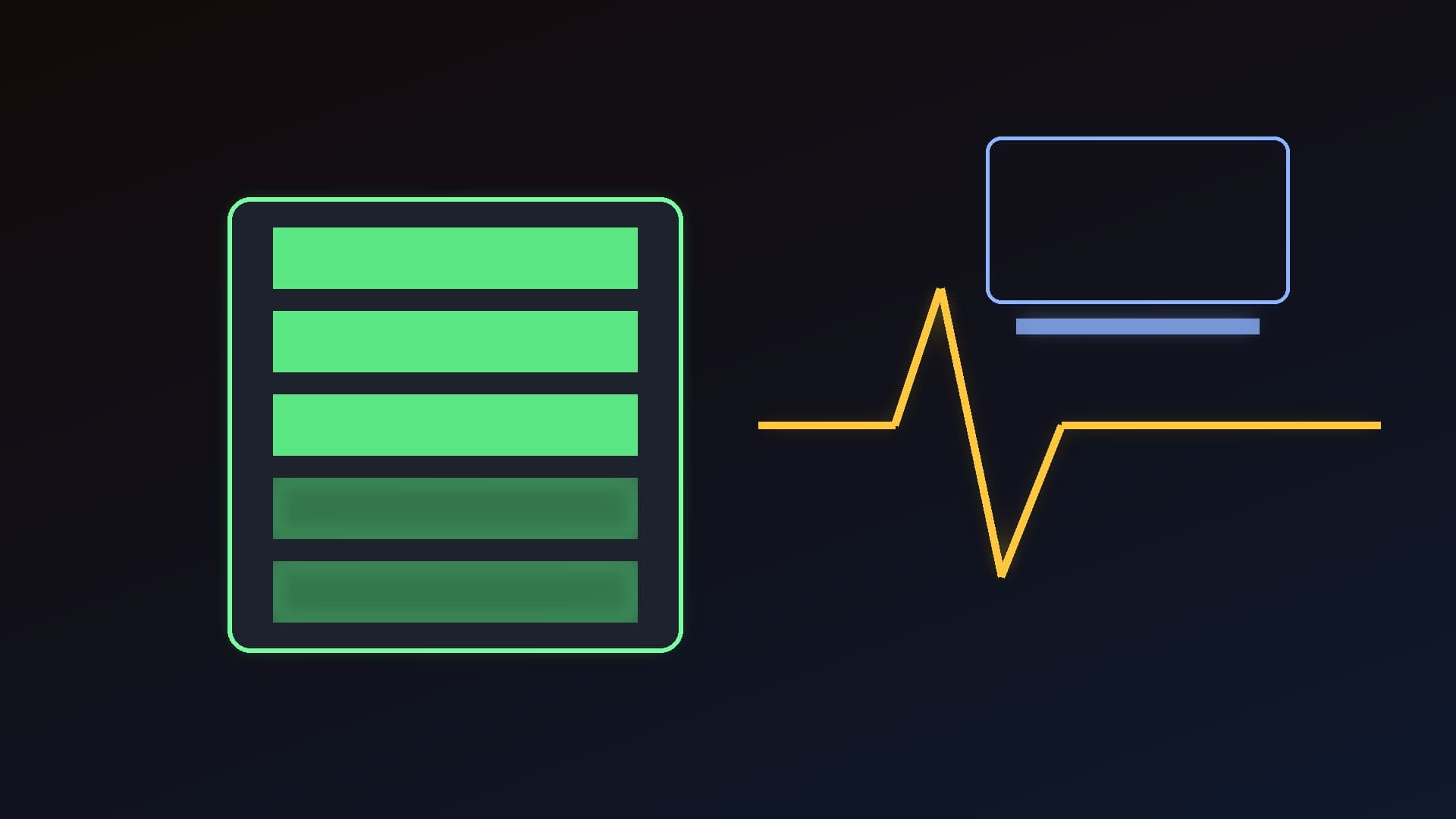
The RTX 5090's extra performance comes with a much higher power draw. NVIDIA lists a total graphics power of 575W and a required system power of 1,000W, compared with 360W and 850W for the RTX 5080. That can mean a new power supply if you're upgrading, and more heat to deal with during long AI jobs. Our guide to choosing a PSU for a local AI PC covers what to look for, and how to calculate local AI electricity costs helps you estimate running costs.

Both Founders Edition cards are the same size on NVIDIA's pages, 304mm long and two slots thick, but NVIDIA's pages say other versions vary by manufacturer, so check the dimensions of the exact model you buy against your case. Partner RTX 5080 cards in our database include the ASUS Prime GeForce RTX 5080 16GB and MSI GeForce RTX 5080 16GB Ventus 3X OC.

Our verdict

If local AI is a major reason for buying, the RTX 5090 is the clear choice: 32GB of VRAM, a 512-bit memory bus and roughly double the RTX 5080's CUDA cores and rated AI TOPS let it run bigger models with less offloading. The RTX 5080 is still a capable card for models that fit in 16GB and needs a smaller power supply (850W against 1,000W recommended). If you're mostly running smaller models, or you're also weighing a cheaper card, see our RTX 5070 Ti vs RTX 5080 for local AI comparison; if 32GB isn't enough, our RTX Pro 6000 vs RTX 5090 piece looks at a 96GB option. For complete builds, see our best PC for local AI picks.

The bottom line

If local AI is a major reason for buying, the RTX 5090 is the clear choice: 32GB of VRAM, a 512-bit memory bus and roughly double the RTX 5080's CUDA cores and rated AI TOPS let it run bigger models with less offloading. The RTX 5080 is still a capable card for models that fit in 16GB and needs a smaller power supply (850W against 1,000W recommended). If you're mostly running smaller models, or you're also weighing a cheaper card, see our RTX 5070 Ti vs RTX 5080 for local AI comparison; if 32GB isn't enough, our RTX Pro 6000 vs RTX 5090 piece looks at a 96GB option. For complete builds, see our best PC for local AI picks.

Sources

  1. 01NVIDIA, GeForce RTX 5090 specifications
  2. 02NVIDIA, GeForce RTX 5080 specifications

About the author

Callum Reid

Senior Hardware Editor

Callum leads GPU, CPU and platform architecture coverage at Forge PC. Before joining the editorial desk, he spent nine years specifying, assembling and stress-testing custom gaming and workstation systems in the UK, with a focus on PCIe bandwidth, VRM thermal design, DDR5 memory tuning and 1440p/4K frame-time consistency.

More from Callum Reid

Read next

How to Set Up a UPS to Shut Down Your PC Automatically

How-To

How to Set Up a UPS to Shut Down Your PC Automatically

How to make a UPS shut your PC down automatically in a power cut: connect the UPS's USB data cable, install the maker's software (CyberPower PowerPanel Personal as the example), choose Keep Computer Running or Preserve Battery Power, pick shutdown or hibernation, then test it.

Marcus Thorne7 min

How to Set Up SillyTavern with a Local LLM Using KoboldCpp

How-To

How to Set Up SillyTavern with a Local LLM Using KoboldCpp

How to set up SillyTavern with a local LLM: installing it on Windows or Linux, loading a GGUF model in KoboldCpp, connecting the two, tuning GPU layers to fit your graphics card's VRAM, adjusting context settings and fixing common problems.

Marcus Thorne8 min

Best Laptops for Local AI in 2026: Which GPU and Chip to Look For

Best Picks

Best Laptops for Local AI in 2026: Which GPU and Chip to Look For

The best laptops for local AI in 2026 by platform: RTX 5090 Laptop GPU machines for speed with 24GB of VRAM, Ryzen AI Max+ 395 laptops for big models with up to 128GB of unified memory, RTX 5080 and 5070 Ti laptops for less, and Copilot+ PCs for battery life.

Hannah Vance8 min