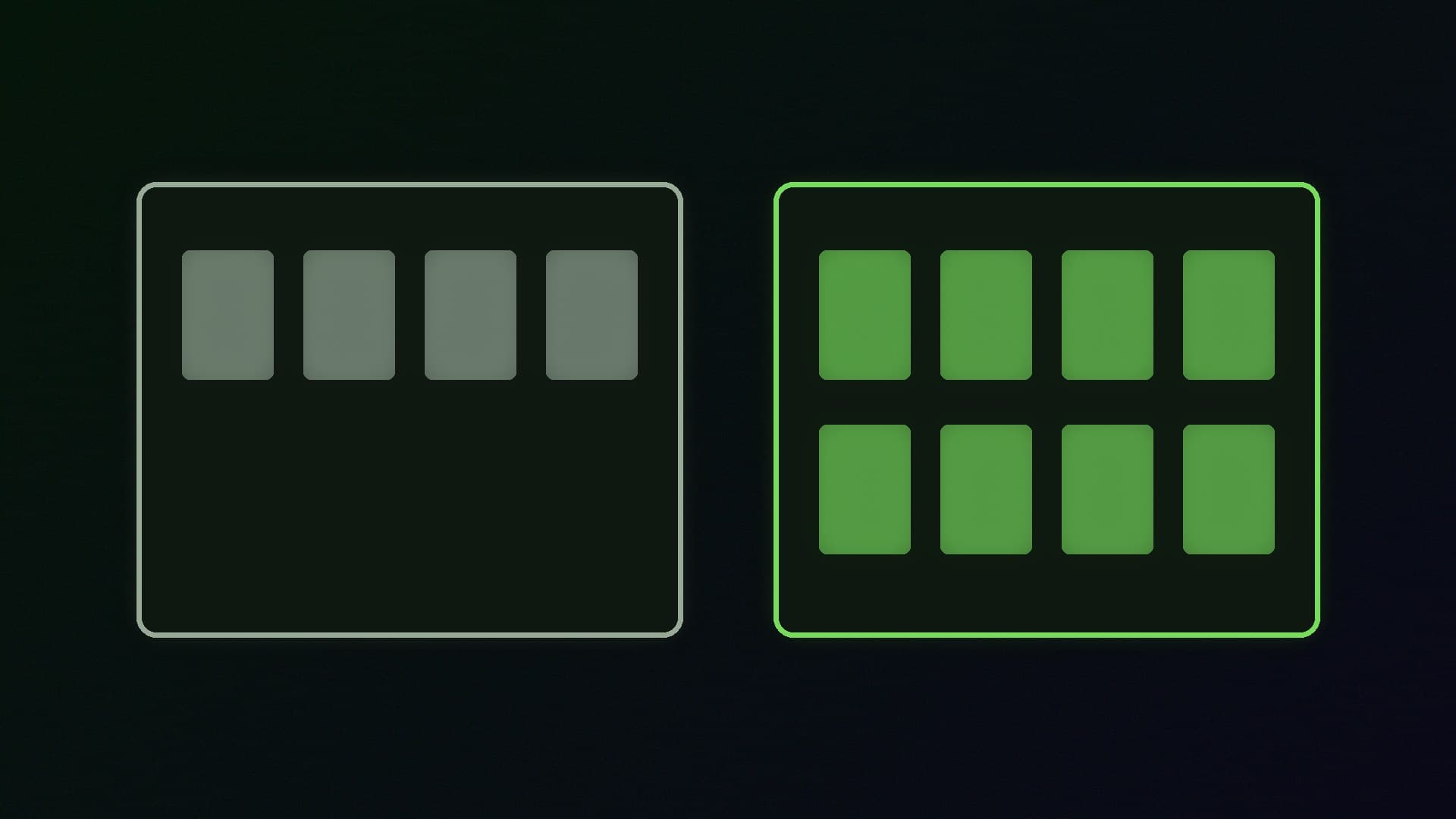
NVIDIA sells the GeForce RTX 5060 Ti in two versions, with 8GB or 16GB of memory, under exactly the same name. NVIDIA lists the same GPU, clocks and power rating for both, so the memory capacity is the only official difference. That makes it easy to buy the cheaper one and assume you are getting the same graphics card. Independent testing says that is a mistake for most people.
Forge PC has not tested these cards. The performance findings below come from TechSpot's PCIe scaling review, specifications come from NVIDIA, and UK prices come from SpecPrice's tracker, last updated at 21:40 GMT on 13 November 2026. All prices are approximate.
Specifications: what is the same and what is not
| RTX 5060 Ti 16GB | RTX 5060 Ti 8GB |
|---|
CUDA cores | 4,608 | 4,608 |
Boost/base clock | 2.57GHz/2.41GHz | 2.57GHz/2.41GHz |
Memory | 16GB GDDR7 | 8GB GDDR7 |
Memory bus | 128-bit | 128-bit |
Total graphics power | 180W | 180W |
Recommended PSU | 600W | 600W |
Approx. lowest UK price (13 November 2026) | £659.99 | £479.99 |
NVIDIA's specification page lists the RTX 5060 Ti family with the same 4,608 CUDA cores, 759 AI TOPS, clocks, 128-bit memory interface, 180W total graphics power and 600W recommended system power for both memory configurations. TechSpot lists 448GB/s of memory bandwidth and a PCIe 5.0 x8 interface.
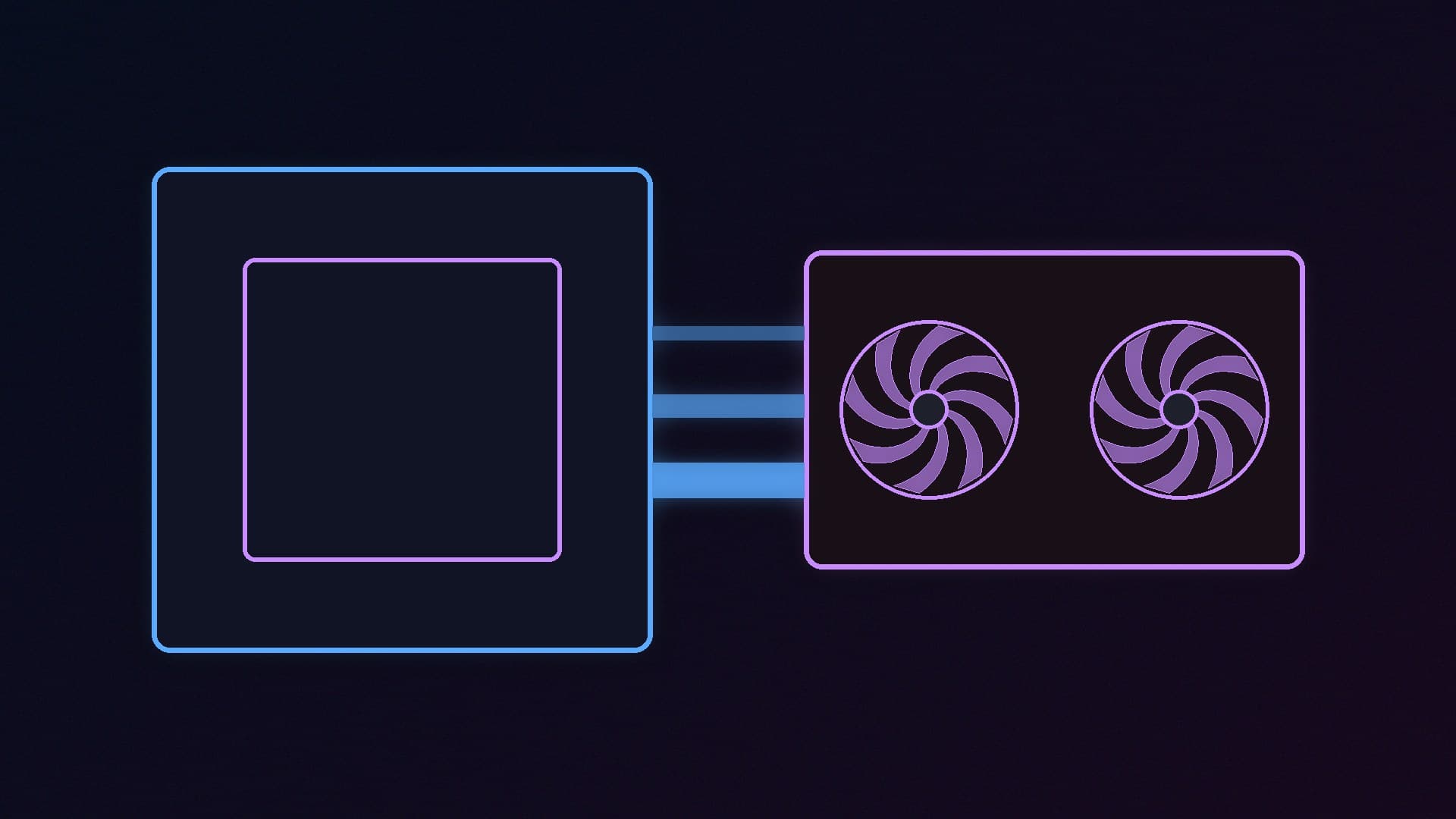
That x8 interface matters. The card uses only eight PCIe lanes, so in an older PC with a PCIe 4.0 or PCIe 3.0 slot, it has half or a quarter of the bandwidth it would get on PCIe 5.0.
What happens when 8GB runs out
When a game needs more memory than the card has, data spills into system RAM over the PCIe bus. TechSpot points out that the 5060 Ti's own memory has 448GB/s of bandwidth, while system memory has roughly 96GB/s for dual-channel DDR5-6000 and around 50GB/s for dual-channel DDR4-3600, before taking the PCIe link into account.
TechSpot's review, published by Steven Walton in June 2025, deliberately used settings that push past 8GB, across PCIe 3.0, 4.0 and 5.0. Its findings included:
In F1 25 at the high preset, the 8GB card was playable, but the 16GB card was 114 per cent faster on PCIe 3.0 and up to 30 per cent faster on PCIe 4.0 or 5.0.
At the very high preset in F1 25, TechSpot says 8GB cards perform very poorly, while 16GB cards are still smooth.
Overall, TechSpot concluded that the 8GB 5060 Ti "is nearly unusable when VRAM is exceeded", largely because of its 8-lane interface, and that even PCIe 5.0 cannot overcome that limitation.
These are TechSpot's results in demanding scenarios, not a claim that the 8GB card fails in every game. In titles and settings that stay within 8GB, the two cards should perform very similarly, because the GPU is the same.
Who could still buy the 8GB card?
TechSpot's verdict was blunt: "if you intend to do anything beyond playing esports titles at 1080p, you'll want to avoid the 8GB model". It even recommended esports players steer clear, if only for better resale value, and said anyone who plans to keep the card for at least two years, play modern AAA games or move to a higher resolution should not buy the 8GB version.
So the 8GB card only makes sense if you play lighter competitive games at 1080p, are prepared to lower texture settings, and the price gap is large. On 13 November 2026, that gap was about £180 on SpecPrice's tracker. Our how much VRAM do you need guide explains how quickly games are using memory.
Local AI: 16GB is the clear choice
If you want to run local AI models, the decision is easier still. VRAM decides which models fit on the GPU, and 16GB gives you room for much larger models, or longer contexts, than 8GB. Our best GPU for local LLMs guide covers how far 16GB gets you.
Alternatives at similar prices
The Radeon RX 9060 XT also comes in 8GB and 16GB versions. TechSpot notes that it uses a full 16-lane PCIe interface, so it suffers less on older PCIe 4.0 and 3.0 slots when memory runs out, although it recommended avoiding the 8GB version of both cards. SpecPrice had the RX 9060 XT 16GB at about £579.98 on 13 November 2026, roughly £80 less than the cheapest RTX 5060 Ti 16GB. See our best budget graphics card list for more options.
Example models in our database include the MSI RTX 5060 Ti 16GB Ventus 2X OC Plus and the MSI RTX 5060 Ti 8GB Ventus 2X OC Plus.
Our verdict
Buy the RTX 5060 Ti 16GB, at about £660 on 13 November 2026, unless you only play esports games at 1080p and the saving is substantial. TechSpot found the 8GB card "nearly unusable" once its memory is exceeded, and that problem gets worse in PCs with PCIe 4.0 or 3.0 slots because of the card's 8-lane interface. If your budget will not stretch to the 16GB 5060 Ti, the 16GB Radeon RX 9060 XT at about £580 is a better buy than the 8GB card. We have not tested these cards; this comparison is based on TechSpot's testing, NVIDIA's specifications and SpecPrice's UK prices.