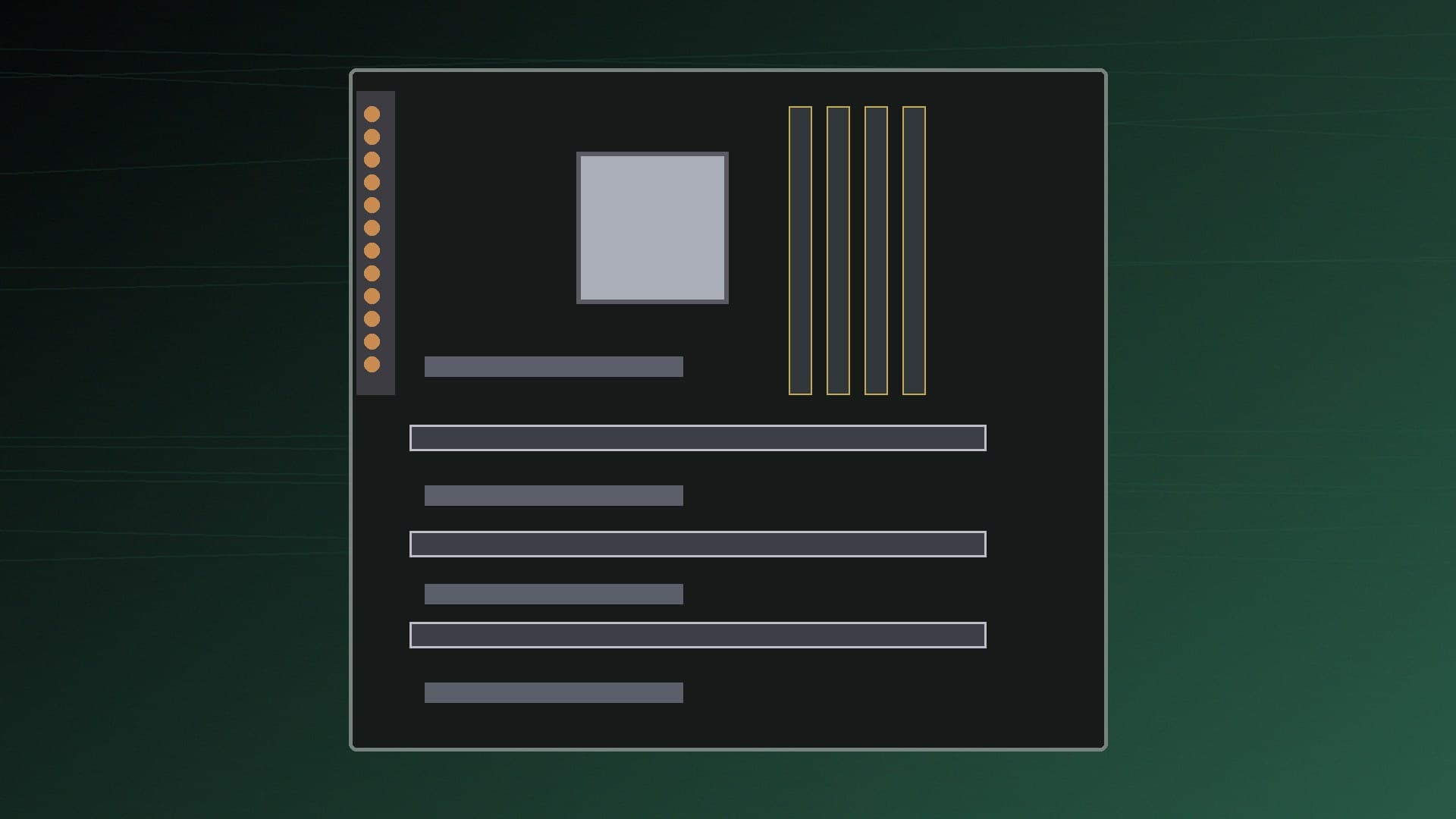
Your motherboard's BIOS can set fan curves, but on many boards each fan can only follow a limited set of temperature sensors, often just the CPU. That's why case fans ramp up when you open a browser tab, then sit idle while your graphics card heats the case during a gaming session. Windows fan control software fixes this by letting any fan respond to any sensor, including GPU and SSD temperatures. Two of the most capable options are FanControl, a free app by developer Rémi Mercier, and Argus Monitor, a paid fan control and system monitoring suite from developer Argotronic. This comparison is based on each developer's official site and documentation, checked on 28 November 2026.
At a glance
| FanControl | Argus Monitor |
|---|
Developer | Rémi Mercier | Argotronic |
Cost | Free (donations welcome) | Paid licence; free, fully functional 30-day evaluation |
Source code | Closed, but built mainly on the open-source LibreHardwareMonitor | Closed |
Windows support | Windows 10 and Windows 11 | Windows 11 and Windows 10 22H2 |
Fan curves | 7 curve types, plus mix curves (max, min or average of several curves) | Control curves, multiple controllers per fan (maximum wins), synthetic temperatures |
Monitoring extras | Temperature tray icons | Hardware monitoring, S.M.A.R.T. drive monitoring, sidebar gadget, tray icons |
RGB control | No | Limited list of supported devices |
Extensibility | .NET plugin system | Open-hardware Argus Controller project for DIY sensors and fan channels |
Fan control: both go far beyond the BIOS
The core idea is the same in both apps: tie any fan to any temperature, and combine several temperatures when one isn't enough.
FanControl says it offers seven fan curve types and the feature that started the whole project, mix curves. You create separate curves for, say, CPU, GPU and SSD temperatures, then combine them with a function such as maximum or average, so the case fans respond to whichever component is working hardest. The developer lists a long set of tuning parameters: fan calibration for RPM control, RPM avoid zones, response time, hysteresis and hysteresis direction, step up and step down, and start and stop logic for smooth 0 RPM operation where the hardware supports it. You can save multiple configurations, and there's an assisted setup.
Argus Monitor covers the same ground with different terminology. It can set fixed fan speeds or control curves based on any temperature source, including CPU, GPU, HDD/SSD, motherboard or AIO sensors. Its multi-controller feature runs several controllers in parallel for each fan and uses the highest value, which is the same idea as FanControl's maximum mix curve. Argotronic adds user-defined synthetic temperatures (combinations of readings using operations such as mean, maximum, time average and limits), plus hysteresis, temperature averaging over time and rate limits to keep fan speeds steady. Fan control profiles can be switched from the interface or with hotkeys, handy for flipping between a quiet profile and a full-speed rendering profile.
In short, neither app is short of control. FanControl's mix curves and per-fan tuning are aimed at tinkerers; Argus Monitor's profiles with hotkeys and time-averaged synthetic temperatures suit people who want a polished set-and-forget system.
Hardware support
Argus Monitor lists fan monitoring and control for the fan channels of motherboard Super I/O chips (ITE, Fintek, Winbond, Nuvoton and others) and for external fan controllers and AIO coolers from Corsair, EVGA and NZXT. For temperatures it reads AMD and Intel CPUs, AMD and Nvidia GPUs, HDDs and SSDs, motherboard sensor channels, RAM, and readings from fan controllers, PSUs and AIO coolers.
FanControl says it supports a variety of motherboards, GPUs and other hardware such as AIOs. Its sensor backend is mainly LibreHardwareMonitor, with dedicated libraries for Nvidia and AMD graphics card fan control, and its plugin system lets third-party developers add extra sensors and controls; the GitHub page lists community plugins for things like some Dell, Lenovo and GPD systems and a Razer cooling pad. Because the backend is open source, hardware support doesn't depend on one developer alone.
Neither is a sure bet on a laptop. FanControl's FAQ says it mostly doesn't work on laptops, because they don't expose their fans the way desktop motherboards do, unless a plugin adds support for a specific model. If you're on a gaming laptop, the manufacturer's own control app is usually the place to start.
Whichever you pick, set the BIOS up first. FanControl's FAQ advises avoiding any "smart" fan control in the BIOS and suggests that a fixed default speed (such as 50%) works well for most people, while checking whether each header is in PWM or DC mode. Our guide on how to set fan curves explains those BIOS options.
Monitoring and extras
This is where Argus Monitor pulls ahead. As the name suggests, it's a hardware monitoring tool as well as a fan controller, with S.M.A.R.T. monitoring for almost all HDDs and SSDs, a desktop sidebar gadget, and the option to show many values as tray icons. It can also control RGB on a short list of devices, including some Asus and EVGA GeForce graphics cards and certain Corsair and NZXT controllers and coolers, setting static colours or colours linked to a temperature. For the technically inclined, Argotronic publishes the Argus Controller open-hardware project, with a protocol, sample circuit and firmware to build your own sensor and fan-control device.
FanControl is deliberately narrower. Its developer describes it as lean and bloat-free, focused on fans. It offers temperature tray icons and UI themes, but for full sensor logging you'd pair it with a dedicated monitor; see our best free hardware monitoring software roundup, or how to use LibreHardwareMonitor, which shares FanControl's sensor library.
Price and licensing
FanControl is free. The developer accepts donations, and notes that GitHub sponsorship goes towards the open-source work around FanControl rather than the main program. Despite the open-source backend, the app's own source code is closed.
Argus Monitor is paid, with one-year and three-year licences on the official site, and a free, fully functional 30-day evaluation. Argotronic says it isn't a subscription: when your licence period ends you can keep using every version released before it expired, and you only need to renew to get newer versions. A licence covers two concurrent installations and remains valid after reinstalling Windows or changing hardware. Check the official site for current pricing, which is listed in euros and US dollars.
Installation
FanControl comes as an installer or a portable zip from its GitHub releases page, and it's also available through package managers, including winget install Rem0o.FanControl (see how to install apps with winget). Its release notes say version 238 stopped shipping the old WinRing0 driver, after Windows Defender began flagging it, so anyone on an older version should update. Our full walkthrough is how to use FanControl in Windows 11.
Argus Monitor is a standard download from argusmonitor.com; version 7.4.03 was the current release on the site when we checked.
Which should you choose?
Choose FanControl if you want the most flexible fan curves for free, you're happy to spend some time calibrating, and you already use (or don't need) a separate monitoring app.
Choose Argus Monitor if you'd rather have fan control, drive health and hardware monitoring in one supported, paid app, or you want hotkey-switchable profiles and limited RGB control from the same place. Use the 30-day trial to confirm it sees all your fans first.
For more alternatives, see our best free fan control software guide.