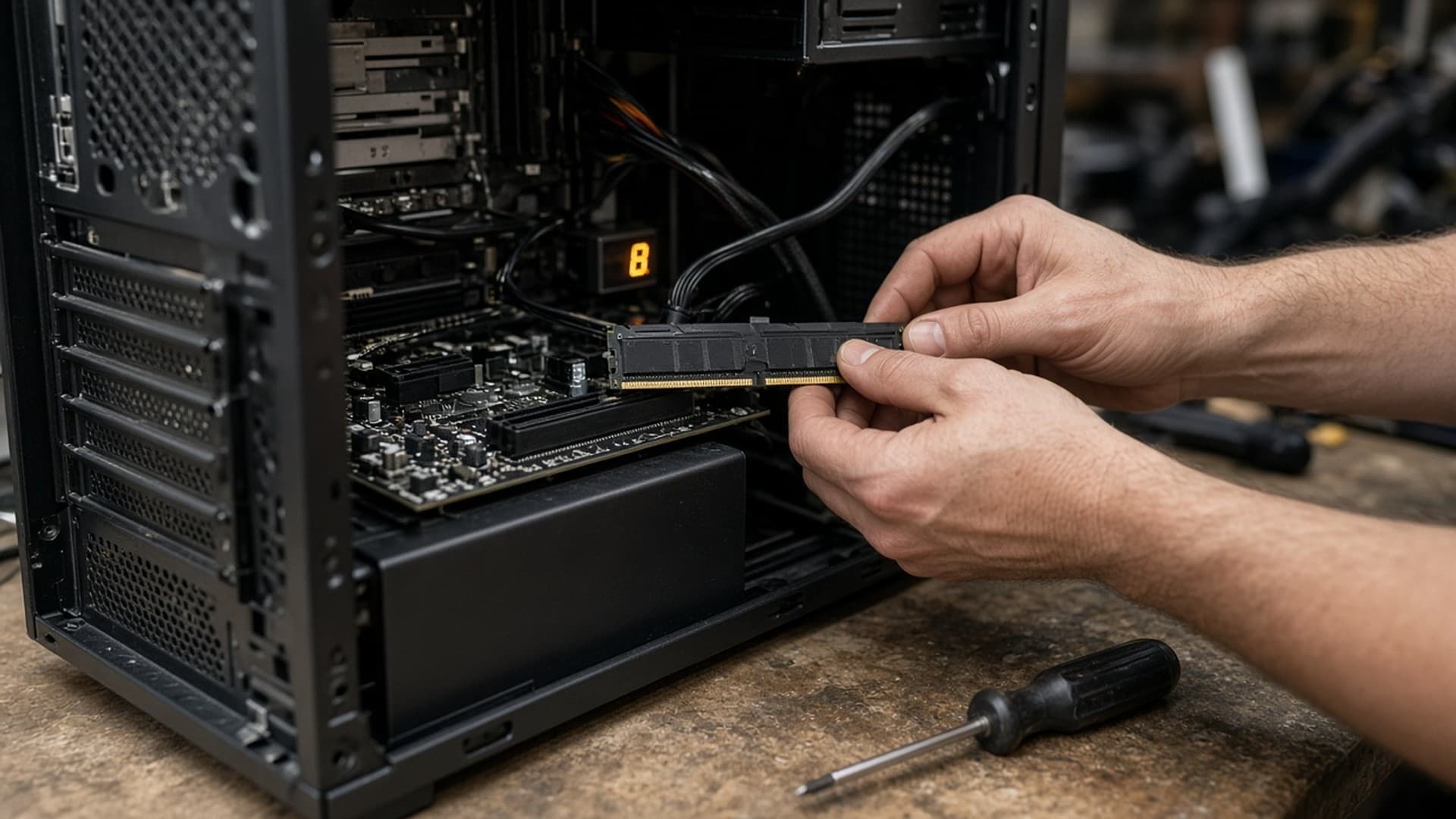
When we first published this article in March, it quoted 32GB DDR5-6000 kits at £70 to £80. That has not aged well. On 12 November 2026, the cheapest 32GB DDR5 desktop kit tracked by ramprices.uk cost about £455, and the median DDR5 price per gigabyte was roughly three times what it was a year ago. DDR4 has gone up too, but by much less.
So the question has changed. It is no longer "is DDR5 faster?" (it usually is) but "is it worth more than £250 extra for 32GB?" This guide sets out what the testing shows and when each type makes sense.
Forge PC has not run its own memory benchmarks for this article. Performance figures come from TechSpot's testing, which is credited below. All prices are approximate UK prices checked on 12 November 2026.
The short version
DDR5 is faster, but not by much in most games. In TechSpot's 21-game test, DDR5-7200 was 7 per cent faster than DDR4-4000 on average at 1080p, and 10 per cent faster in 1 per cent lows. Some games showed no difference, and one was slower on DDR5.
DDR5 costs much more right now. ramprices.uk's medians on 12 November were £18.48 per GB for DDR5 and £8.22 per GB for DDR4.
You don't really choose memory, you choose a platform. AM5 and Intel's LGA 1851 Core Ultra desktop chips need DDR5. AM4 needs DDR4. Intel's 12th to 14th-generation chips can use either, depending on the motherboard.
Already have 16GB or 32GB of DDR4? Keeping it and upgrading the processor on the same platform is usually the better value this year.
Building new with a long-term plan? AM5 and DDR5 are still the better platform. Just budget for the memory first.
What the testing shows
The most useful like-for-like test is still TechSpot's "DDR5 vs DDR4 Gaming Performance", published in December 2023. Steven Walton used a Core i9-14900K, which supports both memory types, with premium kits: DDR5-7200 CL34 and DDR4-4000 CL16. He tested 21 games.
TechSpot result (1080p, 21 games) | DDR5-7200 vs DDR4-4000 |
|---|
Average frame rate | DDR5 7% faster |
1% lows | DDR5 10% faster |
Biggest gains | Double-digit gains in several CPU-heavy games, for example Star Wars Jedi: Survivor |
Smallest gains | No difference in Halo Infinite. DDR4 up to 10% faster in Total War: Warhammer III |
Three things are worth taking from that test:
The gap shrinks as the graphics card becomes the limit. TechSpot notes that as games become more GPU-limited at 1440p and 4K, memory performance matters less. Most people buying in this price range are GPU-limited most of the time.
The gains show up mostly in 1 per cent lows, which affect smoothness. TechSpot's conclusion was that DDR5 "typically offers better performance in modern titles, especially in delivering stronger 1% lows."
TechSpot said that keeping good DDR4 was still "a viable option", especially if you already own 32GB of it. In demanding modern games, it said, GPU limits are what you are going to notice.
There is an important caveat. Back then, TechSpot's buying advice was simply "just go for DDR5" because the two cost about the same. It quoted a 32GB DDR5-5600 kit at about $70 against about $55 for DDR4-3600. That price logic has reversed in 2026, so the performance conclusions still hold but the buying advice does not.
We have not found a newer test from a major outlet that pits DDR4 against DDR5 on the same processor with current games. If one appears, we will update this article.
What it costs in November 2026
Memory (desktop kit) | Approx. UK price, 12 Nov 2026 | Price per GB |
|---|
32GB (2x16GB) DDR4-3200 CL16 | £198 | about £6.20 |
32GB (2x16GB) DDR5-5600 | £455 | about £14.20 |
32GB (2x16GB) DDR5-6000 CL36 (G.Skill Ripjaws S5) | £479 | about £15.00 |
32GB (2x16GB) DDR5-6000 CL30 (Corsair Vengeance RGB, Scan) | £550 | about £17.20 |
16GB (2x8GB) DDR4-3200 CL16 | £111 | about £6.90 |
16GB (2x8GB) DDR5-5600 | £231 | about £14.50 |
The kit prices are the cheapest Amazon.co.uk listings tracked by ramprices.uk, apart from the Corsair kit, which is Scan's price. The median prices across all kits were higher: £18.48 per GB for DDR5 and £8.22 for DDR4. A year earlier, ramprices.uk's medians were £6.16 and £4.39.
For a 32GB kit, the DDR5 premium is roughly £260 to £350 today, depending on speed and timings. For context, the gap between the cheapest RX 9060 XT 8GB and the cheapest RX 9060 XT 16GB on SpecPrice on 12 November was about £130.
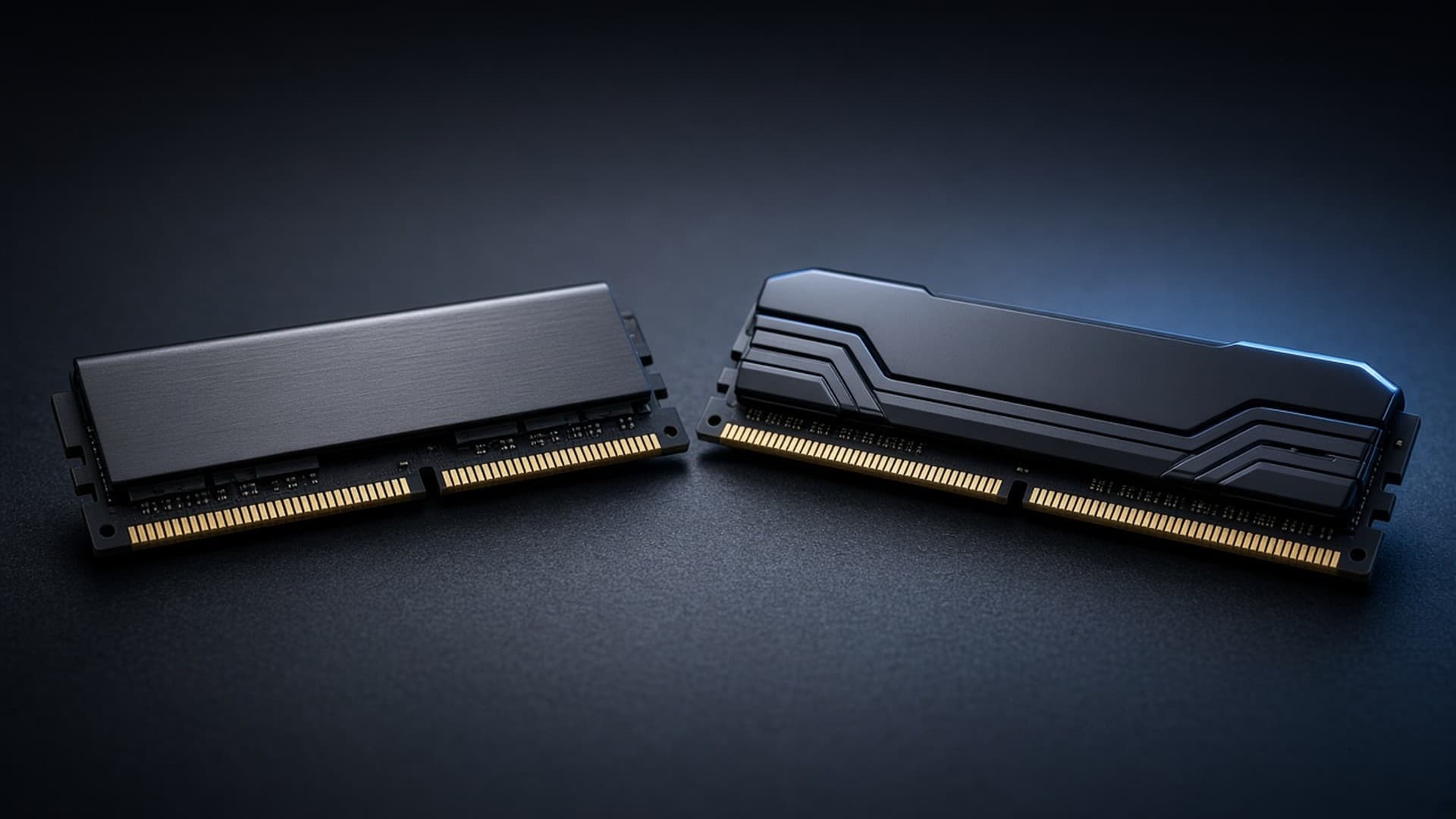
DDR4 and DDR5 are not interchangeable. The slots are physically different, and each motherboard supports one type.
Platform | Memory | Notes |
|---|
AMD AM4 (Ryzen 5000 and older) | DDR4 only | Recent new chips still use Zen 3. The cheapest way to build in 2026 |
AMD AM5 (Ryzen 7000, 8000, 9000) | DDR5 only | AMD has committed to supporting AM5 through 2029 |
Intel LGA 1700 (12th to 14th gen Core) | DDR4 or DDR5, depending on the board | Board is sold in DDR4 or DDR5 versions, for example the MSI PRO B760M-P DDR4 |
Intel LGA 1851 (Core Ultra Series 2 desktop) | DDR5 only | Intel lists the Core Ultra 7 270K Plus at up to DDR5-7200 |
AMD's own specifications for the Ryzen 5 9600X list DDR5-5600 as the officially supported speed with two single-rank sticks. In practice, our RAM guide still recommends DDR5-6000 CL30 with EXPO enabled as the sweet spot for AM5. Don't pay a big premium for anything faster.
Because memory comes with a platform, the fairest comparison is processor, board and memory together. Using 16GB kits, here is the cheapest sensible core of each kind on 12 November:
Core | Parts | Approx. price |
|---|
AM4 / DDR4 | Ryzen 5 5600 (£125), Gigabyte B550M Aorus Elite (£87), 16GB DDR4-3200 (£111) | £323 |
AM5 / DDR5 | Ryzen 5 9600X (£160), MSI PRO B840M-B (£90), 16GB DDR5-5600 (£231), Arctic Freezer 36 (£20) | £501 |
The 9600X has no cooler in the box, so we have added a £20 one. At 32GB the gap grows by roughly another £140. AM5 gets you a faster processor and a socket AMD says it will support through 2029, but you pay about £180 more for it at 16GB.
Which should you choose?
Choose DDR4 if:
You already own a DDR4 platform with 16GB or 32GB of decent memory. A drop-in processor upgrade, such as a Ryzen 7 5800X3D on AM4 (about £300) or a Core i7-14700K on LGA 1700 (about £305), avoids buying a new board and memory kit at today's prices. Our upgrade guide has more on this.
You're building to a tight budget, around £800, where every pound saved on memory goes into the graphics card. Our £800 build is AM4 and DDR4 for exactly this reason.
Choose DDR5 if:
You're building a new mid-range or high-end PC and want an upgrade path. AM5's support commitment matters more than a few per cent of frame rate.
You want an X3D processor such as the Ryzen 7 9800X3D. The current ones are AM5 and DDR5 only, apart from older AM4 chips such as the 5800X3D.
You play CPU-heavy games at high frame rates, where TechSpot found the biggest gains.
Don't:
Buy a new DDR4 LGA 1700 board for a brand-new build unless the saving is big. The socket has no future upgrades, as our CPU guide explains.
Pay a big premium for very fast DDR5 such as 7200MT/s or above on AM5. The gains in TechSpot's test came from comparing premium kits on Intel, not from pushing AM5 past the speeds AMD recommends.
Cut the graphics card to afford 32GB of DDR5. Our RAM guide makes the same point: 16GB with a better graphics card beats 32GB with a weak one.
Our verdict
DDR5 is the better memory, but in November 2026 it is far from the better value. TechSpot's test shows the performance gap is real but modest: single-digit percentages on average, more in 1 per cent lows and CPU-heavy games, and nothing at all in some titles. That doesn't justify paying more than twice the price per gigabyte for a budget build or a platform upgrade you can avoid. If you have DDR4, keep it and upgrade around it. If you're building new and the budget covers DDR5 and a 16GB graphics card (realistically about £1,300 and up today), AM5 is still worth it for the platform. Buy a sensible DDR5-6000 kit, keep it to 32GB or less, and give the rest of the budget to the graphics card.