If you play at 1080p, you don't need a £1,000 graphics card, but GPU prices in 2026 mean even entry-level cards cost more than they used to. This guide picks the best graphics cards for 1080p gaming using the makers' official specs, independent testing from Tom's Hardware and UK prices tracked by SpecPrice. Forge PC hasn't tested these cards itself, so we don't quote our own frame rates. Prices below are approximate, were checked on 20 November 2026 and change daily, especially in the run-up to Black Friday on 27 November.
Our picks at a glance
Pick | GPU | VRAM | Graphics card power | Cheapest UK price (approx., 20 Nov 2026) |
|---|
Best for most people | NVIDIA GeForce RTX 5060 | 8GB GDDR7 | 145W | About £430 |
Best value | Intel Arc B580 | 12GB | Not listed in our sources | About £314 (stock not checked) |
Best step up | NVIDIA GeForce RTX 5060 Ti 8GB | 8GB GDDR7 | 180W | About £480 |
Best AMD option | AMD Radeon RX 9060 XT 8GB or 16GB | 8GB or 16GB GDDR6 | 160W | About £450 (8GB), about £610 (16GB) |
Cheapest option | Intel Arc B570 | 10GB | Not listed in our sources | About £300 |
NVIDIA and AMD figures are from their official product pages; Arc memory sizes are from Tom's Hardware. UK prices are the cheapest new listings found by SpecPrice, updated at 01:35 to 02:50 GMT on 20 November 2026.
How much graphics card does 1080p need?
Tom's Hardware's buying guide, updated on 18 November 2026, says 8GB of VRAM is "the bare minimum" for the latest games at 1080p, and it's the smallest amount you'll find on a new card. That's enough for most games at sensible settings, but cards with 10GB to 16GB give you more headroom for high texture settings and future games. Our how much VRAM do you need guide and RX 9060 XT 8GB vs 16GB comparison go into more detail.
Also think about your monitor. A 1080p screen with a high refresh rate, like those in our best 1080p gaming monitor guide, benefits from a faster card than a 60Hz one. If you're weighing up a resolution upgrade, see 1080p vs 1440p vs 4K.
Best for most people: NVIDIA GeForce RTX 5060
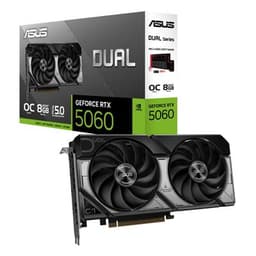
Tom's Hardware's 1080p write-up says the RTX 5060 is "still your best bet" for 1080p gaming, although the card its guide lists as the 1080p pick is the RTX 5060 Ti 8GB, covered below. NVIDIA lists 3,840 CUDA cores, 8GB of GDDR7 memory on a 128-bit bus, 145W total graphics power and a 550W recommended power supply, with support for DLSS 4 multi-frame generation. The cheapest RTX 5060 SpecPrice found was about £430 across seven UK shops.
The 8GB of memory is its main weakness, so it's the right card if you play mostly esports and mainstream games and want NVIDIA's feature set. If you can stretch, the cards below give you more memory or more speed.
Best value: Intel Arc B580
Tom's Hardware calls the Arc B580 Intel's best gaming card and a strong entry-level value, noting that it has 12GB of VRAM and has avoided the worst of the price rises. It also found the B580 is 12% faster than the cheaper Arc B570 at 1080p. In the UK on 20 November, SpecPrice listed the cheapest B580 at about £314 (stock not checked), which made it one of the cheapest current-generation cards with more than 8GB.
It's worth checking that the games you play run well on Arc before buying. Our Arc B580 vs RTX 5060 comparison covers the trade-offs.
Best step up: NVIDIA GeForce RTX 5060 Ti 8GB
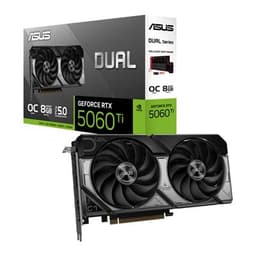
Tom's Hardware found the RTX 5060 Ti 8GB gives roughly 20% more 1080p performance than the RTX 5060 for about 9% more money, based on US pricing. In the UK the gap on 20 November was a little wider, at about £480 for the cheapest 5060 Ti 8GB against £430 for the 5060, or roughly 12% more. NVIDIA lists 4,608 CUDA cores, 180W total graphics power and a 600W recommended power supply. The 16GB version (about £700) is a much bigger jump in price; our RTX 5060 Ti 8GB vs 16GB article explains when it's worth it.
Best AMD option: AMD Radeon RX 9060 XT
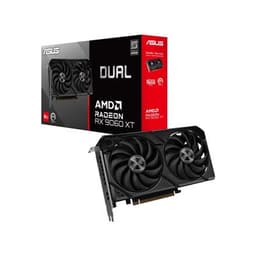
AMD's RX 9060 XT comes in 8GB and 16GB versions, both with 32 compute units, a boost clock of up to 3,130MHz, GDDR6 on a 128-bit bus with 320GB/s of bandwidth, 160W typical board power and a 450W recommended power supply, according to AMD. The cheapest 8GB card was about £450 and the cheapest 16GB card about £610 on 20 November, per SpecPrice. Tom's Hardware says RX 9000 cards can still be good value if you don't care about ray tracing, path tracing or frame generation and are happy with FSR 4 upscaling.
At those prices the 8GB card is close to the RTX 5060, so the choice comes down to which features you prefer. The 16GB card is the one to pick if you want more memory without paying for an RTX 5060 Ti 16GB. Our RX 9060 XT vs RTX 5060 Ti 16GB comparison has more.
Cheapest option: Intel Arc B570
If your budget stops at about £300, Tom's Hardware rates the 10GB Arc B570 as a good value and says it gets just over 60fps on average across its 2026 1080p test suite. But in the UK on 20 November, the cheapest B570 at about £300 was only around £14 cheaper than the cheapest B580 listing, so the B580 is the better buy if you can find it in stock at that price.
What about the RTX 5050?
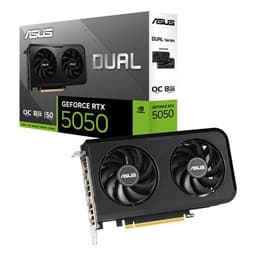
NVIDIA's RTX 5050 has 2,560 CUDA cores, 8GB of GDDR6 and 130W total graphics power, with a 550W recommended power supply. Tom's Hardware found the Arc B570 is only a few frames per second behind it at 1080p, and at about £360 on 20 November the cheapest RTX 5050 cost more than the Arc B580. It only makes sense if you specifically need an NVIDIA card at the lowest possible price.
Our verdict
Buy the RTX 5060 if you want the safest 1080p card with NVIDIA's features, or the Arc B580 if you want more memory for less money. Stretch to the RTX 5060 Ti 8GB for extra speed, or pick the RX 9060 XT 16GB if you want a lot of VRAM at a lower price than the RTX 5060 Ti 16GB. Check prices on the day, because the gaps between these cards are small and Black Friday deals could reorder them. For more budget options, see our best budget graphics card guide, and when your card arrives, our graphics card installation guide.