NVIDIA has published the weights for Nemotron-Labs-Image-30B-A3B on Hugging Face. It's an autoregressive text-to-image model with 30 billion parameters, of which 3 billion are active, and Dataconomy reported the release on 26 November 2026. The weights are open to download, but the licence and the hardware NVIDIA documents make it a research release rather than something most home PCs can run today.
What NVIDIA has released
Nemotron-Labs-Image-30B-A3B is the image-generation part of a wider NVIDIA research project called Nemotron-Labs-VisualCreation. NVIDIA describes VisualCreation as an agentic framework for producing raster images and editable visual artefacts such as webpages, presentations, documents, charts and scientific figures. It calls the approach "Pixel as Code".
This first release covers only part of that framework:
Released: the Nemotron-Labs-Image-30B-A3B image generator, its bundled visual tokeniser, the model definition and inference code.
Not yet released: the VisualCreation harness that ties everything together, and the Nemotron-Labs-VisionCode models for structured output. NVIDIA's release plan says both "will be released upon legal clearance".
How it works
Most local image models people run on PCs, such as FLUX.2 or SDXL, are diffusion models. This one isn't. NVIDIA's model card describes it as an autoregressive raster generator. It writes an image as a sequence of visual tokens, much as a language model writes text, and the bundled Nemotron-Labs-Image-Tokenizer then decodes those tokens into pixels.
Key details from the model card:
Item | NVIDIA's figure |
|---|
Parameters | 30B total, 3B active (mixture of experts) |
Starting point | Initialised from Nemotron 3 Nano |
Training | Progressive mid-training followed by GRPO |
Tokeniser | About 642M parameters, 16x16 pixel patches |
Precision | bfloat16 |
Context length | 262,144 tokens |
Recommended resolutions | 1024x1024, 1184x880, 1248x832, 880x1184 |
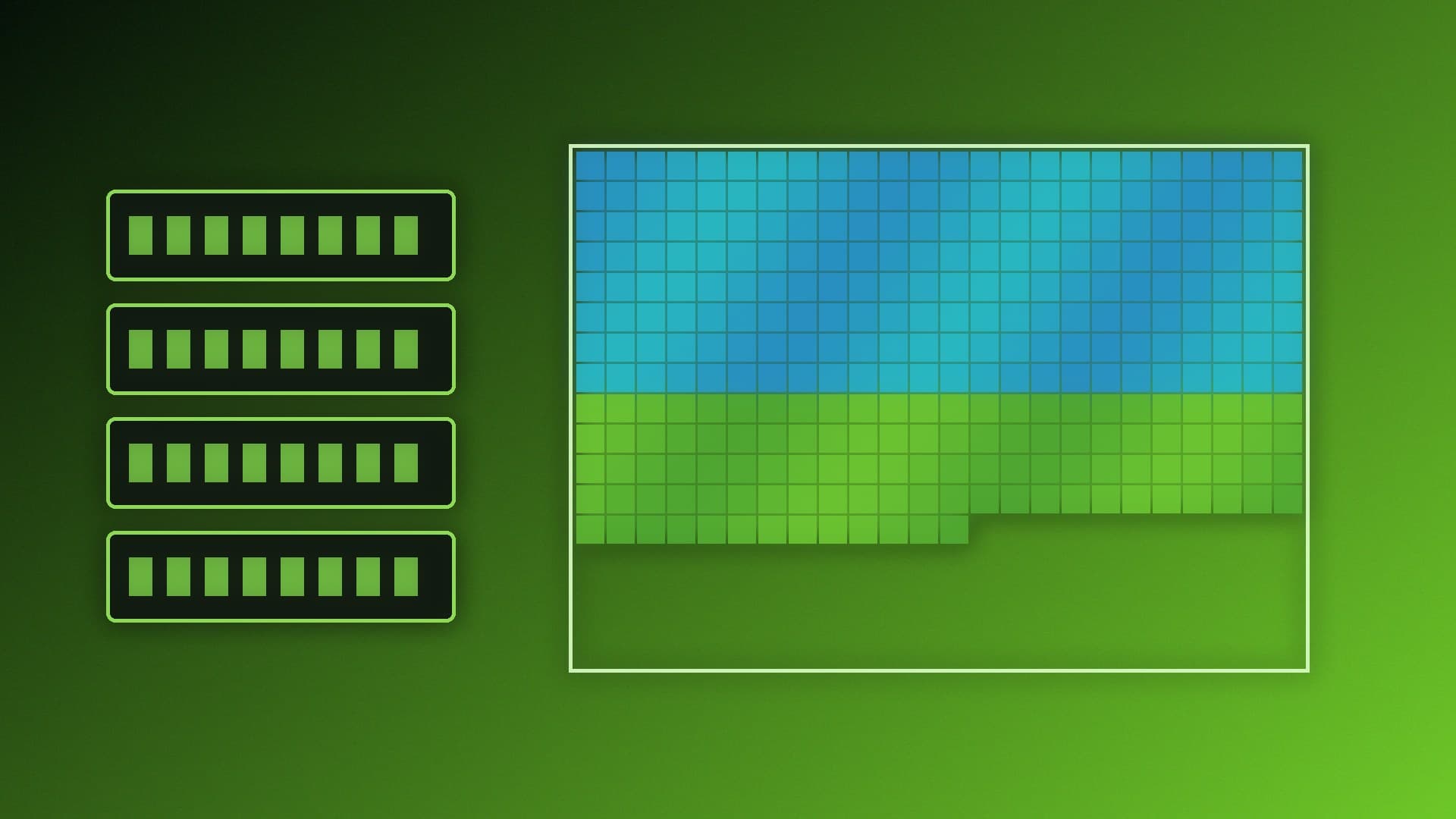
The card says the model supports any resolution, as long as width and height are multiples of 16 and the token grid fits the generation budget. Because the image is built from 16x16 patches, a 1024x1024 image is a 64x64 grid of visual tokens.
If you want to know why only 3B of the 30B parameters are active at a time, see our MoE vs dense explainer.
The hardware NVIDIA documents
This is where the "local" angle falls apart for now. NVIDIA's quick start asks for:
Linux with Python 3.12 and an NVIDIA driver compatible with CUDA 13.0
vLLM 0.21.0, PyTorch 2.11.0 and Transformers 5.23.0
Four NVIDIA H100 80GB GPUs for the inference example, with tensor parallelism set to 4
The weights are stored as 32 safetensors shards in bfloat16, about 130GB in total based on the file sizes in NVIDIA's repository. That's more than the 96GB on a single NVIDIA RTX Pro 6000 Blackwell Workstation Edition 96GB and far more than any gaming card, including the 32GB NVIDIA GeForce RTX 5090 Founders Edition. The card does say the generator and decoder can run in separate processes "if GPU memory is tight". NVIDIA hasn't published a smaller quantised build, or any guidance for consumer GPUs.
The model card also flags two practical limits:
It's not a Diffusers pipeline and isn't compatible with AutoPipelineForText2Image, so tools built around Diffusers won't load it as they stand.
Loading it runs repository code with trust_remote_code=True. NVIDIA advises pinning and reviewing a specific revision for controlled deployments.
The licence: free to download, not free to use commercially
The weights aren't under an open-source licence. NVIDIA's model card says the model "is licensed for non-commercial research and evaluation" under the NVIDIA License. The licence itself says the work may be used "only... non-commercially", and defines that as "for research or evaluation purposes only". If you were hoping to use it for client work or anything you sell, it isn't suitable.
About those benchmark scores
Some early coverage has credited the image model with beating GPT Image 2 on several tests. NVIDIA's own table is more specific: the scores belong to the Nemotron-Labs-VisualCreation framework, and NVIDIA says the table "reports our best score for each benchmark across the configurations evaluated in the paper". In the framework's direct-raster route, the image model generates candidates and a separate model, Nemotron-3.5-Super-VL, picks the best one. All the figures are NVIDIA's, from its technical report, and we haven't seen independent tests.
With that in mind, NVIDIA reports:
Benchmark | Nemotron-Labs-VisualCreation | GPT Image 2 | Nano Banana Pro |
|---|
GenEval | 92.86 | 89.00 | — |
GenEval2 | 65.43 | 81.00 | 59.00 |
LongTextBench | 97.98 | 96.00 | 97.60 |
CVTG-2K | 92.53 | 90.03 | 77.90 |
Qwen-Image-Bench | 52.46 | 65.23 | 59.33 |
BizGenEval | 86.0 | 83.2 | 76.7 |
On NVIDIA's own figures it's a mixed picture: ahead on several prompt-following and text-rendering tests, behind GPT Image 2 on GenEval2 and Qwen-Image-Bench. In a second table, the framework beats FLUX.2 Dev on every benchmark where both have scores.
NVIDIA's limitations section adds the usual warnings. Composition, anatomy, object counts and rendered text can come out wrong, and generated images can contain biases or content resembling real people, brands and copyrighted styles.
What it means for PC builders
For now, this is one to watch rather than one to download. Thanks to the 3B active parameters, each generated token needs relatively little compute, but every one of the 30B parameters still has to be held in memory, and NVIDIA's only documented setup is a four-GPU data-centre server. Community quantisations may change that, as they have for other mixture-of-experts models, but nothing official exists yet.
If you want to generate images on your own PC today, our guides to the best local AI image models and the best GPUs for local AI image generation cover models that run on consumer graphics cards. For another recent open image model, see our SenseNova U1.6 news story.