Everything below comes from each developer's official website, download page and help documentation, all checked on 25 November 2026.
File Explorer's copy dialog is fine for a handful of files, but it's at its weakest on the jobs PC builders do most: moving a game library to a new NVMe SSD, backing up a photo archive to an external drive, or copying hundreds of gigabytes across a home network. If a single file fails, you're left wondering what made it across. TeraCopy, from Code Sector, and FastCopy, from FastCopy Lab, are the two long-running alternatives. Both are free for home use, both can check that copies match the originals, and both plug into Explorer. They're built around quite different ideas, though.
At a glance
| TeraCopy | FastCopy |
|---|
Developer | Code Sector | H. Shirouzu and FastCopy Lab, LLC |
Current Windows version (official site) | 4.0.5 | 5.12.0 (18 August 2026) |
Windows support | 4.x: Windows 10 and 11 (TeraCopy 3.17 still offered for Windows 7 and later) | Windows 7, 8, 8.1, 10 and 11 |
Free for | Home use; commercial use needs Pro/Business | Individuals at home; workplace use needs Pro (two-week trial) |
Main approach | Replaces Explorer's copy and move with a queue and file list | Separate Source/DestDir window with operation modes |
Verify after copy | Yes, 17 checksum algorithms | Yes, xxHash3 by default, plus MD5, SHA-1, SHA-2 and SHA-3 options |
Skip errors and carry on | Yes, then retry failed or skipped files | Yes ("Nonstop" option, errors logged) |
Sync/mirror modes | No dedicated sync mode | Yes (Diff, Sync, Move and more) |
Copy locked files | Yes, via a Windows service and Volume Shadow Copy | Not listed as a headline feature |
Multi-threaded copy | Free: up to 2 threads; Pro: 3 or more | Separate read, write and verify threads |
Also on Mac | Yes (Mac App Store) | No (Windows only) |
How they work day to day
TeraCopy is designed to disappear into Windows. Code Sector says it replaces the copy and move functions in Explorer, so you keep dragging and pasting files as usual and TeraCopy takes over the transfer. You can also turn on a confirmation dialog for every drag-and-drop, which is a handy guard against accidentally moving a folder you meant to copy. Transfers go into a queue and run one after another rather than all at once, and the file list doubles as the log, showing each file's size, source and target checksums and any problems.
FastCopy feels more like a dedicated tool. Its main window has a Source box and a DestDir box, an operation mode drop-down, and Listing and Execute buttons. Listing is the feature to get to know: it shows what will be copied (marked +) and deleted (marked -) before anything happens. FastCopy 5 also supports the Windows 11 shell extension, so you can start jobs from Explorer, and its help explains a detail that catches people out: if the DestDir path ends with a backslash, FastCopy copies the source folder itself; if it doesn't, it copies only the folder's contents.
Handling errors and verifying copies
This is the main reason to install either one.
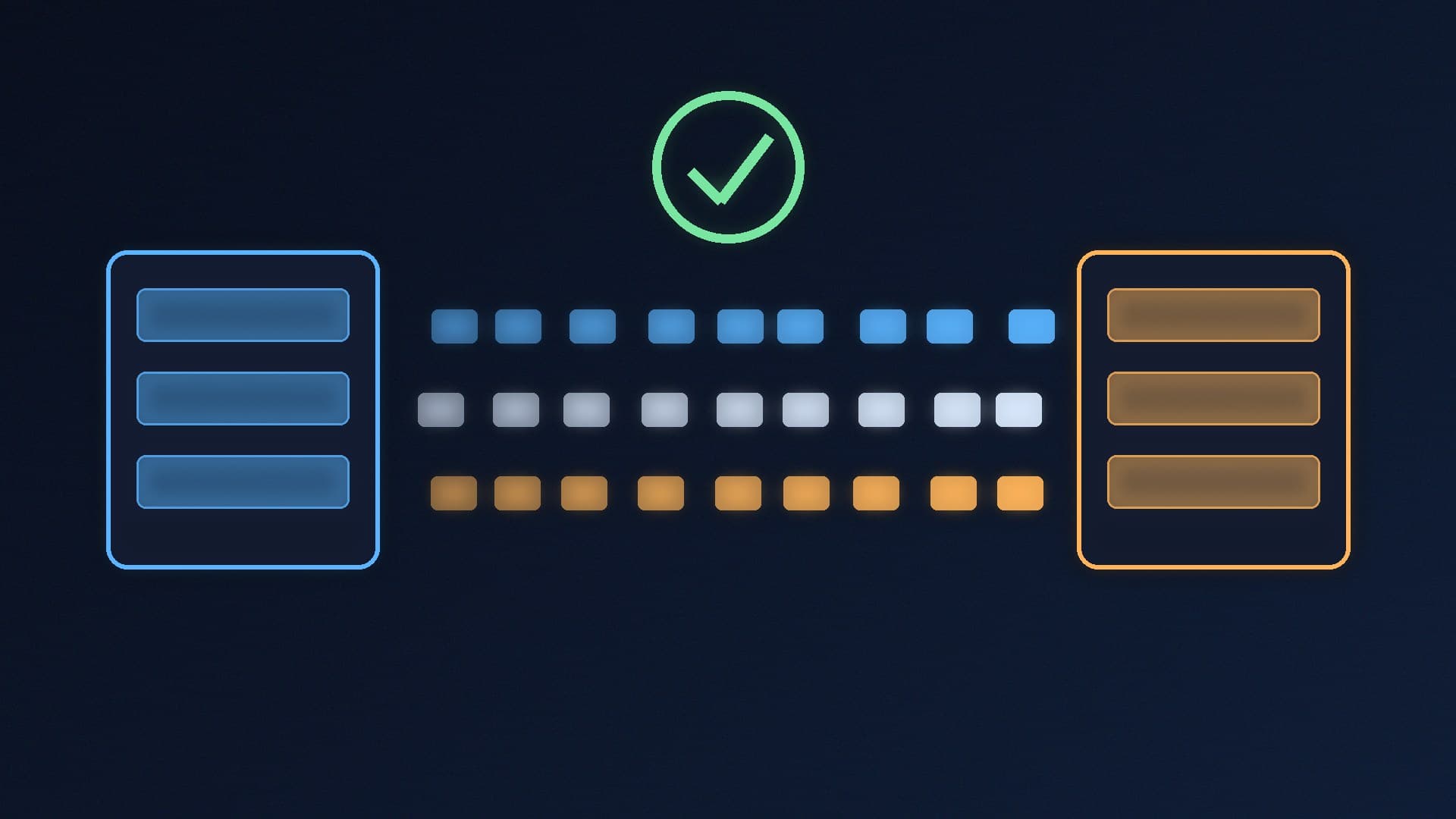
TeraCopy skips a file that won't copy instead of abandoning the whole job, waits for a network share or USB drive to reconnect, and lets you retry only the failed or skipped files afterwards. It can verify that destination files are identical to the source using any of 17 checksum algorithms, including CRC32, MD5, SHA1, BLAKE3 and xxHash3, and it can create or check checksum files.
FastCopy has a Nonstop option that keeps going through read, write and delete errors while showing them in the main window and recording them in the error log. Its Verify option checks written data with xxHash3 by default, and a separate Verify operation mode compares hashes between two folders after the event. The Pro edition adds "Perfect Verify" and a check for silent data corruption on files with stored verification information.
For a one-off move to a new SSD, both cover the essentials. TeraCopy's retry list is the friendlier way to deal with a few problem files; FastCopy's logging suits people who want a record of exactly what happened.
Sync and backup jobs
FastCopy is the stronger choice if you want a repeatable folder mirror. Its operation modes include Diff (Size/Date), which only copies files that are new or have changed, Diff (Newer), and Sync, which also deletes files in the destination that no longer exist in the source. It supports UNIX-style include and exclude filters, a job manager for saved jobs and a command line, so it can be scheduled. Treat Sync with care: run Listing first, because anything marked for deletion in the destination really will be removed.
TeraCopy isn't a sync tool. It can be automated in smaller ways, with a "Skip All" mode for unattended transfers, reports and checksum files, and PowerShell scripts that run when a transfer finishes, but for proper mirrored backups a dedicated tool is a better fit. Our best free file sync software guide covers those, and Windows' built-in option is explained in our Robocopy guide.
Speed claims
FastCopy's site leans heavily on speed. Its help says it reads and writes in parallel on separate threads when source and destination are on different drives (always on SSDs), bypasses the Windows cache so other apps don't slow down, and uses asynchronous, bulk I/O to get close to a device's limits. Version 5 claims a 20 to 30% speed increase on fast SSDs when running with elevated privileges because space is pre-allocated. The developer's site also links to press articles that compared it with Explorer; those are the publications' results, not ours.
TeraCopy makes fewer speed claims. Its feature table says the free version uses up to two threads and Pro uses three or more. In practice, the speed of the slowest drive or network link will usually matter more than the copy tool.
Licensing and editions
Neither app is free for business use. TeraCopy's free version covers verification, locked files, Explorer integration, scripts, checksum files and secure deletion; Pro/Business adds commercial use, copying to several destinations at once, more threads, editable file lists, favourite folders and HTML/CSV reports. FastCopy's licence says the normal version is free only for individuals (non-profit) at home and that workplace use needs a Pro licence after a two-week trial; Pro adds extra operation modes, Perfect Verify and the silent corruption check.
Getting started safely
Download only from the official sites: codesector.com for TeraCopy (Code Sector also lists winget install teracopy) and fastcopy.jp for FastCopy.
For a big one-off copy, turn on verification and leave the source files in place until the job has finished and verified.
In FastCopy, choose your mode, then press Listing before Execute, especially in Sync or Move modes.
In TeraCopy, check the file list at the end for skipped or failed files and use the retry option rather than starting the whole job again.
If you're copying to free up space, see our guide on freeing up disk space in Windows 11 once the transfer has been checked.
Our verdict
Choose TeraCopy if you want Explorer's copy and paste to become more reliable without learning a new tool: it queues jobs, skips and retries problem files, verifies copies and works on locked files in the free version. Choose FastCopy if you want a hands-on copy and sync utility with modes such as Diff and Sync, filters, saved jobs, a command line and detailed logs, and you're happy to preview jobs with Listing first. Both are free only for home use, so businesses need the paid editions.