Reasoning models (Ollama calls them "thinking" models) work through a problem step by step before they answer. That makes them better suited to maths, logic, planning and debugging than a quick chat model, but the extra thinking text costs time and memory. We've picked the reasoning models worth running on your own PC through Ollama, grouped by how much graphics memory they need. Any benchmark claims are the makers' own.
Download sizes are the default tags on each page. Leave a few gigabytes of headroom on top for the context (the model's working memory), which grows with longer prompts and, for reasoning models, with every thinking token. Our context length and VRAM explainer shows why.
Quick picks
Model | Ollama tag | Download size | Context window | Best for |
|---|
Qwen3 4B | qwen3:4b | 2.5GB | 256K | Laptops and 6-8GB GPUs |
DeepSeek-R1 8B | deepseek-r1:8b | 5.2GB | 128K | The classic small reasoner on 8GB cards |
Phi 4 reasoning | phi4-reasoning:14b | 11GB | 32K | Maths and science on 12-16GB cards |
gpt-oss 20B | gpt-oss:20b | 14GB | 128K | Adjustable reasoning effort on 16GB cards |
Magistral 24B | magistral:24b | 14GB | 39K | Multilingual reasoning |
Qwen3.8 27B | qwen3.8:27b | 18GB | 256K | A recent all-rounder for 24GB cards |
Nemotron 3 Nano 30B | nemotron-3-nano:30b | 18-24GB | 1M | Long documents and agents |
Inkling 2 Mini | inkling-2-mini | 18-20GB | 1M | Coding, agents and image input |
Best for 8GB GPUs and laptops: Qwen3 4B and DeepSeek-R1 8B
Qwen3 4B is a 2.5GB download with a 256K context window, so it's small enough for most modern graphics cards and many laptops. Ollama lists it with both tools and thinking capabilities, and Qwen describes the family as able to work in thinking and non-thinking modes. Qwen's own claim is that even Qwen3-4B "can rival the performance of Qwen2.5-72B-Instruct", which is the maker's comparison rather than an independent result. The family is also available as 8B (5.2GB) and 14B (9.3GB) if you have more memory, though those tags list a 40K context window.
DeepSeek-R1 8B is the default deepseek-r1 tag: a 5.2GB download with a 128K context window. Ollama's page says the 8B tag is DeepSeek-R1-0528-Qwen3-8B, a distilled model that learned from the reasoning output of the full 671B DeepSeek-R1. That full model is a 404GB download, so it isn't a realistic home option, but the distilled family runs from 1.5B (1.1GB) up to 70B (43GB). The tags are listed as updated a year ago, so newer models below may suit you better if you have the memory. Our DeepSeek how-to covers setting it up.
Best for 12-16GB GPUs: Phi 4 reasoning and gpt-oss 20B
Phi 4 reasoning is a 14-billion-parameter open-weight model, an 11GB download with a 32K context window. Its Ollama page says it was trained by supervised fine-tuning of Phi 4 on reasoning demonstrations from OpenAI's o3-mini, and a "plus" version (phi4-reasoning:plus) adds reinforcement learning "to deliver higher accuracy". It's a good fit for maths and science problems on a 16GB card. One caveat: unlike the other models here, Ollama's page doesn't show the thinking capability badge for it, so Ollama's think on/off switch may not apply.
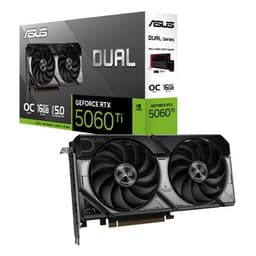
gpt-oss 20B is OpenAI's open-weight model, a 14GB download with a 128K context window and an Apache 2.0 licence. Its standout feature for reasoning is configurable reasoning effort: low, medium or high, so you can trade answer quality against waiting time per question. Ollama's thinking documentation uses gpt-oss as its example, with medium as the default level. It also supports function calling and structured outputs. See our gpt-oss how-to for setup, and our best 16GB graphics cards for local AI for hardware such as the ASUS RTX 5060 Ti 16GB Dual OC.
Best for multilingual reasoning: Magistral 24B
Magistral is described on its Ollama page as Mistral AI's first reasoning model. It's a 24B model and a 14GB download. The page lists support for dozens of languages, from French, German and Polish to Hindi, Japanese and Arabic, which makes it the pick here if you want to reason in a language other than English. The page warns that although the model has a 128K context window, "performance might degrade past 40k", and Ollama's tag lists a 39K window. It's licensed under Apache 2.0 and was last updated a year ago.
Best for 24GB GPUs: Qwen3.8 27B
Qwen3.8 27B is one of the most recent models here: its Ollama page was updated two weeks before we checked. It's an 18GB download with a 256K context window, and it accepts images as well as text. Thinking is on by default but can be turned off per request, and Qwen says reasoning depth can be tuned with a reasoning_effort setting. Qwen describes improvements across coding, professional work, research and long agentic tasks, but those are the maker's claims. An 18GB download fits a 24GB card such as an RTX 3090 or RTX 4090 with some room left for context. See our best 24GB graphics cards for local AI.
Best for long documents: Nemotron 3 Nano 30B
Nemotron 3 Nano comes from NVIDIA and is a 30B mixture-of-experts model with 3.5B parameters active per token, which usually helps speed. Its downloads are 18GB to 24GB with a 1M-token context window, and a 4B version (2.8-2.9GB, 256K context) is also available. NVIDIA's readme explains that it reasons first and then answers, and that you can turn the reasoning off "albeit with a slight decrease in accuracy for harder prompts". The model page lists English, German, Spanish, French, Italian and Japanese as supported languages. Our MoE vs dense explainer covers why a 30B model with 3.5B active parameters can run quicker than its size suggests.
Best for coding and agents: Inkling 2 Mini
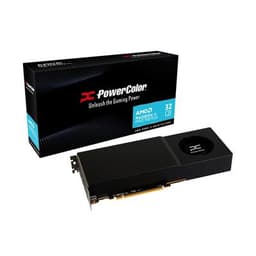
Inkling 2 Mini from Thinking Machines is the most recently updated model here: its Ollama page was updated three days before we checked. It has 26B parameters with 5.4B active, an 18-20GB download, a 1M-token context window, and accepts images. Its page says 12 of its 24 layers run three times per token, "so it does more computation on each token instead of writing more tokens", and that it was trained and shipped in NVFP4 4-bit precision. Its page quotes the maker's scores, including 79.2% on SWE-Bench Verified and 82.7% on MCP Atlas, which haven't been independently confirmed. It's Apache 2.0 licensed. For a large-memory card such as the PowerColor AI Pro R9700 32GB or NVIDIA GeForce RTX 5090 Founders Edition, this is the most interesting new option. For coding-focused models, see our best local coding models.
Also worth knowing: QwQ 32B
QwQ is the Qwen series' dedicated reasoning model, a 20GB download with a 40K context window. Qwen now says its Qwen3-30B-A3B model "outcompetes QwQ-32B", so for most people Qwen3 or Qwen3.8 is the better starting point today.
How to get the most from a reasoning model
Check its thinking controls. Ollama's documentation says controls vary by model. Running /api/show on a model shows the values it accepts, such as true/false or low/medium/high, and its default.
Turn thinking off for simple questions. Ollama's think setting accepts true, false or a named level. Models that can't turn thinking off use their lowest level instead. Our guide to turning off thinking in Ollama walks through it.
Give it enough context. Thinking tokens use up the context window, so a long reasoning chain can push your prompt out. See how to set Ollama's context length.
Measure speed on your own PC. Reasoning models write many more tokens before answering, so tokens per second matters. Our local LLM speed guide shows how to measure it.
Our verdict
For most people with a 16GB graphics card, gpt-oss 20B is the best local reasoning model to start with, because you can set its reasoning effort to low, medium or high to suit each question. On 8GB cards and laptops, Qwen3 4B or DeepSeek-R1 8B are the sensible picks, and on 24GB or more Qwen3.8 27B and Inkling 2 Mini are the most recent options to try. Keep thinking turned off for quick questions and leave memory spare for the context.