When you set up a local AI that answers questions from your own documents, using tools such as Open WebUI, AnythingLLM or your own scripts, you'll meet two kinds of small helper model: embedding models and rerankers. Both judge how relevant a passage is to a question, so it's easy to assume they do the same job. They don't, and knowing the difference helps you decide whether a reranker is worth adding to your PC's setup. This comparison draws on the Sentence Transformers documentation, the Qwen3 model cards, the llama.cpp server README and Open WebUI's documentation.
The short version
| Embedding model (bi-encoder) | Reranker (cross-encoder) |
|---|
What it reads | One text at a time | The question and one passage together |
What it outputs | A vector (a list of numbers) for each text | A relevance score for each question-passage pair |
Can you pre-compute it? | Yes, documents are embedded once and stored | No, it runs again for every new question |
Scales to | Millions of passages | A shortlist, typically tens to about 100 passages |
Job in RAG | Find candidate passages quickly | Put the best candidates at the top |
llama-server option | --embedding
| --rerank
|
How embedding models work
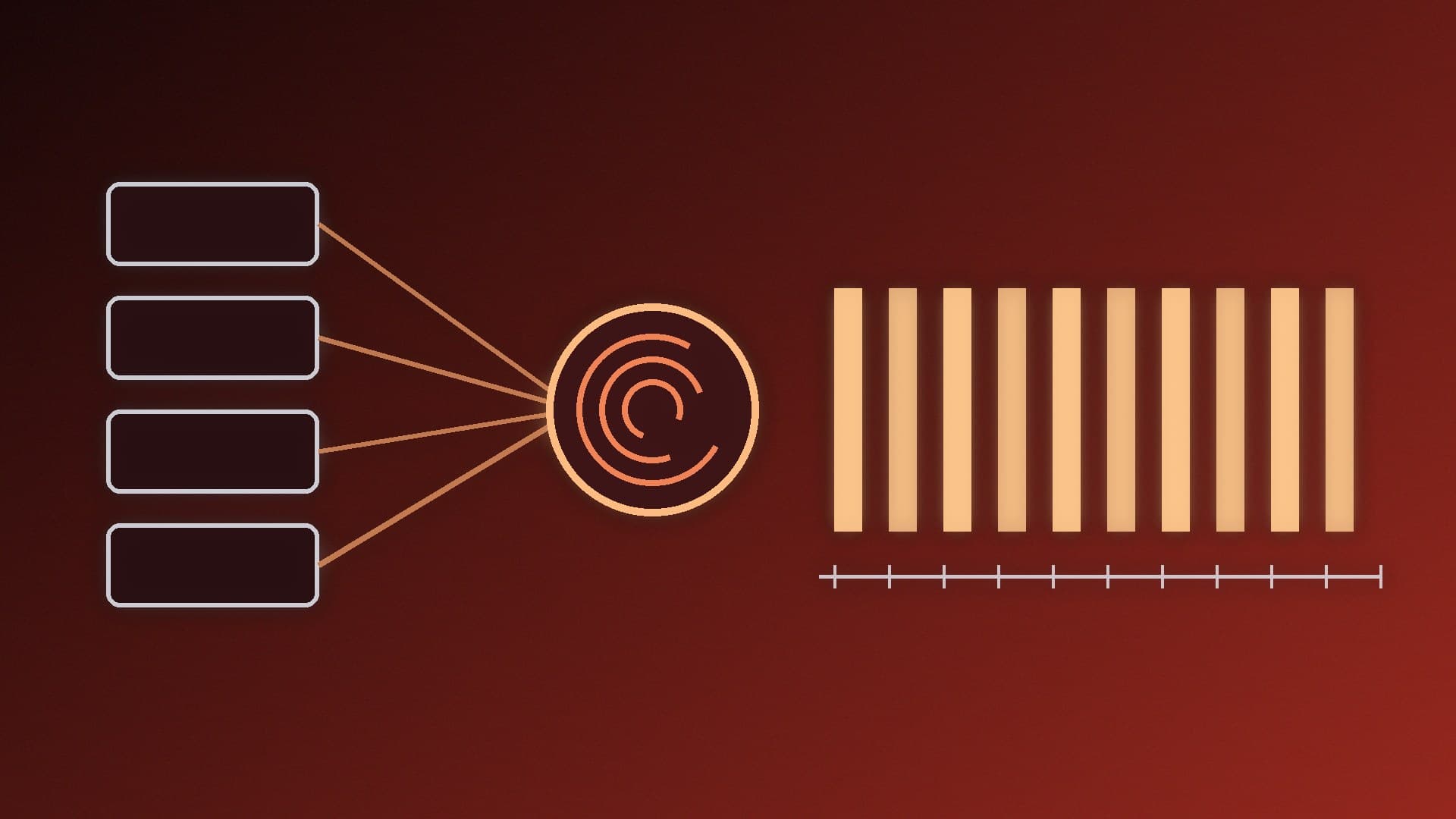
An embedding model, which the Sentence Transformers documentation calls a bi-encoder, turns each text into a vector on its own. Your documents are split into chunks and embedded once, when you add them to a knowledge base, and the vectors are stored. When you ask a question, only the question needs embedding; the system then finds the stored vectors closest to it, which is fast even across a huge collection. Qwen3-Embedding-0.6B, for example, produces vectors of up to 1,024 dimensions, and its model card says you can choose a smaller size anywhere from 32 to 1,024 to save storage.
The weakness, according to Sentence Transformers, is that this kind of retrieval "might return irrelevant candidates", because the question and passage are never compared directly, only their separately computed vectors. For more on picking one, see our best local embedding models and how to use embedding models with Ollama.
How rerankers work
A reranker, or cross-encoder, reads the question and a passage at the same time and outputs a single relevance score; Sentence Transformers describes it as a score between 0 and 1. Because it can pay attention to both texts at once, it's more accurate, and the Sentence Transformers documentation says cross-encoders achieve better performance than bi-encoders.
The cost is that nothing can be prepared in advance. Every new question means scoring every passage again, and Sentence Transformers gives a stark example: clustering 10,000 sentences with a cross-encoder means scoring about 50 million pairs, which it puts at about 65 hours, against about 5 seconds to embed the same sentences with a bi-encoder. That's why a reranker can't replace the embedding search on a real document collection.
Better together: the two-stage pipeline
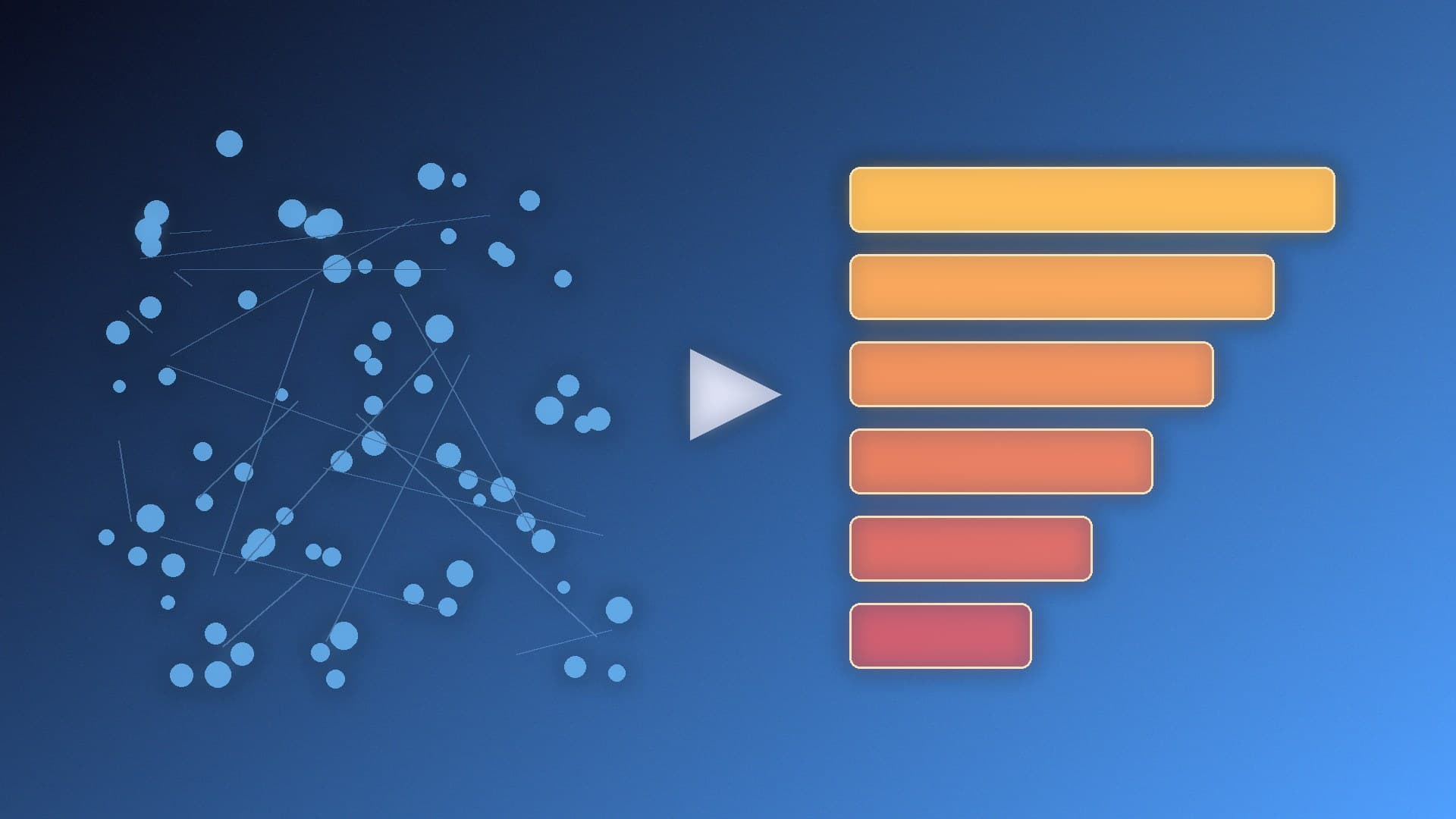
The standard answer is to use both. Sentence Transformers recommends retrieving a shortlist, for example the top 100 passages, with a fast embedding search, then letting a cross-encoder rerank those candidates and keeping only the best few for the answer. The Qwen team's model card gives a useful example of what the second stage can add. In its tests, the table lists its Qwen3-Embedding-0.6B model on its own at 61.82 on English retrieval (MTEB-R); reranking that model's top 100 candidates with the equally small Qwen3-Reranker-0.6B raised the score to 65.80, and with Qwen3-Reranker-4B to 69.76. Those are Qwen's own figures for its own models, but they show why rerankers are popular.
There's one case where you can skip the embedding stage. Sentence Transformers notes that if you only have a small set of paragraphs, such as searching within a single document, you can simply score them all with the reranker.
What it means for your PC
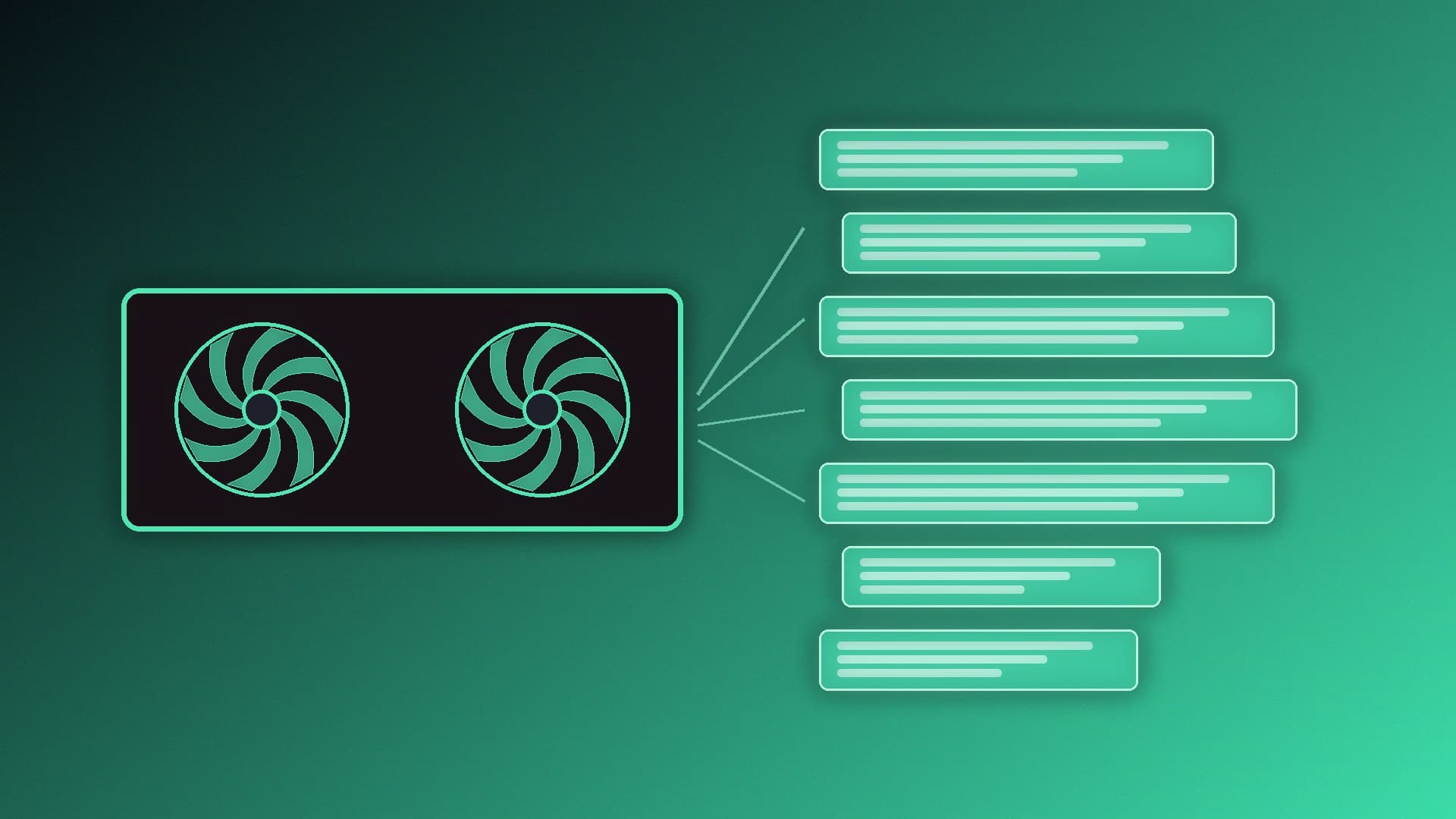
Both kinds of model are small next to the chat models they serve. Qwen3-Embedding-0.6B and Qwen3-Reranker-0.6B each have 0.6 billion parameters, and ggml-org's Q8_0 GGUF of the reranker is about 0.64GB, so neither needs much video memory next to a typical chat model. The difference is when they work. The embedding model does its heavy lifting once, when you add documents, plus one quick pass per question. The reranker does all its work at question time, and that work grows with the number of candidates you send and their length, so it adds some delay before each answer. Sending a shortlist of tens of passages rather than hundreds keeps that delay in check.
In practice:
Open WebUI offers hybrid search, which its documentation says combines BM25 keyword search with re-ranking powered by a CrossEncoder; you turn it on in Settings > Documents in the admin section without re-indexing. Our Open WebUI knowledge base guide covers the setup.
llama-server can run both: a dedicated embedding model with --embedding, and a reranker with --rerank and the /v1/rerank endpoint.
Which do you need?
You always need an embedding model (or keyword search) for a document collection of any size. It's what makes searching thousands of chunks practical.
Add a reranker if answers often cite the wrong passage, your documents are technical or full of similar-looking sections, or you search in several languages. Small, permissively licensed models such as Qwen3-Reranker-0.6B are an easy place to start.
Skip the reranker if your collection is small and answers are already good, or you're on a slow CPU-only machine where every extra second before an answer matters.