Corsair's RM850e and RM850x are two of the most common 850W power supplies in UK gaming builds, and on paper they look almost identical. Both are fully modular, both are ATX 3.1 compliant with a native 12V-2x6 cable for modern graphics cards, and both deliver the same 70.8A on the 12V rail. So what does the extra money for the RM850x actually get you, and is it always more expensive? Everything below comes from Corsair's UK product pages and its PSU lineup guide, read on 24 November 2026.
The quick answer: the RM850x is the better-built, quieter-rated, longer-warrantied PSU, while the RM850e is shorter and lighter. Normally the RM850e is the budget choice, but at the time of writing Corsair UK's Black Friday pricing had flipped that.
Specs at a glance
Spec (Corsair figures) | Corsair RM850e | Corsair RM850x |
|---|
Corsair part number | CP-9020263 | CP-9020270 |
Continuous power | 850W | 850W |
+12V rail | 70.8A, 850W | 70.8A, 849.6W |
+3.3V / +5V | 20A / 20A, 150W combined | 20A / 20A, 150W combined |
Efficiency certification | Cybenetics Gold, 80 PLUS Gold | Cybenetics Gold |
Cybenetics noise rating | A- | A |
ATX version | ATX 3.1, PCIe 5.1 | ATX 3.1, PCIe 5.1 |
Modularity | Fully modular | Fully modular |
Native 12V-2x6 cable | Yes | Yes |
Zero RPM fan mode | Yes | Yes |
Manual fan override knob | No | Yes |
Capacitors | 105°C industrial-grade | 100% Japanese, 105°C-rated electrolytic |
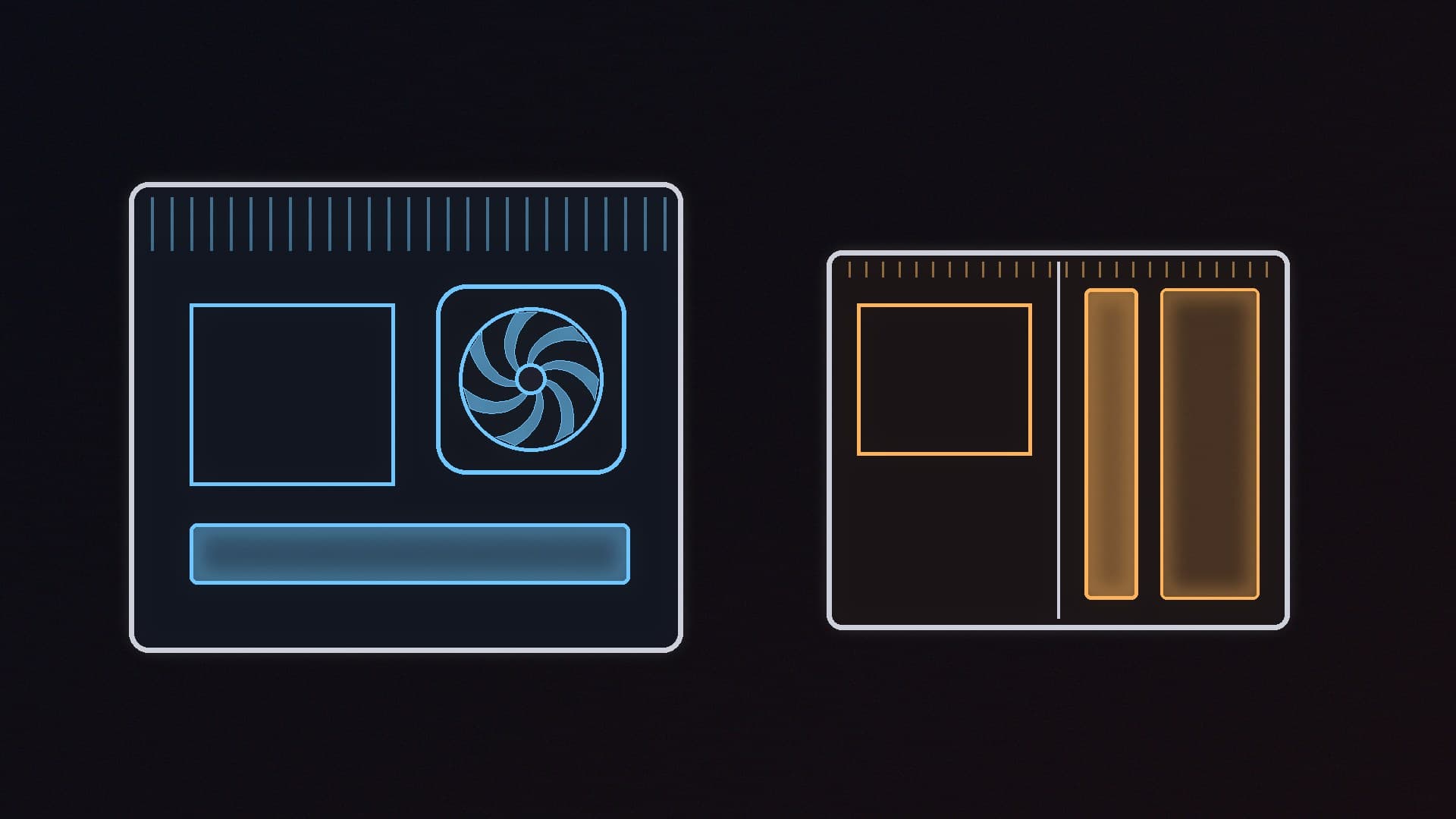
Dimensions (L x W x H) | 140 x 150 x 86mm | 160 x 150 x 86mm |
Weight | 2kg | 3kg |
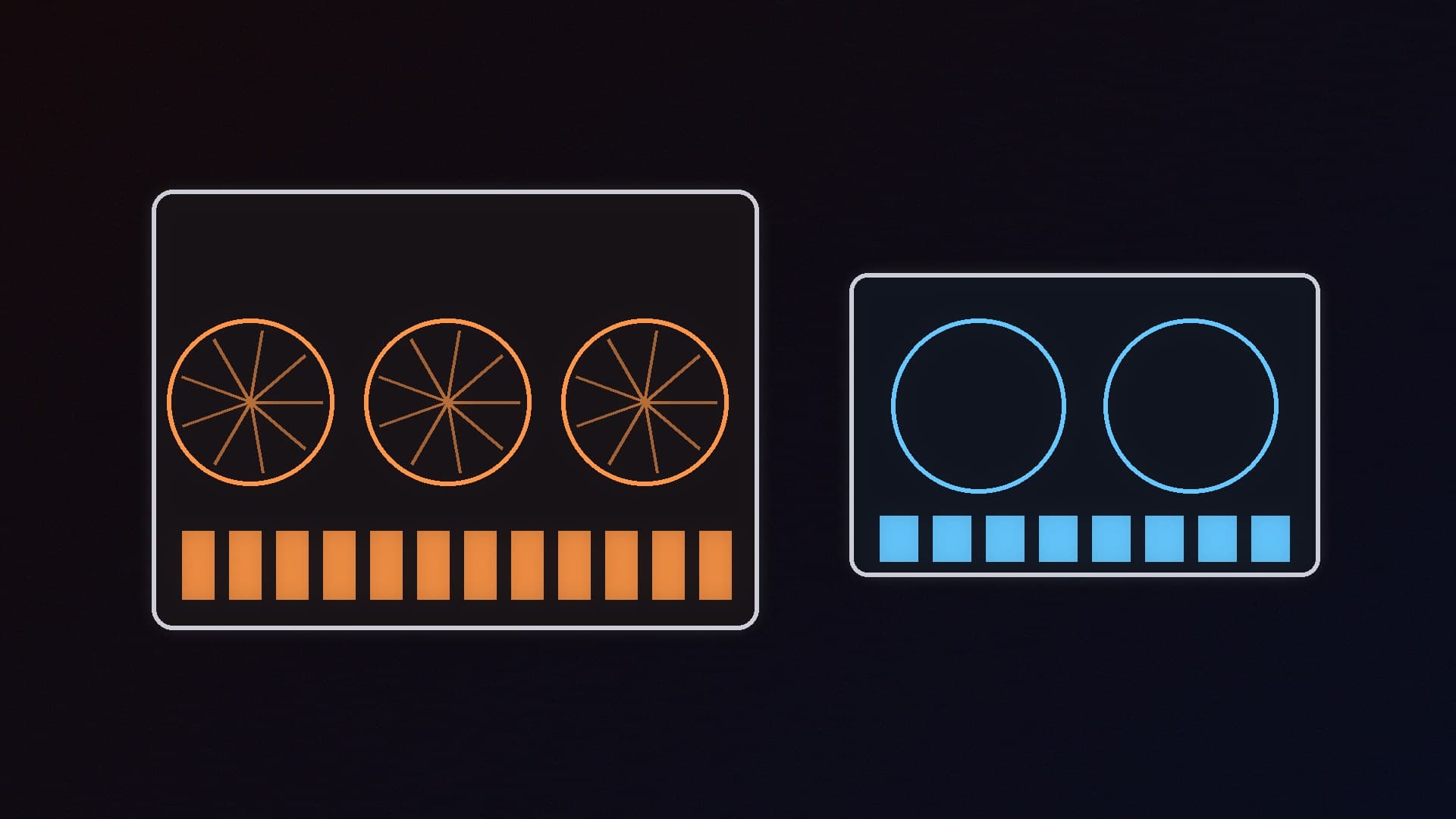
SATA / Molex (PATA) connectors | 7 / 4 | 8 / 3 |
Modern Standby support | Yes | Yes |
MTBF | 100,000 hours | 100,000 hours |
Warranty | 7 years | 10 years |
Both units are in the Forge PC specs database as the Corsair RM850e and the Corsair RM850x.
One note on efficiency: the RM850e's spec table lists Cybenetics Gold and 80 PLUS Gold, but marketing copy elsewhere on the same page says "Cybenetics Platinum certified". Corsair's 2026 lineup guide lists the whole RMe range as Cybenetics Gold, so we've gone with Gold. If efficiency is your deciding factor, check the unit's certificate on the Cybenetics website before buying.
What they have in common
The shared feature list is long, and it covers everything most gaming builds need:
850W with a strong 12V rail. Both list 70.8A on +12V, which is where a modern CPU and graphics card draw almost all of their power.
ATX 3.1 and PCIe 5.1. Corsair says both are certified for ATX 3.1, and both include a native 12V-2x6 cable for graphics cards that use the 16-pin connector, rather than relying on an adapter. If you're using one of those cards, read our guide to connecting a 12V-2x6 cable safely.
Fully modular cabling. You only plug in the cables you need, which helps with airflow and cable management.
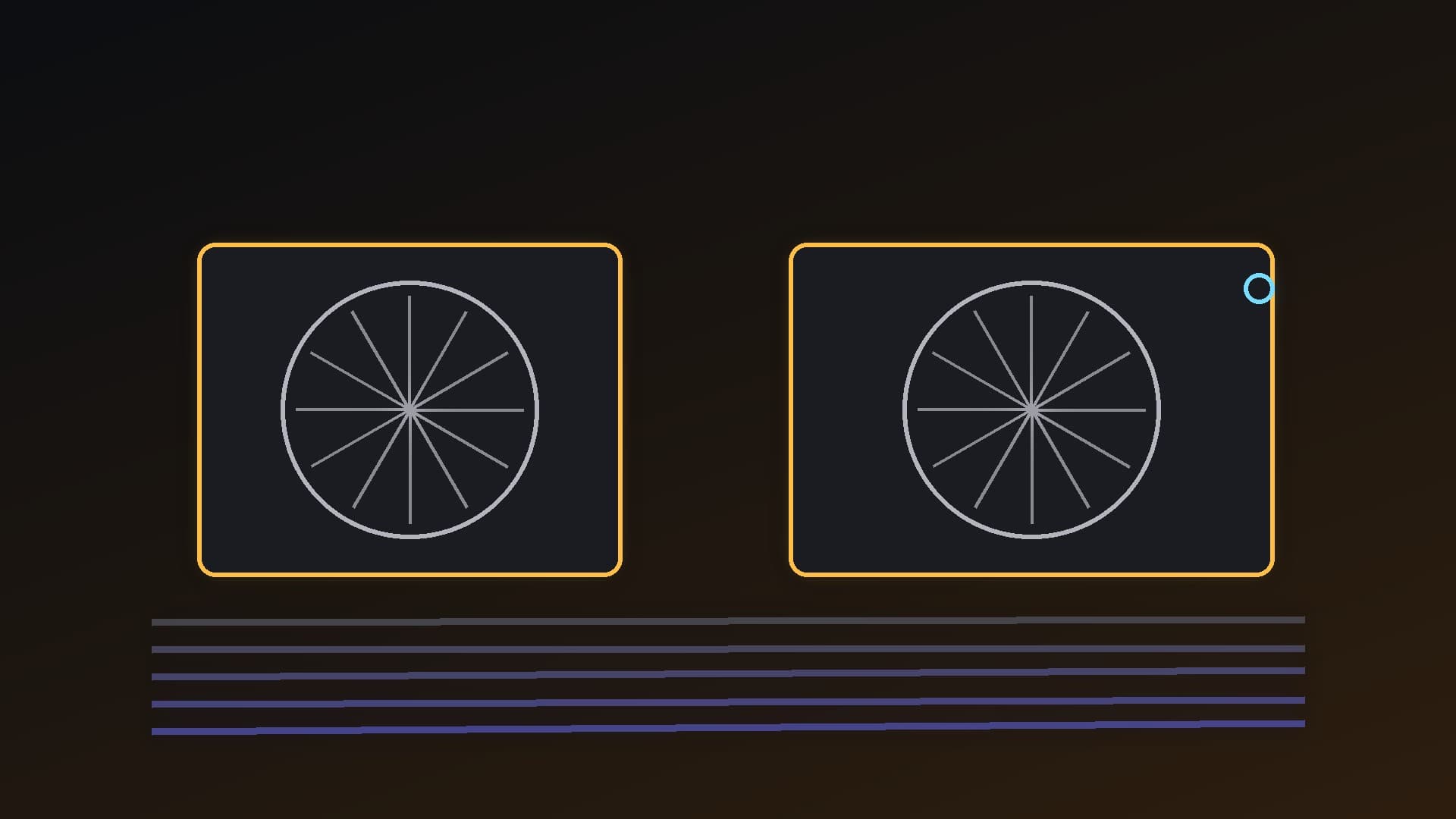
Zero RPM fan mode. The fan stops completely at low loads on both, so an idle or lightly loaded PC is silent from the PSU.
Modern Standby support. Both list Modern Standby, which Corsair says gives faster wake-from-sleep and better low-load efficiency.
For a typical gaming PC with a single graphics card, the electrical headroom is the same. Neither unit is going to run out of power before the other.
Where they differ
Noise rating and fan control
This is the most practical difference for most people. Corsair lists a Cybenetics noise rating of A- for the RM850e and A for the RM850x. Cybenetics' LAMBDA scheme rates average noise across its test loads, with A- covering 25 to under 30dB(A) and A covering 20 to under 25dB(A). So, on Cybenetics' measurements, the RM850x is the quieter unit on average. Our explainer on Cybenetics vs 80 PLUS ratings covers how the scheme works.
Corsair says the RM850x uses a 140mm fluid dynamic bearing fan with a magnetic dome structure. It also has a manual fan override knob on the back, which lets you disable Zero RPM mode and spin the fan up if you want more airflow, for example in a hot case or when the PSU is pulling air from inside the chassis. The RM850e doesn't have this knob.
Components and warranty
Corsair specifies 100% Japanese 105°C-rated electrolytic capacitors in the RM850x. For the RM850e it says 105°C-rated industrial-grade capacitors, without specifying where they're from, alongside a resonant LLC topology with DC-DC conversion.
The warranty reflects that difference: seven years for the RM850e and ten years for the RM850x. Both list the same 100,000-hour MTBF figure. If you tend to keep a PSU through several builds, and many people do, that extra three years of cover is worth having.
Size and weight
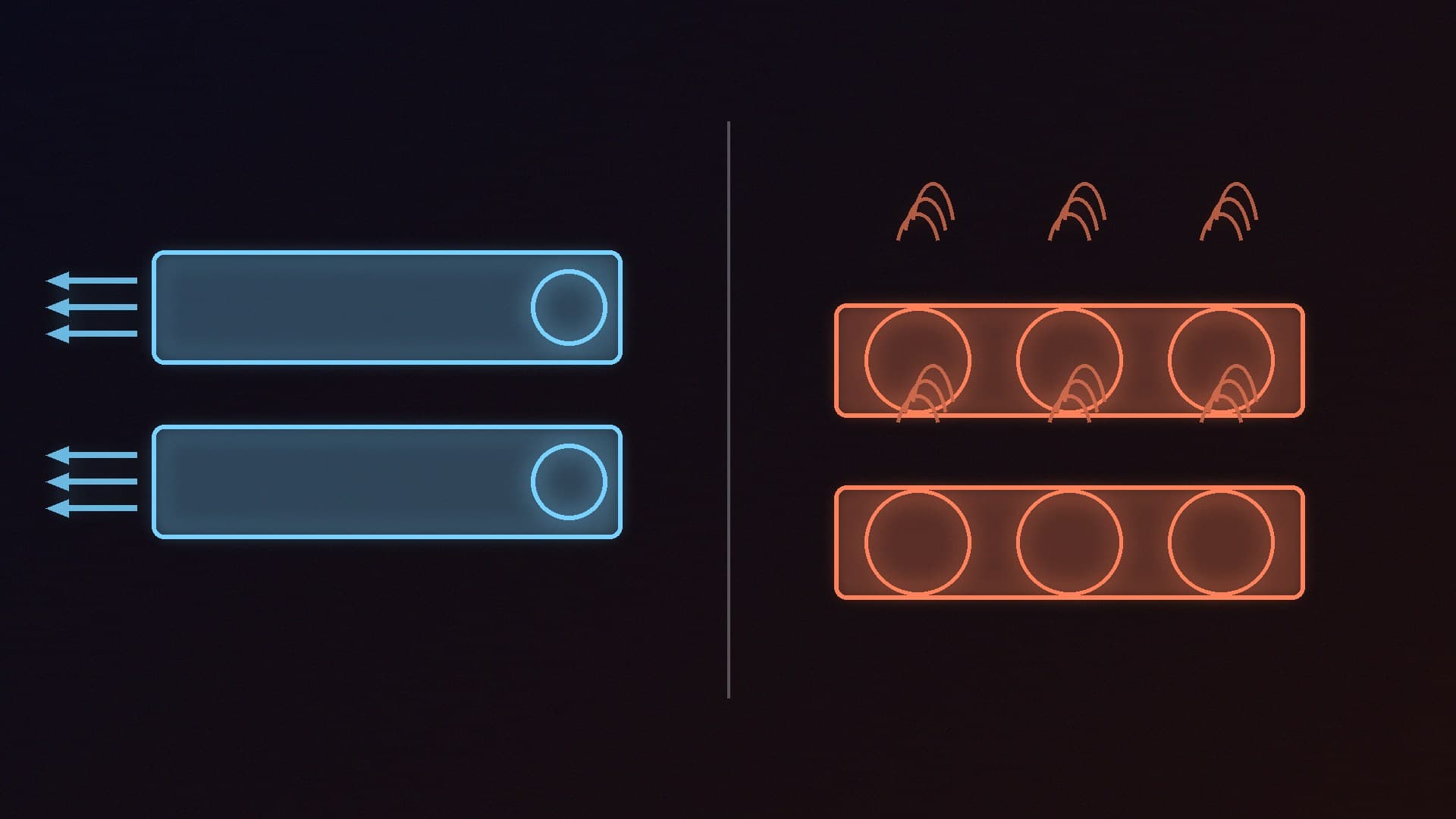
The RM850e is the more compact unit, at 140mm long against 160mm for the RM850x, and Corsair lists it at 2kg against 3kg. Corsair specifically says the shorter RMe leaves more room for cables behind the PSU. That 20mm can matter in smaller ATX cases and in cases with a drive cage or bottom fans near the PSU. Check your case's maximum PSU length before buying; most mid-towers will take either.
Cables and connectors
Both come with a 24-pin ATX cable, two EPS 4+4-pin CPU cables, a 12V-2x6 cable and PCIe 6+2-pin cables. Corsair's RM850e cable list includes one single PCIe 8-pin cable and one daisy-chained cable with two 6+2-pin connectors, so three PCIe 8-pin connectors in total, and its EPS cables are 650mm long. Corsair lists 750mm EPS cables for the RM850x, which helps in larger cases where the CPU power header is at the top of the motherboard.
For drives and accessories, Corsair lists seven SATA and four Molex (PATA) connectors on the RM850e, against eight SATA and three Molex on the RM850x. The RM850e's 24-pin cable is listed as sleeved and its other cables as flat.
If you're reusing modular cables from an older Corsair unit, don't assume they'll fit. Our guide on checking whether modular PSU cables are compatible explains why mixing cables can be dangerous.
Price: the RM850x was cheaper on 24 November 2026
Normally the RMe range is Corsair's value line and the RMx sits above it. Corsair's lineup guide describes RMe as "the starting point" for its fully modular PSUs and RMx as the choice for prioritising quiet operation and long-term reliability.
But on 24 November 2026, Corsair's UK store had the RM850x on a Black Friday deal at about £104.99 (down from £139.99) and in stock, while the RM850e was listed at about £124.99 and out of stock. Our Corsair Black Friday PSU price round-up covers the other deals. Prices change daily, and retailers such as Scan, Overclockers and Amazon may be cheaper than Corsair's own store, so compare before you buy.
Which should you buy?
Choose the RM850x if: it's the same price or cheaper, which it was at Corsair UK on 24 November 2026; you want the quieter Cybenetics A noise rating; you value the 10-year warranty and Japanese capacitors; or you want the manual fan override.
Choose the RM850e if: your case is tight on PSU length and the 140mm unit fits where the 160mm one won't; or you find it noticeably cheaper than the RM850x at your retailer. You still get the same 850W output, ATX 3.1 compliance, native 12V-2x6 cable and Zero RPM mode.
If you're not sure 850W is the right size, see our guide to calculating PSU wattage, and for more options at this size, our best 850W power supply and best Corsair power supply guides.
Our verdict
The RM850x is the better power supply. It has the same 850W output and ATX 3.1 feature set as the RM850e, but Corsair adds 100% Japanese capacitors, a fan override knob, a quieter Cybenetics A noise rating and a 10-year warranty instead of seven. The RM850e's advantages are a 20mm shorter, lighter chassis and, usually, a lower price. With Corsair UK selling the RM850x for about £104.99 on 24 November 2026, below the RM850e's £124.99, the RM850x is the easy pick right now; outside of sales, buy the RM850e only if the saving is meaningful or your case needs the shorter unit.