Skip to content

VersusGPU

RTX 5060 Ti 16GB vs RTX 5070 Ti for Local AI: Same VRAM, Different Speed

RTX 5060 Ti 16GB vs RTX 5070 Ti for local AI: both have 16GB of GDDR7, so the same models fit, but NVIDIA lists a 256-bit bus against 128-bit, 1,406 AI TOPS against 759, and 300W against 180W, so the 5070 Ti should be faster.

By , Senior Hardware Editor

2 min read

RTX 5060 Ti 16GB vs RTX 5070 Ti for Local AI: Same VRAM, Different Speed
ASUS RTX 5060 Ti 16GB Dual OC compared with ASUS RTX 5070 Ti 16GB TUF Gaming OC
ASUS RTX 5060 Ti 16GB Dual OCASUS RTX 5070 Ti 16GB TUF Gaming OC
1080p average164fps202fps
1440p average122fps160fps
4K average61fps89fps
GPU Chip ManufacturerNVIDIANVIDIA
GPU SeriesRTX 5000RTX 5000
ArchitectureNVIDIA AmpereAmpere
VRAM Capacity (GB)1616
VRAM TypeGDDR6GDDR6
Base ClockBase Clock Not Specified1410 MHz
Boost ClockBoost Clock Not Specified1770 MHz
CUDA / Stream Processor Count03584
Ray Tracing SupportYesYes
AI / Tensor SupportYesYes
PCIe Interface VersionPCIe 4.0 x16PCIe 4.0 x16
Typical Board Power (W)0250
Recommended PSU Wattage (W)0650
Minimum PSU Wattage (W)0600

Estimated average frame rate across 10 games, paired with a top-tier processor. These are estimates from our benchmark dataset, not measurements of these exact units. Try other pairings

The RTX 5060 Ti 16GB and RTX 5070 Ti both have 16GB of video memory, which is what decides which local AI models you can load. So what does the 5070 Ti add? NVIDIA's specs show the difference is in compute, memory bus width and power.

Specs compared

RTX 5060 Ti 16GB

RTX 5070 Ti

VRAM

16GB GDDR7

16GB GDDR7

Memory interface

128-bit

256-bit

AI TOPS (NVIDIA)

759

1,406

CUDA cores

4,608

8,960

Total Graphics Power

180W

300W

Required System Power

600W

750W

Figures are from NVIDIA's RTX 5060 family and RTX 5070 family spec pages.

What fits: the same

Because both cards have 16GB, the same models and quantisations will fit fully in VRAM on either card. That's the most important factor for local AI: once a model spills into system RAM, it slows down a lot. Our how much VRAM guide covers what fits in 16GB.

How fast: the 5070 Ti has the edge on paper

Generating text with an LLM is often limited by memory bandwidth, because the GPU reads the model's weights for each token it produces. The 5070 Ti's 256-bit bus is twice the width of the 5060 Ti's 128-bit bus, and NVIDIA lists nearly twice the AI TOPS and CUDA cores. On paper, that points to the 5070 Ti being faster for the same model, but by how much depends on the software and model, so look for independent tests.
Power and PSU

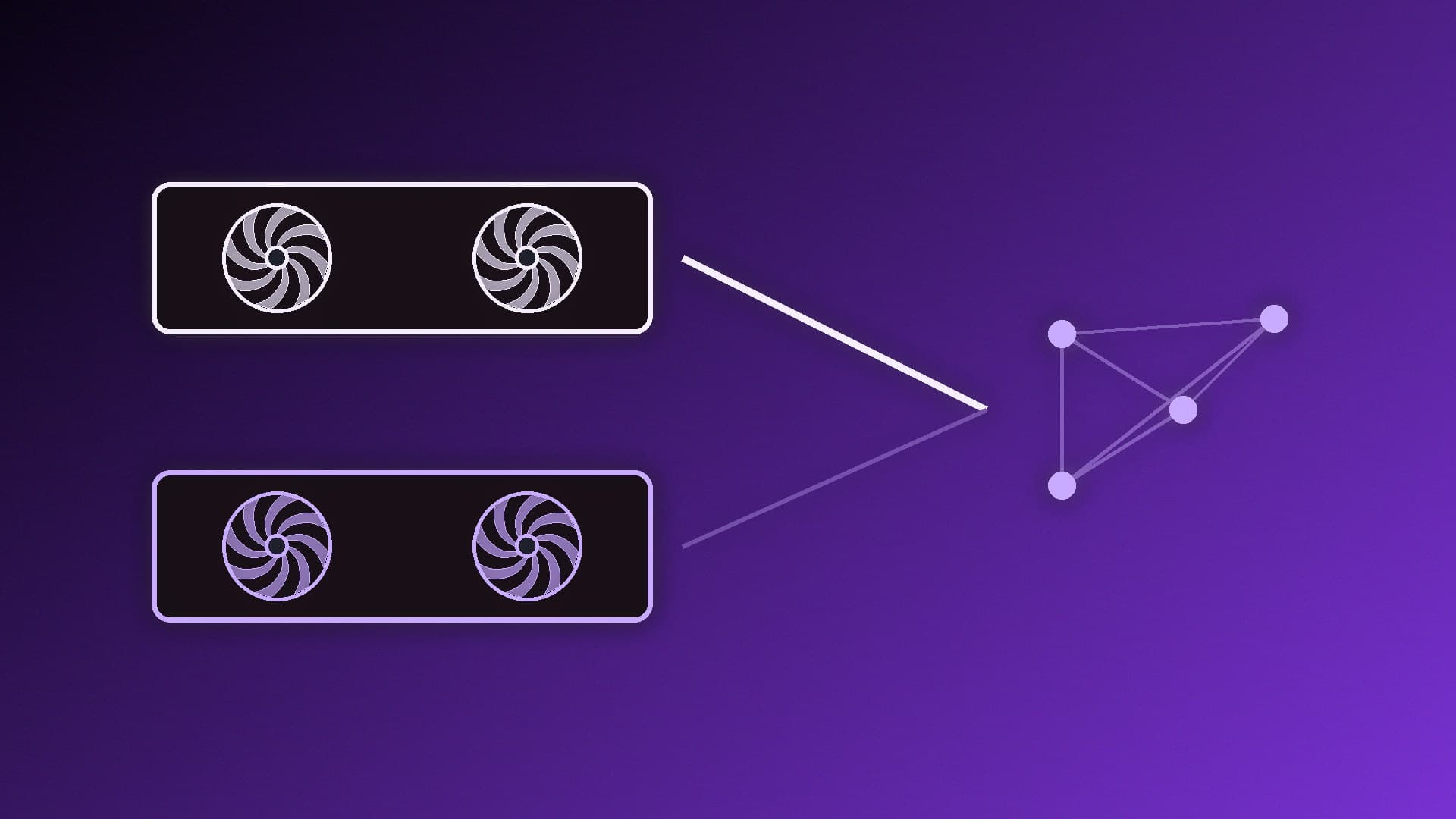
NVIDIA lists 180W for the 5060 Ti and 300W for the 5070 Ti, with Required System Power of 600W and 750W. If you're upgrading an older PC, the 5060 Ti may avoid a PSU upgrade. Our PSU wattage guide explains how to check.

Image generation and other AI work

The same logic applies to local image generators such as Stable Diffusion and FLUX models: 16GB on either card sets what you can load, while the 5070 Ti's extra compute should help generation time. Both cards are Blackwell-generation GeForce RTX 50 GPUs with 5th-generation Tensor Cores, according to NVIDIA.

Which should you buy?

  • Buy the RTX 5060 Ti 16GB if you want 16GB for the lowest outlay and lower power, and you can accept slower generation.

  • Buy the RTX 5070 Ti if you want the same model capacity with much more bandwidth and compute, and your PSU can handle it.

If you're weighing the 5070 instead, see our RTX 5060 Ti 16GB vs RTX 5070 for local AI and RTX 5070 vs RTX 5070 Ti for local AI comparisons. Our best GPU for local LLMs guide covers the wider field.

Our verdict

Both cards run the same 16GB-class models. The RTX 5070 Ti should run them faster thanks to double the memory bus width and far more compute, while the RTX 5060 Ti 16GB is the lower-power way to get 16GB.

The bottom line

Both cards run the same 16GB-class models. The RTX 5070 Ti should run them faster thanks to double the memory bus width and far more compute, while the RTX 5060 Ti 16GB is the lower-power way to get 16GB.

Sources

  1. 01NVIDIA, GeForce RTX 5060 family specifications (UK)
  2. 02NVIDIA, GeForce RTX 5070 family specifications (UK)

About the author

Callum Reid

Senior Hardware Editor

Callum leads GPU, CPU and platform architecture coverage at Forge PC. Before joining the editorial desk, he spent nine years specifying, assembling and stress-testing custom gaming and workstation systems in the UK, with a focus on PCIe bandwidth, VRM thermal design, DDR5 memory tuning and 1440p/4K frame-time consistency.

More from Callum Reid

Read next

How to Choose Which GPU Ollama Uses (or Force CPU)

How-To

How to Choose Which GPU Ollama Uses (or Force CPU)

How to make Ollama use a specific graphics card with CUDA_VISIBLE_DEVICES (NVIDIA), ROCR_VISIBLE_DEVICES (AMD ROCm) or GGML_VK_VISIBLE_DEVICES (Vulkan), how to force CPU-only with an invalid ID, and how to check the result with ollama ps.

Marcus Thorne2 min

How to Log GPU Usage, Temperature and Power With nvidia-smi

How-To

How to Log GPU Usage, Temperature and Power With nvidia-smi

How to log an NVIDIA graphics card's utilisation, VRAM, temperature and power draw to a CSV file with nvidia-smi's --query-gpu, --format=csv, -l and -f options, plus the dmon alternative, based on NVIDIA's documentation.

Marcus Thorne3 min

How to Enable K/V Cache Quantisation in Ollama (and Save VRAM)

How-To

How to Enable K/V Cache Quantisation in Ollama (and Save VRAM)

How to cut the memory Ollama's K/V context cache uses by setting OLLAMA_KV_CACHE_TYPE to q8_0 (about half of f16) or q4_0 (about a quarter), which needs Flash Attention, with steps for Windows, Linux and macOS from Ollama's FAQ.

Marcus Thorne2 min

How to Choose a Power Supply for a Local AI PC

How-To

How to Choose a Power Supply for a Local AI PC

How to size a power supply for a local AI PC: start from NVIDIA's Required System Power (1,000W for the RTX 5090, 750W for the 5070 Ti), add the rest of the system and headroom, add both cards' power for two-GPU builds, and check native 12V-2x6 cables.

Marcus Thorne2 min