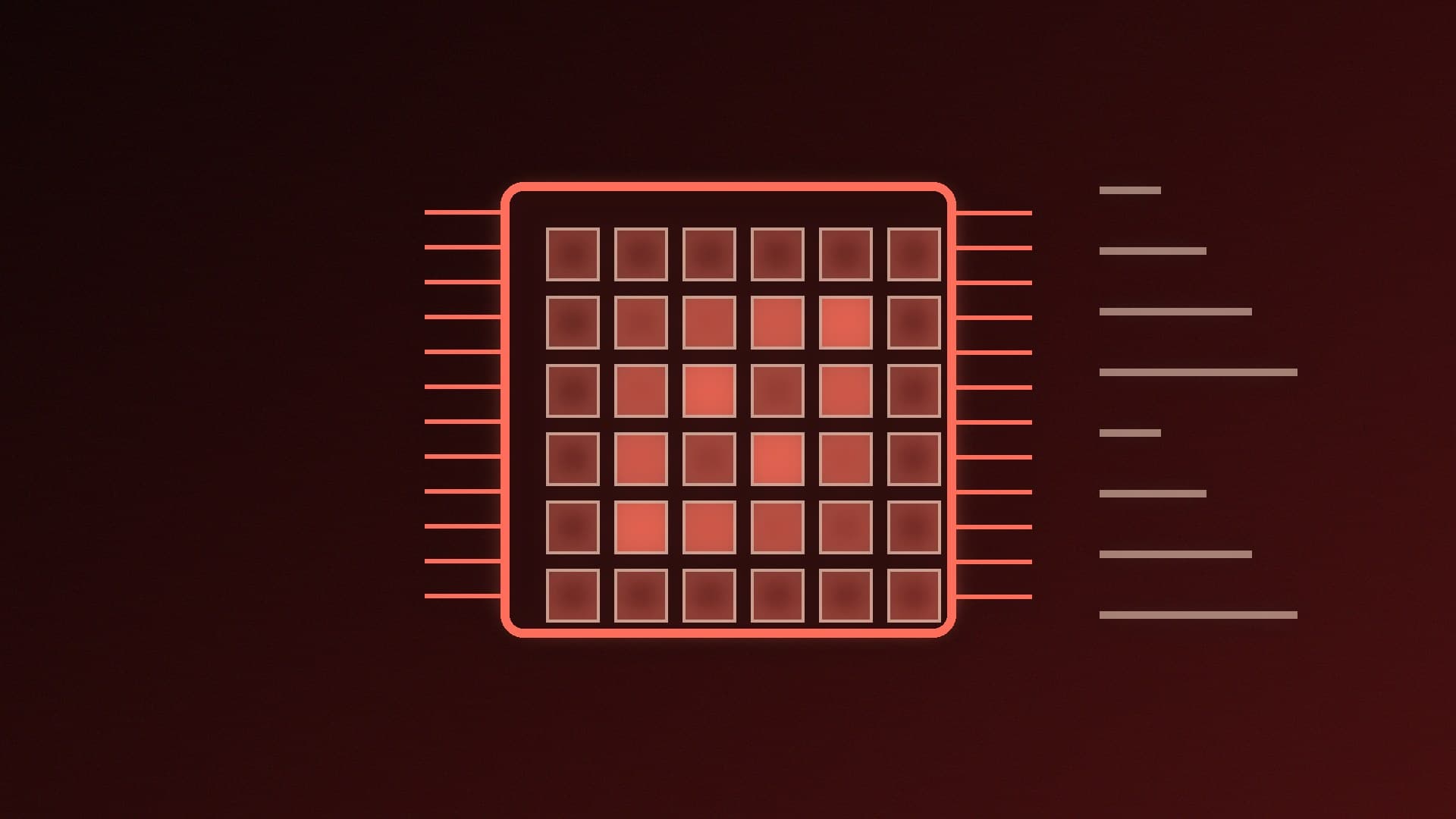
AI is now being used to design the chips that run AI. In a post published on 18 November 2026, OpenAI says its models found up to 14% PPA improvements (power, performance and area) on AMD's flagship GPU IP, by rewriting the SystemVerilog RTL code that describes the chip's circuits. AMD has already put some of those changes into a recent design sent for manufacturing. This is a news report based on OpenAI's announcement and independent coverage; Forge PC hasn't seen the designs, and neither OpenAI nor AMD has named the products involved.
What OpenAI announced
OpenAI's post makes these claims about its work with AMD:
Up to 14% PPA improvement on AMD's flagship GPU IP, measured against what OpenAI calls "heavily optimized baselines".
Roughly a year of progress in under five months, in OpenAI's words.
Some changes are already in a design AMD sent for manufacturing, and others have been added to AMD's production design files for future versions.
CPU gains too: AMD verified single-digit percentage PPA gains across key blocks of its upcoming next-generation flagship CPU using designs written by OpenAI's model.
Checked with standard tools: the model used Synopsys tools to verify that each rewrite kept the block's behaviour the same and to measure the trade-offs.
The same post says that on OpenAI's own Jalapeño inference chip, model-proposed changes cut standard-cell area by about 13% in the vector unit and 10% in the matrix unit.
What "up to 14% PPA" means, and what it doesn't
PPA is a chip-design measure that combines power use, performance and the silicon area a circuit takes up. It is not the same as a graphics card being 14% faster in games. Tom's Hardware describes the headline as up to 14% PPA improvement for the GPU circuitry, with unspecified single-digit PPA gains on the processor. OpenAI hasn't broken the 14% down into power, speed and area, and "up to" means it's the best result, not an average across the chip.
We also don't know which AMD products will carry the changes: OpenAI's post doesn't name them, so it isn't clear whether they relate to a future Radeon gaming card, an Instinct data-centre accelerator or both. For context on what AMD has already confirmed for its platforms, see our report on AM5 support until 2029 and the AMD CES 2027 keynote date.
Should you wait for AMD's next GPU?
No. A design improvement announced today won't be in a card you can buy this Black Friday, and nobody has said when the affected chips will ship or what they'll cost. If you need a graphics card now, our best graphics cards for 2026 guide covers what's on sale in the UK, and our NVIDIA vs AMD for local AI comparison covers today's AI options.
Our verdict
OpenAI's claim is significant for the chip industry: AI-written circuit changes are already going into an AMD design sent for manufacturing. But "up to 14% PPA" is a design-efficiency figure, not a gaming benchmark, and OpenAI's announcement names no AMD product. Treat it as a sign that future GPUs may get a little more efficient, not a reason to delay buying a graphics card you need now.