Lenovo's ThinkCentre X Ultra is one of the more interesting small PCs for running AI models at home or in a small office. It pairs AMD's top Ryzen AI Max+ PRO 495 processor with up to 128GB of unified memory in a 1.6-litre case, and Lenovo said at its IFA 2026 launch on 3 September that it would be available from November 2026. Lenovo's official product specification sheet (PSREF) now lists the system and its configurations. Forge PC hasn't tested the X Ultra; everything below comes from Lenovo's own announcement and specification documents.
What Lenovo has confirmed
Spec | ThinkCentre X Ultra (Lenovo figures) |
|---|
Processor | Up to AMD Ryzen AI Max+ PRO 495 (16 cores, 32 threads, 3.1GHz base, 5.2GHz max, 64MB L3) |
Graphics | Integrated AMD Radeon 8065S, with up to 96GB of the unified memory allocatable as graphics memory |
NPU | Up to 55 TOPS |
Memory | Up to 128GB LPDDR5X-8533, soldered and not upgradable |
Storage | Two M.2 2280 slots (PCIe 4.0 x4), up to 4TB each |
Networking | 10GbE Ethernet, Wi-Fi 7, Bluetooth 5.4 |
Ports | Two Thunderbolt 4 / USB4 40Gbps, DisplayPort 2.1, HDMI 2.1, plus USB-C and USB-A 10Gbps |
Size and weight | 183 x 183 x 51mm, from 2kg |
Power | 245W external adapter |
Operating systems | Windows 11 Home or Pro, Ubuntu Linux, AMD's Ryzen AI developer platform, or no OS |
Lenovo's PSREF also lists two lesser chips for the same chassis: the Ryzen AI Max+ 492 (12 cores, Radeon 8065S) and the Ryzen AI Max+ 388 (8 cores, Radeon 8060S). For whole-system AI performance, Lenovo quotes up to 132 TOPS for the PRO 495 version, against 127 TOPS for the 492 and 118 TOPS for the 388. These are combined figures for the CPU, GPU and NPU, and they are manufacturer numbers, not measured results.
Why the memory matters for local AI
The headline here is memory capacity rather than raw speed. Large language models need to fit in memory to run well, and on a normal desktop that usually means the graphics card's VRAM. A 16GB or 24GB card limits the size of model you can load comfortably. Lenovo says the X Ultra can give up to 96GB of its 128GB pool to the integrated GPU, which puts much bigger models within reach than any mainstream graphics card can hold. Our guide to how much RAM you need for local AI explains how model size, quantisation and context length add up.
The trade-off is that the memory is soldered. Lenovo's spec sheet states plainly that the 128GB is "not upgradable", so buy the capacity you'll need for the life of the machine. Storage is upgradable, with two M.2 2280 slots, but Lenovo lists them as PCIe 4.0 x4.
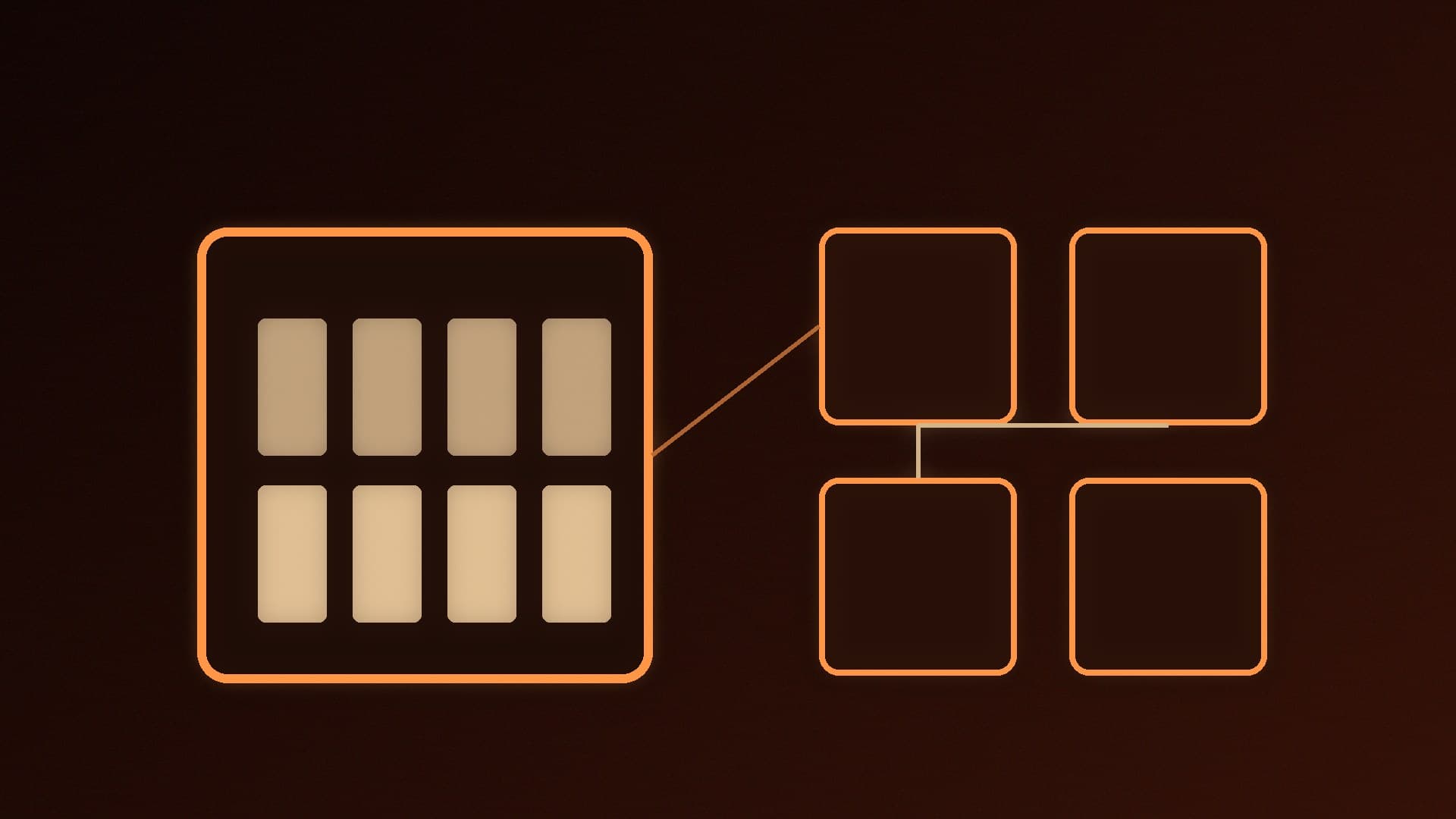
Lenovo also says up to four X Ultras can be connected as a cluster to pool compute and memory for larger models, longer context windows or more simultaneous requests. It ships with AMD's Ryzen AI Developer Center, which Lenovo describes as a set of preconfigured AI tools, models and workflows on Windows and Linux. We haven't seen how well clustering works in practice, so treat it as a feature to research rather than a reason to buy.
How it compares with other AI mini PCs
The X Ultra sits in the same category as the other Ryzen AI Max-based mini PCs and NVIDIA's DGX Spark-style desktops. We compared those two approaches in DGX Spark vs Ryzen AI Max+ 395, and covered the 192GB Ryzen AI Max+ PRO 495 mini PCs announced by other makers. Lenovo's version tops out at 128GB, but it adds business features such as a discrete TPM 2.0 chip and Lenovo's ThinkShield security tools, and it carries a big-brand support network.
If you're wondering whether the 55 TOPS NPU matters, our NPU vs GPU for local AI explainer covers what NPUs are good at today. For most local LLM tools, the integrated GPU and its memory will do the heavy lifting.
Price and UK availability
Lenovo hasn't published UK pricing or a UK on-sale date for the X Ultra yet. Lenovo's announcement gave November 2026 as the launch month. This is a premium business workstation, so don't expect it to compete on price with consumer mini PCs. If you only need a small PC for everyday work, see our best mini PC guide instead.
Our verdict
The ThinkCentre X Ultra is a 1.6-litre business mini PC with AMD's Ryzen AI Max+ PRO 495, up to 128GB of soldered LPDDR5X (up to 96GB usable as graphics memory), 10GbE and Windows or Linux. Lenovo says it launches in November 2026, but there's no UK price yet. It looks like a strong option for running large local AI models in a small box (Lenovo's spec sheet lists TÜV Rheinland Ultra Low Noise certification), as long as you buy enough memory up front, because it can't be upgraded later.