Skip to content

VersusPSU

Thermaltake Toughpower GT 850W vs MSI MAG A850GL PCIE5: Which 850W PSU?

The Thermaltake Toughpower GT 850W and MSI MAG A850GL PCIE5 are both 850W, 80 PLUS Gold, fully modular ATX 3.1 power supplies of the same size. Using the makers' specs, we compare GPU connector ratings, SATA count, fans, certifications and warranty to help you choose.

By , Senior Hardware Editor

3 min read

Thermaltake Toughpower GT 850W vs MSI MAG A850GL PCIE5: Which 850W PSU?
Thermaltake Toughpower GT 850W 80 Plus Gold Fully Modular ATX 3.1 PSU compared with MSI 850W Gold F/Modular MAG A850GL PCIe5
Thermaltake Toughpower GT 850W 80 Plus Gold Fully Modular ATX 3.1 PSUMSI 850W Gold F/Modular MAG A850GL PCIe5
Wattage (W)850850
Efficiency Rating80+ Gold80+ Gold
Form FactorATXATX
Modular TypeFully ModularFully Modular
ATX Version / PCIe Power StandardATX 3.1ATX 3.0
12V Rail Output (A)—70
Multi / Single Rail—Single Rail
Protections (OVP/OCP/OTP etc.)OCP, OVP, UVP, OPP, SCP, OTPOVP, OCP, OTP
24-pin ATX Count11
8-pin EPS Count—2
4+4 EPS Count20
6+2 PCIe Count44
12VHPWR / 12V-2x6 Count11
SATA Power Count68

The Thermaltake Toughpower GT 850W and the MSI MAG A850GL PCIE5 are two 850W power supplies aimed at mid-range gaming builds. On paper they look almost identical: both are 850W, 80 PLUS Gold, fully modular and built for ATX 3.1, and both come in the same size box. The differences are in the details, and one of them matters a lot if you're buying a high-end graphics card. This comparison uses the makers' own specification pages only. We haven't listed prices because they change daily.

Specs side by side

Thermaltake Toughpower GT 850W

MSI MAG A850GL PCIE5

Rated output

850W

850W

Efficiency certification

80 PLUS Gold (up to 90%)

80 PLUS Gold (up to 90%) and Cybenetics Gold

ATX / PCIe standard

ATX 3.1, PCIe 5.1

ATX 3.1, PCIe 5.1

Modular

Fully modular

Fully modular, flat cables

GPU high-power connector

1x 12+4-pin (12V-2x6), cable marked 450W

1x 16-pin, rated 600W

PCIe 6+2-pin

4

4

CPU EPS 4+4-pin

2

2

SATA

6

8

Peripheral 4-pin

4

4 (plus 1 FDD)

Fan

120mm hydraulic bearing, Smart Zero Fan

120mm fluid dynamic bearing

+12V

Single rail, 70.8A (849.6W)

Not listed on the spec page

Protections

OCP, OVP, UVP, OPP, SCP, OTP

OCP, OVP, OPP, OTP, SCP, UVP

Dimensions

150 x 86 x 140mm

150 x 86 x 140mm

Warranty

5 years (Thermaltake product page)

Not listed on the fetched spec page; check MSI UK before buying

All figures from the Thermaltake UK product page and MSI's product and specification pages.

The big difference: the GPU connector rating

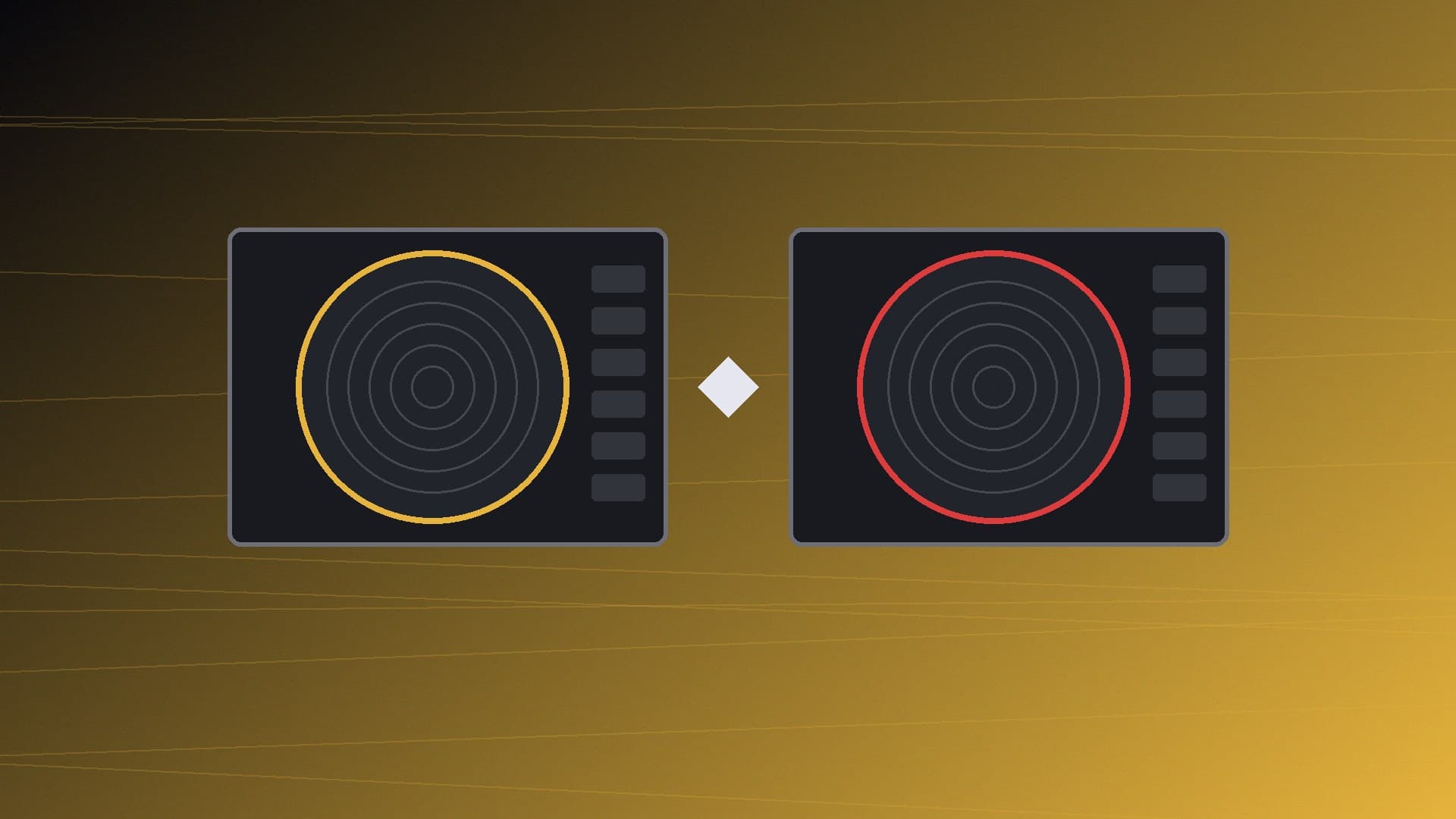
Both units have a single native high-power graphics card connector, but they're rated differently. MSI says the A850GL's 16-pin cable can deliver up to 600W to a PCIe 5.1 graphics card. Thermaltake's 12+4-pin cable is marked 450W, and Thermaltake explains that the figure on the connector is a recommended wattage based on Intel's design guideline.

For most mid-range and upper mid-range cards this won't matter, because they draw well under 450W through that connector, or use ordinary 8-pin plugs. But if your graphics card maker's specification calls for a 600W 12V-2x6 connection, the MSI unit is the one designed to supply it on its own cable. Whatever you buy, always follow the card maker's PSU recommendation; our guide to how to calculate PSU wattage explains how to add up your system.
Smaller differences

SATA count. The MSI unit has eight SATA power connectors to Thermaltake's six. Six is plenty for a typical build, but if you run several SATA drives, fan hubs or RGB controllers, the extra two could save you a splitter.

Fan bearing and fan control. Thermaltake uses a 120mm hydraulic bearing fan and a Smart Zero Fan design, which Thermaltake says adjusts the fan speed to minimise noise. MSI uses a 120mm fluid dynamic bearing fan. Hydraulic and fluid dynamic bearings are closely related designs; see sleeve vs ball vs fluid dynamic bearing fans for the basics and semi-passive vs always-on PSU fans for how fan modes on power supplies work.

Certifications. Both carry 80 PLUS Gold. MSI also lists Cybenetics Gold, a separate efficiency certification; our Cybenetics vs 80 PLUS explainer covers what that adds.

Cables. MSI highlights flat cables and a dual-colour 16-pin cable whose connector is coloured yellow. Thermaltake lists low-profile modular cables, with cable lengths on its page (for example, 550mm for the 24-pin and 700mm for the CPU cables).

What's the same. Both are fully modular, both are ATX 3.1 and PCIe 5.1 rated, both list the same full set of protections, and both are 150 x 86 x 140mm, so either will fit any case that takes a standard 140mm-deep ATX PSU. For what ATX 3.1 changes, see ATX 3.1 vs ATX 3.0.

Which should you buy?

Choose the MSI MAG A850GL PCIE5 if you have, or plan to buy, a graphics card that needs a 600W 12V-2x6 feed, you want eight SATA connectors, or you'd like the extra Cybenetics Gold rating.

Choose the Thermaltake Toughpower GT 850W if your graphics card needs 450W or less from its high-power connector or uses 8-pin plugs, you like Thermaltake's Smart Zero Fan design, and you want the five-year warranty Thermaltake lists on its page. If it's clearly the cheaper of the two, that makes it a sensible choice for a mid-range build.

For more options, see our best 850W power supply guide, best MSI power supply and best power supply picks.

The bottom line

On the makers' specs, the Thermaltake Toughpower GT 850W and MSI MAG A850GL PCIE5 are near twins: 850W, 80 PLUS Gold, fully modular, ATX 3.1 and the same 150 x 86 x 140mm size. The deciding factor is the graphics card cable, which MSI rates at 600W and Thermaltake marks at 450W, so the MSI is the safer pick for a card that needs a full 600W feed. For mid-range graphics cards, either is fine, and the Thermaltake's Smart Zero Fan design and listed five-year warranty make it a good choice if the price is right.

Sources

  1. 01Thermaltake UK, Toughpower GT 850W ATX 3.1 product page
  2. 02MSI, MAG A850GL PCIE5 product page
  3. 03MSI, MAG A850GL PCIE5 specifications

About the author

Callum Reid

Senior Hardware Editor

Callum leads GPU, CPU and platform architecture coverage at Forge PC. Before joining the editorial desk, he spent nine years specifying, assembling and stress-testing custom gaming and workstation systems in the UK, with a focus on PCIe bandwidth, VRM thermal design, DDR5 memory tuning and 1440p/4K frame-time consistency.

More from Callum Reid

Read next

Best Antec Power Supply 2026: HCG Pro, NeoECO and GSK Compared

Best Picks

Best Antec Power Supply 2026: HCG Pro, NeoECO and GSK Compared

Antec's ATX 3.1 power supplies are all fully modular with a 12V-2x6 cable and a 10-year warranty, but they differ in efficiency, fan size, length and connectors. Using Antec's spec pages, we pick the best HCG Pro, NeoECO and GSK models for gaming PCs, high-end GPUs, compact cases and multi-GPU builds.

Hannah Vance4 min

Best MSI Power Supplies in 2026: MAG and MEG PSUs Compared

Best Picks

Best MSI Power Supplies in 2026: MAG and MEG PSUs Compared

MSI's power supply range runs from the budget, non-modular MAG A750BN PCIE5 II to the 1300W Platinum MEG Ai1300P PCIE5. Using MSI's specification pages, we pick the best MSI PSU for most gaming PCs, for 750W Gold builds, for tight budgets and for high-end systems, with connectors, efficiency ratings and sizes for each.

Hannah Vance4 min

Super Flower Leadex VIII Platinum Pro vs Leadex VII Platinum Pro: What's Changed?

Versus

Super Flower Leadex VIII Platinum Pro vs Leadex VII Platinum Pro: What's Changed?

Super Flower's Leadex VIII Platinum Pro and Leadex VII Platinum Pro both come in 850W, 1000W and 1200W versions with ATX 3.1, Cybenetics Platinum efficiency and identical rail ratings. We compare them from Super Flower's specs on size, fan, the 12V-2x6 cable, cables and protections, and say which to buy.

Callum Reid4 min

Best Lian Li Power Supplies 2026: EDGE, SP, SX and RS Compared

Best Picks

Best Lian Li Power Supplies 2026: EDGE, SP, SX and RS Compared

Lian Li now sells far more than cases: L-shaped EDGE power supplies for dual-chamber builds, compact SX and RS ATX units, and SP SFX models for mini-ITX. Using Lian Li's own specifications, we explain how the EDGE, EDGE Gold V2, EDGE Platinum V2, SX Platinum, RS, SP Platinum and SP V2 Gold differ and which build each suits.

Hannah Vance7 min