The Ryzen 5 7500F and Ryzen 5 8400F are two of the cheapest ways into AMD's AM5 platform. Both are six-core, 12-thread Zen 4 processors with a 65 W default TDP, both need a separate graphics card, and both drop into the same AM5 motherboards. Their names suggest the 8400F is the newer, better chip, but AMD's own spec sheets tell a different story. This comparison is based on AMD's official product pages, linked in the sources, and we don't quote benchmark results because we haven't measured them.
Ryzen 5 7500F vs Ryzen 5 8400F: the specs side by side
Spec (AMD) | Ryzen 5 7500F | Ryzen 5 8400F |
|---|
Series / codename | Ryzen 7000 / "Raphael" | Ryzen 8000 / "Phoenix" |
Architecture | Zen 4 | Zen 4 |
Cores / threads | 6 / 12 | 6 / 12 |
Base clock | 3.7 GHz | 4.2 GHz |
Max boost clock | Up to 5.0 GHz | Up to 4.7 GHz |
L2 cache | 6 MB | 6 MB |
L3 cache | 32 MB | 16 MB |
Default TDP | 65 W | 65 W (configurable 45-65 W) |
Manufacturing | 5nm CPU die + 6nm I/O die (two dies) | 4nm (single die) |
PCIe version | PCIe 5.0 | PCIe 4.0 |
Native PCIe lanes (total/usable) | 28 / 24 | 20 / 16 |
Memory | DDR5, 2 channels, up to 128 GB | DDR5, 2 channels, up to 256 GB |
Max memory speed (2x1R) | DDR5-5200 | DDR5-5200 |
Graphics | Discrete graphics card required | Discrete graphics card required |
Unlocked / EXPO / PBO | Yes / Yes / Yes | Yes / Yes / Yes |
Launch date (AMD) | 22 July 2023 | 1 April 2024 |
Why the "newer" 8400F isn't simply better
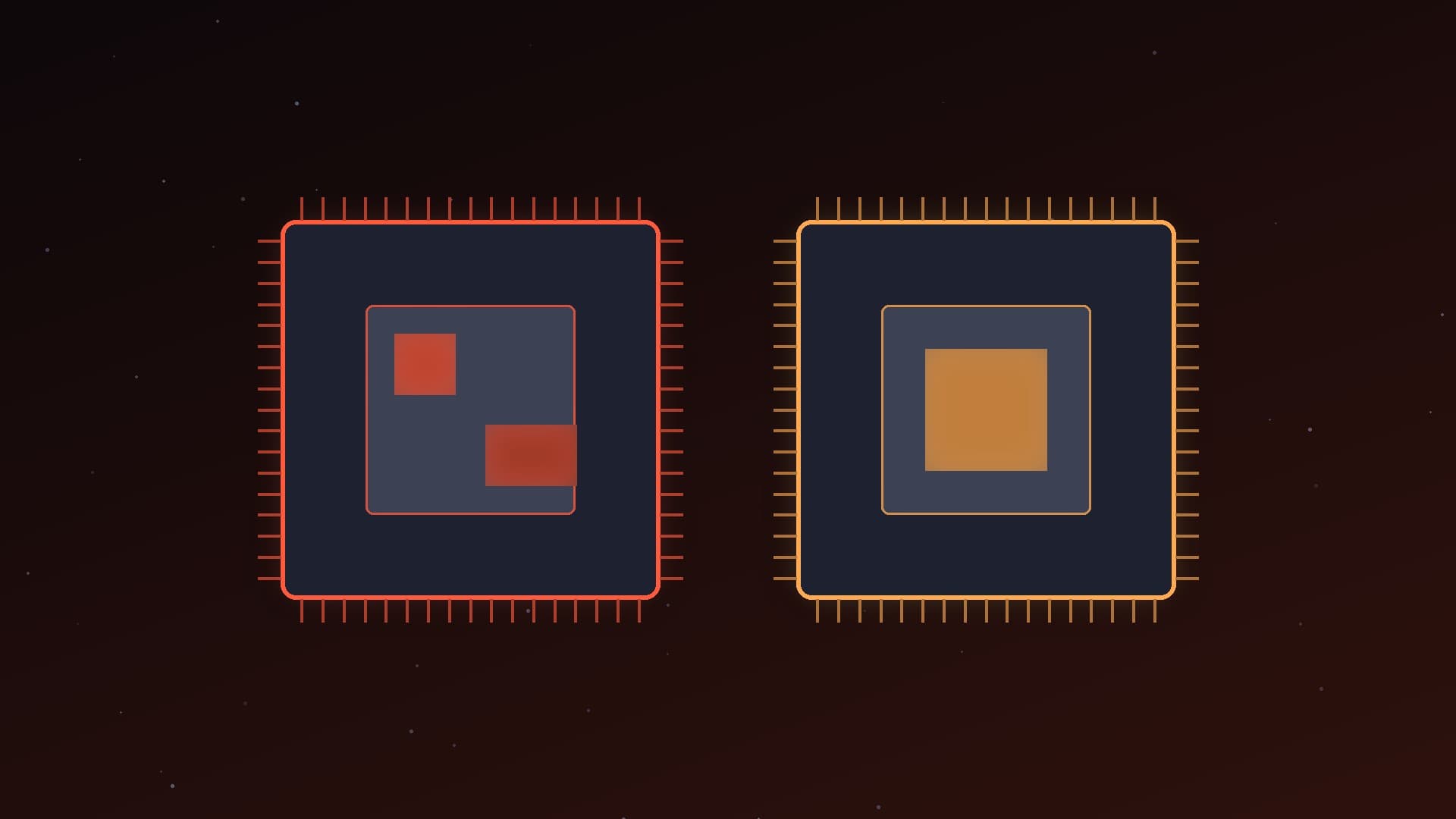
The two chips share the Zen 4 architecture, but they're built from different designs. The 7500F is a desktop "Raphael" chip, made from a separate CPU die and I/O die, just like the rest of the Ryzen 7000 range. The 8400F is a "Phoenix" chip, which AMD lists as a single-die design made on a 4nm process. Like the 7500F, it has no usable integrated graphics: AMD lists both as "discrete graphics card required".
That difference shows up in three places that matter for a gaming PC.
L3 cache. The 7500F has 32 MB of L3 cache, double the 8400F's 16 MB. Many games are sensitive to cache size, and AMD's X3D gaming chips are built around adding extra L3 cache. With the same core count, the 7500F's larger cache is its biggest advantage for gaming.
Boost clock. The 7500F boosts up to 5.0 GHz, against up to 4.7 GHz for the 8400F. The 8400F has a higher base clock (4.2 GHz against 3.7 GHz), but under typical gaming loads both chips will usually run above their base clocks, so the boost figure is often the more relevant one.
PCIe 5.0 and lanes. The 7500F supports PCIe 5.0 with 24 usable lanes, while the 8400F is limited to PCIe 4.0 with 16 usable lanes. In practice, PCIe 4.0 is still plenty for today's graphics cards and most SSDs. But on the 8400F, fewer lanes can mean fewer CPU-connected M.2 slots, or slots running at reduced speed, depending on the motherboard. Check your board's manual. The PCIe version can also matter with cards that use only eight lanes, such as Intel's Arc B580 and B570, which run at PCIe 4.0 x8 either way.
Where the 8400F does have an edge
The 8400F isn't without strengths. AMD lists support for up to 256 GB of memory against 128 GB on the 7500F, though few budget gaming builds will come close to either. Its configurable TDP of 45-65 W gives it extra flexibility in small or quiet builds. Whichever you pick, make sure your motherboard's BIOS supports it, as our CPU and motherboard compatibility guide explains.
Ryzen 8000 desktop chips are also the ones affected by a recent firmware change: AMD's AGESA ComboAM5 PI 1.3.0.1f Patch A limits core voltage to 1.4 V on select Ryzen 8000-series processors, according to TechPowerUp's report on board makers' BIOS release notes. That's not a reason to avoid the 8400F, but it's worth keeping your BIOS up to date.
Coolers and what's in the box
AMD's 7500F page lists the AMD Wraith Stealth as the thermal solution for both the boxed (PIB) and multi-pack (MPK) versions. The 8400F's AMD page doesn't list an included cooler, so check the retailer listing for the exact version before you buy. Boxed, tray and multi-pack versions are sold, so don't assume a cooler is included unless the listing says so.
Which should you buy?
Choose the Ryzen 5 7500F if: - you want the better gaming chip of the two, thanks to double the L3 cache and a higher boost clock - you want PCIe 5.0 and more CPU lanes for future graphics cards and SSDs
Choose the Ryzen 5 8400F if: - it's noticeably cheaper than the 7500F where you're buying - you're building a small, low-power PC and value the configurable TDP
For most budget gaming builds, the 7500F is the stronger pick on paper if the prices are close. UK prices for both change often, so compare them on the day. If you can stretch a little further, the six-core Ryzen 5 9600X and 7600X are compared in our Ryzen 5 9600X vs 7600X guide, and our best budget CPU round-up covers the wider market. Pair either chip with a board from our best AM5 motherboard picks and enable EXPO for your DDR5 memory.
Our verdict
On AMD's own specs, the Ryzen 5 7500F is the better gaming processor: it has 32 MB of L3 cache against 16 MB, a higher 5.0 GHz boost clock and PCIe 5.0 with more lanes. The Ryzen 5 8400F's higher model number reflects a newer series, not better gaming hardware. It's still a capable six-core chip, with more memory support and a configurable TDP, so buy it only if it's clearly cheaper. Either way, check whether a cooler is included before you order.