NVIDIA's DLSS 5, the AI feature that changes how a game's lighting and materials look rather than just making it run faster, is now in its third game. NVIDIA announced on 12 November 2026 that DLSS 5 with "3D-Guided Neural Rendering" is live in War Thunder, following NBA 2K27 in September and Hogwarts Legacy in early November. Where Winds Meet is next, from 23 November.
This report is based on NVIDIA's announcements, its driver release notes and TechPowerUp's driver coverage. Any performance or image-quality claims below are NVIDIA's own and are labelled as such.
What DLSS 5 actually does
Earlier versions of DLSS are mainly about speed. Super Resolution renders at a lower resolution and upscales, and Frame Generation adds AI-generated frames. Our DLSS, FSR and frame generation explainer covers those.
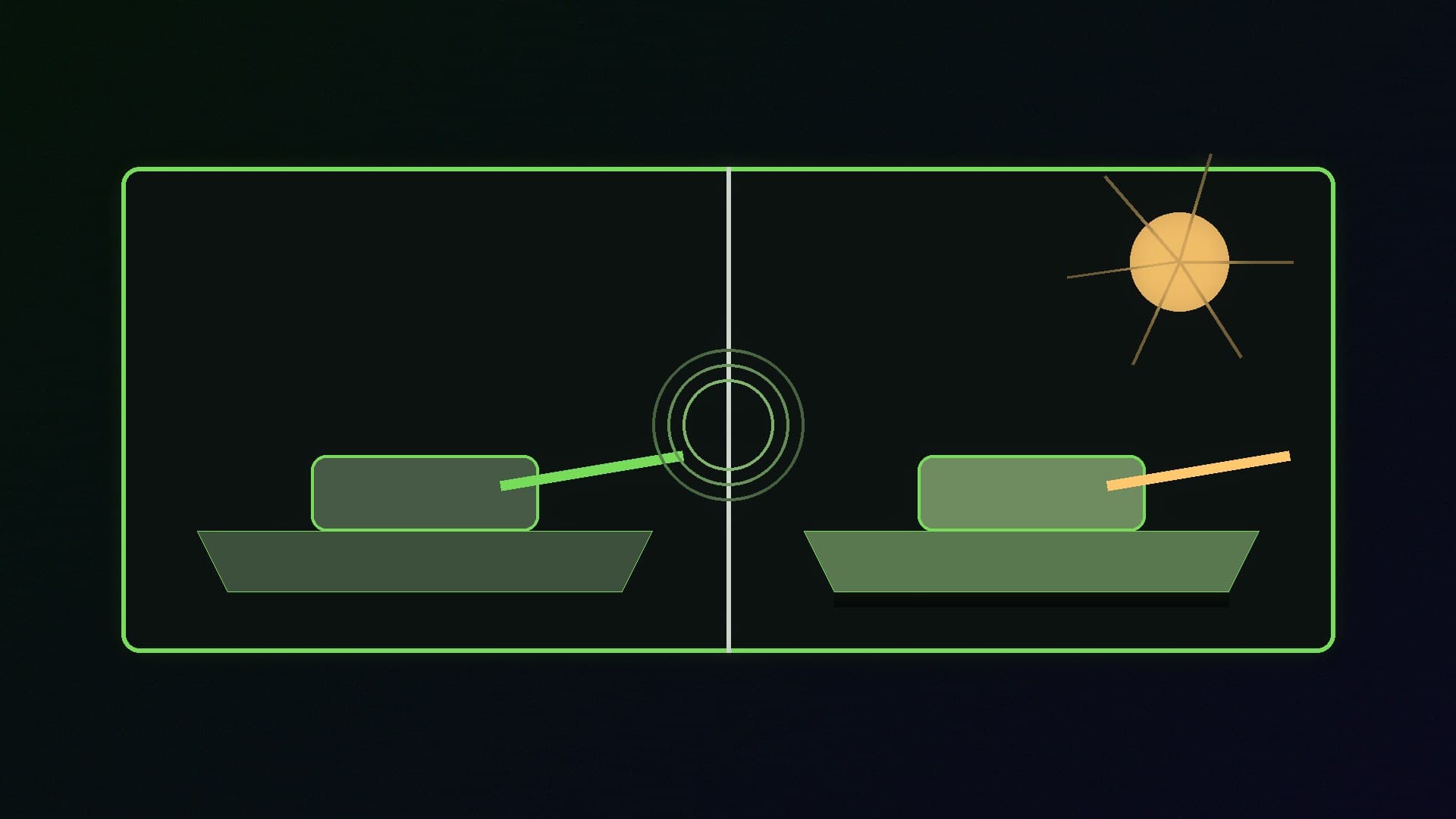
DLSS 5 is different. NVIDIA describes it as the final stage of the graphics pipeline: it takes the game's finished frame, using its colour and motion vectors as input, and uses an AI model to add more realistic lighting and material detail, such as deeper contact shadows, ambient occlusion and light passing through skin. NVIDIA says the result is "deterministic, temporally stable and anchored to the game's content", meaning it should not invent new objects or flicker between frames.
Developers decide how strongly it is applied. According to NVIDIA, the DLSS 5 software kit offers:
Several AI models with different weights, which studios can mix by scene, for example one for outdoor foliage and another for cutscenes.
Structure Intensity, which controls fine detail such as ambient occlusion, reflections and subsurface scattering.
Tone Intensity, which controls broader lighting and colour. Set to zero, the game's original colours are kept.
Semantic masking, which recognises objects so developers can enhance environments more than characters, or vice versa.
For players, it is a single on-off setting. In War Thunder and Hogwarts Legacy, you turn on the in-game "Neural Rendering" option.
Whether the result looks better is a matter of taste. Gaijin's art director, Kirill Stupin, told NVIDIA that DLSS 5 "does not completely change how War Thunder looks at first glance", but that the number of subtle improvements was so large that some of the team "initially thought we had changed the rendering engine itself". That is a developer's view published by NVIDIA, not an independent assessment.
Which graphics cards support DLSS 5?
NVIDIA says DLSS 5 is available on:
Hardware | DLSS 5 support |
|---|
GeForce RTX 50 Series desktop graphics cards | Yes |
GeForce RTX 50 Series laptop GPUs | Yes |
RTX Spark systems | Yes |
GeForce NOW Ultimate (cloud streaming) | Yes |
GeForce RTX 40, 30 and 20 Series | Not listed by NVIDIA |
NVIDIA's announcements list only RTX 50 Series, RTX Spark and GeForce NOW Ultimate, so owners of older RTX cards should not expect the Neural Rendering toggle to work. Older RTX cards still get the other DLSS features they already support.
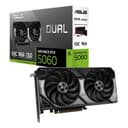
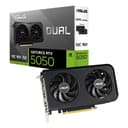
If you were considering a budget graphics card partly for DLSS 5, the cheapest way in on a desktop is an RTX 5050 or RTX 5060. SpecPrice's UK tracker listed the lowest RTX 5050 at about £402.99 and the lowest RTX 5060 at about £424.95 on 14 November 2026. Examples in our database include the ASUS Dual RTX 5050 OC and ASUS Dual RTX 5060 OC. Those prices are approximate and change daily; our November GPU price watch explains why cards cost more than they did earlier in the year.
Which driver do you need?
Hogwarts Legacy and War Thunder: NVIDIA's release notes say Game Ready Driver 621.14 (4 November 2026) added DLSS 5 support for both games.
Where Winds Meet: Game Ready Driver 621.24 (12 November 2026) adds DLSS 5 for Where Winds Meet, alongside Game Ready support for Warhammer 40,000: Dawn of War IV and Assetto Corsa Rally. TechPowerUp's coverage of 621.24 also lists fixes, including the NVIDIA OptiX Denoiser failing at high resolutions in Chaos Vantage and incorrect colours when playing DJI D-Log H.265 video in Windows Photos and Media Player.
The easiest way to stay current is the NVIDIA app; our guide to updating graphics drivers shows how, and our NVIDIA app vs AMD Software comparison covers what else the app does.
How fast is it?
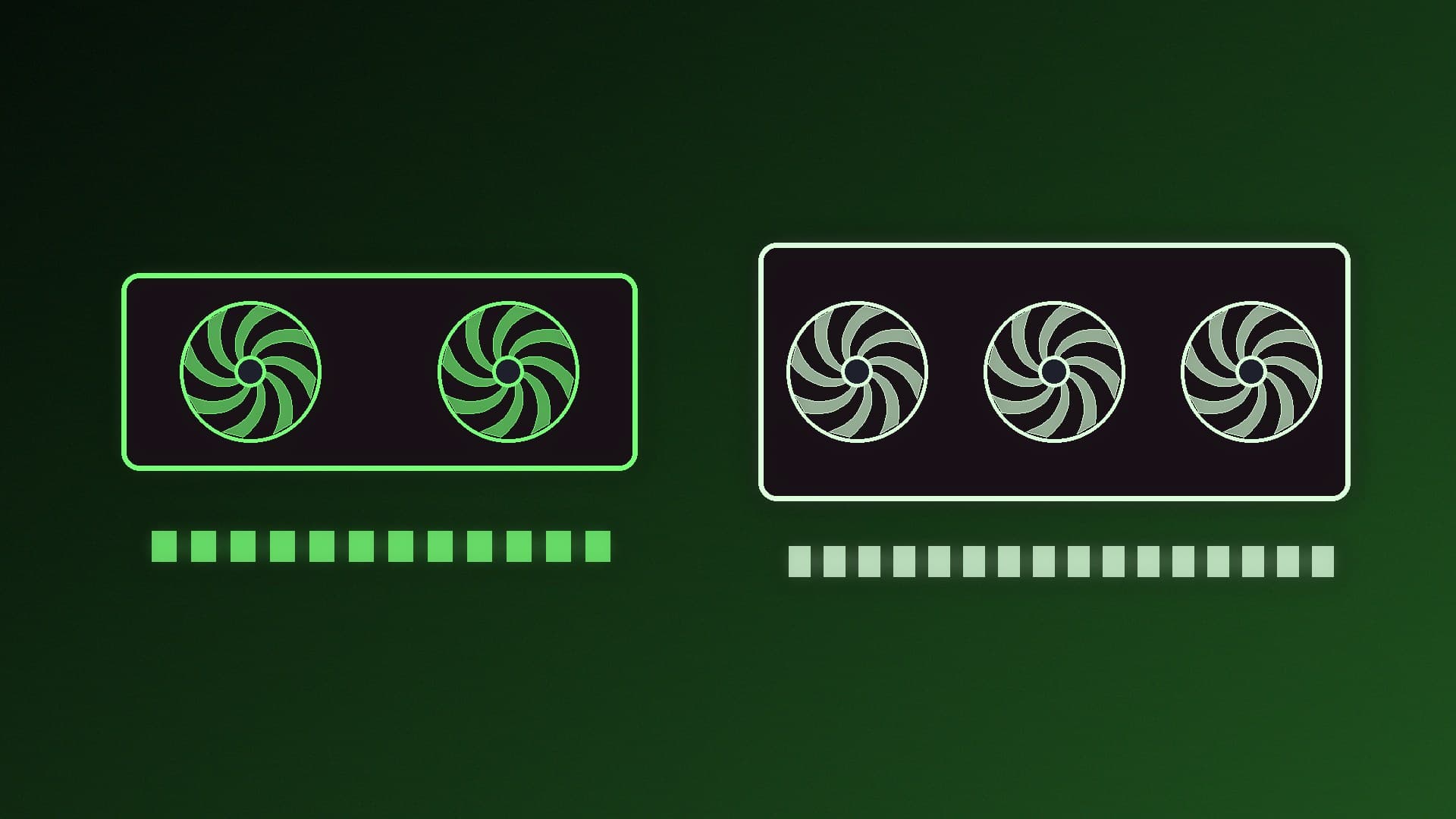
When DLSS 5 was first shown in March, NVIDIA says it needed two GeForce RTX 5090s. NVIDIA now says it runs on a single card, a 10X performance improvement in seven months. Its October 2026 model, used in War Thunder, is about 118 million parameters, 24% smaller than before, and NVIDIA claims it is 2X faster and uses 20% less video memory at 4K than the previous version.
NVIDIA has also published War Thunder frame-rate figures with DLSS 5, Ray Reconstruction and up to 6X Multi Frame Generation enabled, including a claim of up to 400 frames per second in its own ground-battle benchmark. Those numbers depend heavily on Multi Frame Generation, which inserts AI frames. They are NVIDIA's measurements, not independent tests, so wait for independent reviews before using them to decide on a purchase.
What we do not yet know is how much DLSS 5 costs in performance on lower-end RTX 50 cards with 8GB of memory. Our RTX 5060 Ti 8GB vs 16GB comparison explains why video memory matters for newer features, and our VRAM guide covers how much you need.
Our verdict
DLSS 5 is now in three games, War Thunder, Hogwarts Legacy and NBA 2K27, with Where Winds Meet adding it on 23 November. It is a genuinely new kind of feature, using AI to change lighting and materials under the developer's control, but it is limited to RTX 50 Series graphics cards, RTX Spark systems and GeForce NOW Ultimate. If you already own an RTX 50 card, update to driver 621.24 and try the Neural Rendering toggle. If you are thinking of upgrading just for DLSS 5, wait for independent image-quality and performance testing, especially on 8GB cards.